Welcome to the blog of the Tasmanian branch of the Children's Book Council of Australia!

Thursday, 21 June 2012

Criminally good - Penny Garnsworthy on Artemis Fowl


Criminally good ...
 
That's the byline from Eoin Colfer's book Artemis Fowl and the Lost Colony. In May I was fortunate enough to attend the CBCA national conference in Adelaide and privileged to meet one of my favourite children's authors, Eoin Colfer who hails from Ireland and was one of the keynote speakers at the conference.
I thought I had read all the Artemis Fowl books - not necessarily in order - but a review of the website http://www.artemisfowl.com/ (which is fantastic I might add) has in fact revealed I am two short. Plus (and Eoin mentioned this as he was signing a book for me at the conference) the final book in the series is due for release soon. What a sad day it will be when I read the last line of Artemis Fowl, The Last Guardian. And even sadder I should think, for Eoin. But then once I have read the remaining three, I'll simply start reading the series all over again, and this time in order.

But I digress ... Artemis Fowl is a 12 year old brilliant criminal mastermind ... well he was 12, and he was a brilliant criminal mastermind, but somewhere along the line Artemis grew up (as some of us do) and although still brilliant, he eventally changed from being a criminal into a mastermind who apprehends criminals. But these are no ordinary criminals; most of them aren't even human; they're armed, they're dangerous, they're technologically advanced and they live underground. And it is here the fun and excitement begins.

Colfer's stories centre on a crime, and the battle between good and evil. Sometimes that battle takes place here on earth, other times beneath us in the complex world of the fairies. But there's always a world to save. And although there's some violence, Colfer doesn't glamorise crime and young Artemis always has a lesson to learn. They're a great read, for all ages and I guess you could say his books are ... criminally good.

Sunday, 10 June 2012

Convict Stories - by Maureen Mann


Recently, I’ve been spending a lot of enjoyable time doing some online research about Tasmanian convicts. Coincidentally – or is it cause and effect? – I have read several books with Tasmanian convicts as an important part of the tale. Here are two of them.

The first was an adult book, the challenging Vogel-winner The Roving Party by Rohan Wilson. It’s a complex story, set at the time of the Black Wars in Tasmania, about John Batman, farm-hand Gould, four downtrodden convicts and Black Bill, brought up by white society but retaining his traditional point of view . It gives an interesting version of the main character before he left his place of birth to establish Melbourne. It’s a heart-wrenching novel with black humour but elements of hope. Though adult in audience, it will appeal to some mature young adults.

I then followed this with the CBCA Younger Readers Short List Nanberry: Black Brother White by Jackie French. It’s set in the first ten or so years of Sydney and is a great mix of historical fact combined with the author’s fictitious characters. The reader comes to understand life in those early years: the squalor as well as the hardships, corruption and the threats to and challenges for the Aboriginal population. It was a book which sent me investigating because I wanted to know more about that period of our history.

Historical novels for me create a sort of time travel, allowing me to visit another era. The successful ones mean that I have an improved understanding of the past and a personal recognition that I may not have fared very well had I been alive at that time. I come away from some of my research with the same feeling. What would the convicts I have been investigating think of what I am doing?

And now I have just finished Orson Scott Card’s Pathfinder, written for young adults. This is pure fantasy, set in Garden a world established 11,191 years ago, with many similar elements to historical fiction but nothing to do with Tasmanian convicts. Rigg is able to see all the paths traced by people in the past as they move through the landscape. Umbo can transport people to the past and, if necessary, modify the future. Param can make herself invisible by slowing down time. It’s a typical fantasy quest where the main characters have to meet their challenges but the reader constantly needs to keep thinking because there are some complex paradoxes discussed. It’s long – 662 pages – so not for the faint-hearted, but a good book to make the reader think.

Monday, 28 May 2012

Diana Wynne Jones - by Patsy Jones


Many years ago, when my daughter would have been nine or so, she came home from the Hobart Library with a copy of a book entitled Dogsbody. She enjoyed this, and so did I, so we looked for books by the same author. I don’t know how she came to pick it up as a possible read – did a staff member suggest it (in which case we can be for ever grateful to that staff member), or was it just a serendipitous choice? As this book was initially published in 1975, it must have been quite new to the library at the time, anyway.

It was written by Diana Wynne Jones, and my children and I have been reading her works ever since. I was very selfishly sad to hear last year that she had died, so we no longer have new books of hers to look forward to. But very recently my copy of her latest (and last, I think) book, Reflections: on the magic of writing arrived at my house and I have been enjoying dipping into it. It consists of a wide range of material produced by Diana over the years since 1975 – critical reviews, autobiographical material, explanations of the origins of some of her books, advice to young writers, and so on. Very interesting are the texts of three talks she gave on what must have been her only visit to Australia – in 1992. Why oh why wasn’t I there to see and hear her in person?

While dipping into this wonderful book, I have been driven as a result to reread The Homeward Bounders (a profoundly sad story) and Enchanted glass (quite the opposite – witty, warm, totally golden) and have taken others of her works off my shelves for re-reading. AND I find there are two I’ve never read – but I have ordered them and look forward to their arrival!

Reflections is very well produced (the ISBN is 978 0 385 65403 6 and it is published by David Fickling Books); as well as Diana’s collected material, it contains a foreword by Neil Gaiman, a bibliography of her works, a preface, and a very helpful index.

If you enjoy fantasy with a very wide scope and range, you should embark on reading her works. There are some novels for adults (though I think any literate teenager would find them very approachable), some for the Upper Primary and YA cohort, and some for the younger reader. There are various series and some short story anthologies, and Miyazaki based his animated movie Howl’s moving castle on the book of the same name.

If you are already a fan, do post the names of your favourite Diana Wynne Jones books on this blog for me to see!

Monday, 7 May 2012

Give Them The Choice - Helping Your Child Become a Reader by Lyndon Riggall


You probably can't get your child to read because you haven't given them access to books.

It's a risky statement, I know. And you might be thinking: Hold on, but they have heaps of books! And you may well be right.  But my guess is that nine times out of ten, if a child won't read for pleasure, it's because they haven't got their hands on books. And I don't mean any books, I mean the right ones.

Because you don't get to decide what your child likes. In fact, I can remember all the books my mum told me I shouldn't read, and I remember them especially because I made a concerted effort to read them all. I loved most of them, too. Just as you don't like the books your parents do, so will your children choose different books to your tastes, and it's imperative that they have access to them. A home library will get you so far, and a school library a bit further. But if you want to turn your child into a real reader, get them a State Library card and let them run free.

Looking back on my own reading history, I can recognise the significance of my dad working opposite a library. I trained myself to master the holds system, and to request books from other collections in the state, to be shipped to the Launceston library free of charge. I'd send my dad in with my card, and one night a week I would wait patiently at the door for him to come home with a heavy bag full of books. Even at age nine or ten my tastes were beyond what even the local library's extensive collection had to offer. I'm just really lucky that fate managed to conspire a way to deliver the books I really wanted right into my hands for nothing.

There are books I don't like, and books I would try to steer my children away from because I think they are stupid, badly written, or ideologically dangerous. In the end though, all you can do is question the value of those books with your child, because you can't train them to hate what they love. We need to acknowledge that while not every medium of entertainment is perpetually valuable as an educational tool, every book is at least a lesson in literacy. A reading child is always engaged in a valuable learning experience, even if you might find it hard to accept that as you watch them laugh on the couch with The Bugalugs Bum Thief.

Some kids just naturally love reading, and some kids don't. I accept that. But if you're having trouble sending your child across the great divide, take them to the local library and give them plenty of time to sit, browse and choose. Tell them they can take out any books they like; from the adult section, children's section, or from the baby section, no limits and no judgment. If you're really worried about a particular choice, warn them, but try not to say no. Let them call the shots.

We do 'reading' because we have to. 'Reading' is what we do when we fill in our taxes, write assignments and check our work emails. Kids learn 'reading' in school.

Being 'a reader' is what we do because we love it. It's being tucked under the blankets at night, refusing to go to sleep even though we can barely keep our eyes open. It's being in the hammock on a hot summer day with a cold lemonade or a beer, and a fresh favourite with a still uncrinkled spine. It's reading what we want, when we want it. We don't choose to read, but we choose to be a reader. 

And if you give your child the choice, they might just choose to be a reader too.

Monday, 30 April 2012

The Reading Brain


Remember the stillness and quiet at the end of a stirring piece of music? For a moment everyone is caught – absorbing the music, the meaning, the associations or memories that the music evoked. Then comes the thunderous applause, the curtain calls and reality.

Reading is like that. Sometimes I find I have to wait a day before starting the next book. My mind wanders back and the current book (no matter how good it is) just has to wait.

It seems I’m not alone. Brain scans are revealing what happens in our heads when we read a detailed description, an evocative metaphor or an emotional exchange between characters. Stories, this research is showing, stimulate the brain and even change how we act in life. Furthermore that those who frequently read fiction seem to be better able to understand other people, empathize with them and see the world from their perspective.

The brain, it seems, does not make much of a distinction between reading about an experience and encountering it in real life.

Books that have stimulated my brain this year include:
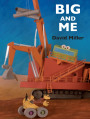
David Miller reading aloud his book Big and Me
Annabel Pitcher My Sister Lives on the Mantlepiece
S D Crockett After the Snow
Daniel Handler & Moira Kalman’s Why We Broke Up

Wednesday, 25 April 2012

Um, so what exactly IS a "Mechanics Institute"? - by Maureen Mann


I’m going to talk this week on a similar theme to Patsy’s blog last week: how different interests fit together. I am a committee member of the Launceston branch of the Australian Decorative and Fine Arts Society and have taken on compiling information about the Launceston Mechanics Institute to be included in an ADFAS publication. There’s plenty of information so it will be a matter of condensing it to a manageable size.

 Did you know that the libraries of the Mechanics Institutes in Tasmania became the original core collection for our State Library? The natural history collection of our wonderful Queen Victoria Museum and Art Gallery here in Launceston had its beginnings in the Launceston Mechanics Institute acquisitions. What was the role of the Mechanics Institutes?

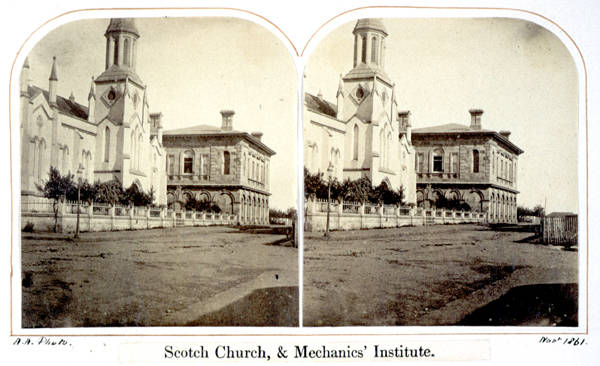
 According to Wikipedia, they “were educational establishments formed to provide adult education, particularly in technical subjects, to working men.” (http://en.wikipedia.org/wiki/Mechanics%27_Institutes). They held lectures and classes, especially in technical subjects, for working people. The first one, established in 1827, in Australia was in Hobart, established only six years after the movement was founded in Scotland and less than 25 years after Hobart’s European settlement. In Launceston, the Institute was established in 1842 and under the auspices of John West, £8000 was raised for a new building. http://www.utas.edu.au/library/companion_to_tasmanian_history/M/Mechanics%20Institutes.htm

Major cities in the English-speaking world developed their own Mechanics Institutes organisations. There are many still in existence: including as libraries, parts of universities and higher education colleges, theatres, and museums. Smaller versions sprang up in many towns, not all with the same name but all with the aim of helping the working classes. Some of the buildings have been absorbed into the public structure. Others, like Launceston have disappeared or been converted to very different uses.

The original plans for the purpose-built Launceston building included a reading room, museum, laboratory, class room and a lecture hall capable of seating 700 people. Sadly this building was demolished in 1971 to make way for the ‘new’ State Library building and what is now Civic Square. But other less grand buildings remain throughout the state reflecting the benevolent aims. We have a lot to be thankful to these far-sighted men (and women) who encouraged this movement. Our museums and libraries are still venues for learning and teaching.

Tuesday, 17 April 2012

The School That John Built - Patsy Jones


I wonder how many readers of CBCA (Tasmanian Branch) Inc. are aware that John Marsden (Tomorrow, when the war began, etc.) started a school in the Macedon Ranges in Victoria in 2006? If you want to check this out, Google ‘John Marsden Candlebark school’ and you can find out about the school, its wonderful site, its staff (John is the Principal), and its history.

Why am I writing about the school? Because it’s an example of how one’s varied interests coincide! I’m a retired librarian, the president of the Tasmanian branch of CBCA (Inc.), and a volunteer in a small library (Sustainable Living Tasmania) - you can Google too if you wish.

Today I was adding the most recent issue of the journal ReNew to our catalogue and John Marsden’s name jumped out at me from one of the pages. So of course I looked at it more closely! It was in an article about the new library at Candlebark School.

The library was funded, as were so many of our schools’ new libraries, with federal money, but what made it noteworthy for that particular journal was that the library is an underground, earth-covered building, and a ‘striking example of environmentally sustainable design’ which doubles as a ‘well-designed bushfire shelter’.

I expect it will be a while before any new school libraries are being planned, given that there have been so many built in the last few years, but in case you’re interested, see ReNew : technology for a sustainable future, Issue 119, pp. 26-28.

Monday, 2 April 2012

The National Year of Reading - Penny Garnsworthy


The National Year of Reading 2012 was launched in Canberra on 14 February and in an effort to turn Australia into a nation of readers its three goals are:

1. For all Australians to understand the benefits of reading as a life skill and a catalyst for wellbeing.

2. To promote a reading culture in every home.

3. To aim for families, parents and caregivers to share books with their children every day.

Reading is something most of us began when we were young and which for many of us has become a lifelong habit; one we relish. We read for education, for vocation, for enlightenment and just plain enjoyment. I love nothing more than losing myself in a good book, and losing time along with it.

But there are those, who for whatever reasons, haven’t grown up with books or learned to love them. Maybe their parents didn’t read or have books in the house when they were young and school text books are all they remember; or they spent so much time on the playing field they rarely ventured indoors; or their interest lies more in technology or electronic gadgets.

At a recent BBQ the subject of e-books came up, not that we had been discussing books at all, it just came up. One of the diners said they owned an e-reader and that they found it so convenient to carry it in their bag and bring it out when they were in a waiting room, on a bus or at the hairdresser. Personally, I would have done this with a paperback (I also own a Kindle). A friend who has never been a ‘reader’ now has a Kindle and not only does he constantly use it while travelling but he also finds himself reading more traditional books as well. So the point is, if reading electronically encourages people to take up, or even expand, their reading, that’s fantastic and we should encourage it, especially in The National Year of Reading.

So, get into your library, your bookstore, your bookcase or on-line and let’s try to reach those three goals in 2012. And if you need any encouragement just go to the website: http://www.love2read.org.au/