Welcome to the blog of the Tasmanian branch of the Children's Book Council of Australia!
Showing posts with label reviews. Show all posts

Saturday, 7 March 2026

Dipping into the 2026 Notable list

Did you wait with baited breath to see if some of your favourite reads from the past year made it to “the lists”? I did and was thrilled to see some terrific books included. Read on for a quick dip into just a few of Jennie’s favourites across each category. As she hasn’t read all the books this is just a selection that resonated. Lots left out and lots more to read!


Eve Pownall Award


The Illustrated Encyclopedia of Fast and Slow Animals. Written and illustrated by Sami Bayly. Published by Lothian Children's Books.

What I love about Baylys’ work is not just the amazing realism of her meticulous art work but the original and creative perspectives she explores to present the familiar and extraordinary animals across the globe and from all animal families. Her coverage of fast and slow goes well beyond the animals we know so well – such as the cheetah! Wonderful for all inquiring minds the coverage is sure to broaden your knowledge. Careful design is evident with carefully laid double page spreads that compare and differentiate between different groups. Language is engaging and entertaining with some humorous commentary intertwined within the factual coverage.


This bird. Noticing our Urban Birds. Written and illustrated by Astred Hicks ; with Holly Parsons. Published by CSIRO.

Hicks, with scientific support from Parsons, presents a colourful and vibrant array of familiar Australian birdlife. An original approach to organising each entry works effectively to focus on 'noticing' differences in birds by highlighting unique features that make each bird stand out from the rest. Double page spreads start with "This bird…" followed by an additional clause “... has a red butt; “…is a hoverer; ‘”…loves cities; etc. Information is accessible, interesting, informative and identifies special attributes to help young bird watchers with identification and location.


Picture Book of the Year


(I have only read one of the books on this list! But it is wonderful!)


Once I was a Giant. Written and illustrated by Zeno Sworder. Published by Thames & Hudson.

This is an enigmatic and challenging tale of the life of a tree told by one of its end products - a pencil. Dark, muted pastels convey the majesty of the giant tree and its surrounding forest and the joy of the visitations from the wanderer, (perhaps a wood sprite?), who relates the passing of time. The bleak devastation of the cleared land is beautifully contrasted with the quiet work of the wanderer to reseed the forest. Sworder's masterful visual storytelling is both thoughtful and thought provoking, exploring nature and the life cycles that support regeneration and reforestation.


Book of the Year: Early Childhood


The Emperor’s Egg. Written and illustrated by Rae Tan. Published by Lothian Children’s Books.

Tan has reworked an ancient Chinese folk tale about integrity, courage and patience that celebrates ancient Chinese traditions. The old and childless Emperor is seeking an heir and puts a call out for children over the age of five to each care for a beautiful coloured egg. Ren nurtures his egg with patience and care as he watches the other children play with their glorious dragon like hatchlings. On the thirtieth day the Emperor makes his decision based on the evidence. The design, layout, and illustrations are exquisite - richly coloured with artful use of white space and glorious movement and facial expressions in the children.


Look, See, Find Me. Written and illustrated by Sandra Severgnini. Published by CSIRO.

A cleverly designed introduction to camouflage that presents a range of animals in different environments. With a single descriptive sentence on each double page young readers are encouraged to discover different animals blending into their environment. This is supported with the names - common and scientific - to indicate how many creatures need to found. The artwork accurately portrays both elements with each spread being fully coloured and richly texture to the eye. A glossary at the end includes information about each creature and an image similar to how they look on their respective pages. Perfect for this younger age group, the book is more literary nonfiction rather than story.


Where the River Runs Free. Written by Vikki Conley, illustrated by Tasmanian illustrator Jedda Robaard. Published by Windy Hollow Books.

Portraying a delightful and cheerful walk along the river, young readers will make many connections with Mum, two girls and the baby as the set off for an adventure. Familiar landscapes and activities to stimulate discussion, the story is simple and familiar. Splashing in the river, hearing the birds, sharing snacks and chasing butterflies are all part of the fun. Robaard’s Illustrations enrich and expand the story with soft watercolours providing different perspectives, shifting the focus of the eye with broad double page spreads interspersed with cameo images that use white space effectively to highlight the action. The placement of the simple storyline adds to the flow of the story. Text is enriched with wonderful alliteration, onomatopoeia and descriptive language, all perfectly placed on each page. The conclusion is very satisfying – they get to see a ….! Can you guess what they were looking for on the river?


Book of the Year: Younger Readers


Run. Written by Sarah Armstrong. Published by Hardie Grant Children’s.

A fast-paced adventure survival story follows Cas (Casper) who avoids facing his long estranged father by escaping into the bush. He quickly realises that he does not have the necessary survival skills and lost, hungry and thirsty, he despairs, but is unable to find his way out. Discovered by two sisters and their dog he soon realises he has stumbled into a mystery as the girls and their Dad are living off grid and have a secret to hide. 

Armstrong explores both physical and emotional survival in this tight, edge-of-the-seat adventure that explores neglect, forgiveness, family, friendship and moral challenges. A great read for older primary and early secondary with a cast of interesting robust characters including a teenager thirsting for civilization.


Song of a Thousand Seas. Written by Zana Fraillon, illustrated by Aviva Reed. University of Queensland Press.

Similar in style to her engaging and emotive verse novel Way of Dog, Fraillon uses a first person narrative to tell the story of Houdini the octopus, trapped in a tank, who longs with all of her nine brains, three hearts, and 3,154 suckers to be back home in the sea. Houdini narrates her own and three other points of view - Paul the keeper, Juno the keeper’s daughter and Joe the aquarium cleaner - to present multiple perspectives that show how each is pulled in a particular direction. Fraillon artfully immerses the reader into Houdini's caged world to understand and sympathise with her craving for the ocean and freedom. Black and white illustrations are placed throughout, at times twisting between the short verses each starting with a short and evocative heading to highlight the voice and the perspective being related. The illustrations add depth and mood to the narration as well as enhancing the visual appeal and accessibility of the book. A story for primary aged readers that is rather different from the usual fare - and certainly one that will encourage them to think and question the ethical issues around keeping captive animals - though this is not discussed at any stage. Such is the power of seeing into the 3 hearts and 9 minds of Houdini.

Book of the Year: Older Readers


Eleanor Jones is Playing with Fire. Written by Amy Doak. Published by Penguin.

Eleanor continues to plunge head first into trouble in this third stand-alone adventure. Her friends and others at school are all suspects in the first disaster – a house fire that sees one man dead – accident or arson? A note warning Eleanor off suggests the latter. Although trying to do the right thing and pass all information onto Holly, the local police officer, she can’t help but wonder. 

Another entertaining thriller with an interesting mixture of teen characters, all with flaws and most with strengths, that will engage teen readers from Year 7 up. Doak handles a number of teen issues and moral responsibilities, including family pressure, toxic behaviour and sexting, boredom, carjacking, thrill seeking behaviours, and that most important first kiss, with dexterity, humour and insight. 


We Saw What You Started. Written by Carla Salmon. Published by Pan Macmillan.

Told from different perspectives the main characters include Otto, relocated with his mum from California with a mysterious past that involves a fire destroying a farm and a love of surfing. Twins, Jasper and Milly, the brother lazy and laid back, and apparently destined to become captain of the local surf living team of which their father is the manager. Milly, determined to prove her worth to her father and a dedicated life saver. Otto becomes prime suspect for the fires, he suspects Jasper and Milly is determined to prove both innocent. Other characters support or thwart her endeavours. Salmon has crafted a realistic teen fiction story that features three arson attacks, family relationships, the challenges of being new to the town and country, sibling rivalry, family, friendship and community dynamics, exploitation and manipulation and a budding romance. A good read for teens with some detective work, and a strong focus on life saving, surfing and personal relationships.


All the best with your reading adventure over the next few months as we warm up the orchestra for Book Week. Please share one of your early favourites. Now, what will I read next?


Jennie Bales

Retired teacher librarian and CBCA Tasmania Social Media Coordinator

Friday, 15 November 2024

Have you ever found a fossil?

Tasmanian author and illustrator, Fiona Levings, also has a PhD in Geology. Although no longer working in that field Fiona has expertly harnessed her experiences and knowledge to craft an informative and captivating picture  book to tell, in lyrical prose and amazingly detailed illustrations, the story of the mountain that embraces Hobart in its foothills. Fiona shares some of the challenges, planning, book design and illustrative techniques undertaken to capture a millennia of geological change in Before the Mountain had a Name.

Cover image of Before the Mountain had a Name

If you live in Tasmania, the chances are that you have. Three hundred million years ago our little state sat wedged between mainland Australia and Antarctica, part of the long coastline of the supercontinent Pangaea. At that time, Tassie lay within the southern polar circle and a large portion of it was covered by a cold, shallow sea that was teeming with life. Reefs of brachiopods and bryozoans competed for space with clams and mussels, sponges, corals and hungry snails. The fossilised remains of these critters are preserved in abundance in rock formations across the state, many of which are exposed in cliffs and platforms lining the modern shoreline. 

Permian-aged fossils including Brachiopod shells and Bryozoan colonies
are commonplace in rocks found across large parts of Tasmania © F Levings

The moment in time that is captured within these rocks is just one episode in the multi-billion-year history of this part of the world. Every bit of the Earth is the way it is today as a result of geological processes that have operated continuously at all scales – from continents colliding to slow drips of water – for the entire life of the planet. The complexity of this system is breathtaking and beautiful - even more so when you add in the biosphere and all of the things that grow, rustle, scurry, crawl and fly around the surface. It’s a lot to take in but understanding how our world formed is important, not least because it gives us perspective on our own species and the role we play within it. The trick, then, is to communicate the beauty of geology whilst dodging its overwhelm.

Page spread depicting The Permian Sea - how the mountain may have
appeared 300 million ago © F Levings

I am a geologist who is lucky enough to write and illustrate books for kids. For years I’ve wanted to ‘do one on rocks’ but couldn’t figure out how. The sense of wonder and curiosity that kids have regarding our world is such fertile ground - the more we can augment it with real understanding, the better. Geology is most commonly communicated to kids using fact books and these are super useful as they teach the language and concepts that underpin the science. There are also books that focus on periods in time (dinosaurs are pretty reliable) or specific processes (volcanoes, anyone?) and certainly lots and lots of books on fossils. However, what I wanted to do was to bring these concepts together and tell the story as a whole which, as we’ve seen, is a terrible idea because it’s huge and even if I could write it, who would ever read it?


Two things came to my rescue. The first was kunanyi, our beautiful mountain, which presented itself as a subject. To focus on just the mountain, a single piece of the earth, reduced the scale of the task enormously. The second was a discovery I’d made with my previous book Now and Then that a detailed illustration really is worth a thousand words.  And so, Before the Mountain had a Name, a picture book where each page spread is one moment in the history of one mountain, came into being. The story of the mountain gives us a glimpse into deep time and the many processes that combine to make our world the way it is - as well as a little bit of context for those wonderful fossils we find so often in its foothills. And whilst the book can be read as ‘just a story’, like all good geology adventures, the more you dig into these pictures, the more you will find. 

Hobart's beautiful kunanyi/Mt Wellington © F Levings

Fiona Levings

To learn more about Before the Mountain had a Name and access resources, activities and references for the book go to fionalevings.com.au 


Friday, 14 June 2024

Emotional Intelligence

This week Maureen Mann casts an alternative lens over a selection of CBCA Shortlisted titles to consider those that could spark conversations around empathy and resilience because of the emotional intelligence displayed in the characters. You are invited to add your own examples to this list.


The 2024 CBCA Shortlist contains books with a wealth of themes which can be explored in the classroom or at home. There are the regular themes of family relationships, friendship, historical settings, mental health issues and many others. I’d like to focus on Emotional Intelligence which I’ll define as the ability to empathise with others’ feelings, viewpoints, cultural backgrounds and diversity to develop resilience and coping skills. The ideal is that through experiencing Emotional Intelligence in story format that readers can then discuss and learn, at an appropriate level, from their reading.


Here are a few of my favourites from the 2024 Short List which I think will be excellent books to use with different age groups to focus on this concept.


Grace Notes by Karen Comer.  

Set during Victoria’s early lockdowns, Grace sets out to help her grandmother, now in a nursing home, cope with the absence of her husband, absence of music and contact with the outside world. Crux learns to understand others’ points of views through his interaction with other street artists. Positive family dynamics are very well portrayed, while allowing the reader to understand the everyday frictions.


Inkflower by Suzi Zail

This story has two timelines: the 1980s and the Holocaust years. The latter sections are harrowing, possibly making readers question their veracity over the hardships and cruelty but by using discussion readers should becoming more empathetic people. Lisa’s story in the 1980s shows her emotional adjustment to the earlier conditions as she learns more and more, and how to cope with the grief of her father’s encroaching illness. 


Scout and the Rescue Dogs by Dianne Wolfer and Tony Flowers.

Scout as a character is almost too good to be true as she responds to the plight of homeless dogs, of animals injured in the wildfires across Victoria and NSW, and her developing friendship from a school assignment. But Scout such an empathetic character and her actions centre on her emotional maturity, her generosity and her wonderful relationship with her truckie father. 


Being Jimmy Baxter by Fiona Lloyd

Jimmy is a carer and old beyond his years, while also being naïve. The reader has to come to terms with these variables to develop an understanding of his view of the world, and eventually realise that not everyone has the same opportunities or setbacks.


Grace and Mr Milligan by Caz Goodwin

Grace forms a strong friendship with her neighbour Mr Milligan as well as his pet goat Charlie and the three of them do everything together. When Charlie dies from old age, Mr Milligan in particular loses the will to live and Grace slowly encourages him to return to his old self. There are lots of discussion points which will help early childhood readers understand the sadness as well as the importance of friendship.


Bear and Duck are Friends by Sue deGennaro

Bear is scared of everything and Duck has to help him overcome his fears. It’s the small creature helping the bigger one until they both realise that, in fact, they are helping each other achieve their goals. Lots of discussion for early childhood readers on bullying and stereotypes and meeting new challenges. 


That Bird has Arms by Kate Temple & Jol Temple and Ronojoy Ghosh & Niharika Hukku.  

Roy is a bird who has arms but has to hide them from all the other birds because that’s an unheard-of condition. The other birds mock the basic concept, but all have to accept the differences when Roy demonstrates so clearly and uniquely that he can solve a problem. For the picture book reader, regardless of age, this understanding of diversity as well as the establishment of individual identity is a strength.


Every Night at Midnight by Peter Cheong

This is another book exploring identity and acceptance. Felix struggles to make and keep friends because he can’t join in normal activities: every night he turns into a wolf and fears being ostracised by his human buddies. On first reading, its suited to younger readers but older picture book readers will bring many more emotional experiences and maturity to all the events in this book. 


Do you agree with my selections? Which other 2024 short list titles would you like to add to this list of books exploring emotional intelligence? 


Maureen Mann

Retired teacher librarian and avid reader.

Friday, 21 July 2023

Dog Tales

Discover some wonderful chapter books about dogs in this week’s post brought to you by Loretta Brazendale. With a focus on the work of Kate Foster, discover her engaging fiction titles that deal with not just dogs but some of life’s challenges.


The last few weeks I have been reading Kate Foster’s chapter books! Now you are probably wondering how I got onto them. Well, I was checking out a book to a child at the library and I saw the cover of Harriet Hound and I thought ‘I have to read this as it has dogs and a girl in dog pj’s!!’ I did ask the child why she had borrowed this book and like me she loves dogs also. So, I placed it on hold straight away!  Read it, loved it, and ordered another three of Kate Foster’s books. I don’t know how Kate does this but her approach to topics on autism, mental health and depression in children is amazing and thoughtful. Her stories are worded so well and the understanding of what can be a daunting subject and a confusing time for a child – she somehow writes without it feeling overwhelming to the reader. Her books can really help children understand how we are all different and how others may see the world or how they are coping. I applaud you Kate for your wonderful books and for the beautiful dog characters in your stories. I can relate to how precious a friendship with a dog can be to a child and even an adult.  Please enjoy my reviews on four of Kate Fosters beautiful stories. 


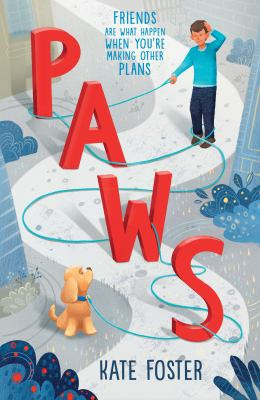
Paws
- Kate Foster, 2021, Walker Books

Loved this warm, funny book about finding real friends. The book is aimed at children ages 7-10 and focuses on autism and moving from Primary to High School. People like myself who are dog crazy will love this beautiful story. 

Kate really did an amazing job with the detail of the story to give a young reader a kid’s perspective of living with autism and the challenges that come with that. I think this story should be read by all primary students, so they understand how everyone is different. Kevin the cockapoo played such an important role in Alex’s life as one friend he can always count on. I love how dogs can always sense when you need a little pick me up like a lick or their head on your knee.  I personally feel dogs bring a calming presence into a space – especially in a school environment. 

I highly recommend this well written story! 


The Unlikely Hero’s Club
- Kate Foster, 2023, Walker Books

The story is about a group of autistic kids who attend a week at Hero Club to learn ways to engage, socialise and hopefully make some new friends. Oli, the main character, thinks this will be boring, and he would be happier to stay at home. 

I loved how Kate described each of the kid’s different autistic traits within the story. The group notice a dog running into an abandoned building – they know they have to save it before demolition day.  

The group’s dedication and teamwork is lovely. You cannot help but cheer on the kids of the Heroes Club, as they each use their strengths to help save the dog.

It’s a very sweet book, that I think primary school aged children would enjoy. 


Harriet Hound
-
Kate Foster, 2023, Walker Books

This book is absolutely wonderful! Gorgeous dogs and an autistic girl with superpowers- what more could you want. The illustrations by Sophie Beer complement. Harriet is an awesome little girl who never lets her autism stop her from doing the things she loves! Harriet’s family run a dog rescue shelter and Harriet knows and loves each and every dog that they care for there. When help is needed Harriet transforms into a superhero, wearing her special dog pyjamas. She only needs to touch a picture of a dog on her pyjamas, and she is there to help with any situation. I have to admit I was reading this story in my dog pj’s, and I felt a bit like Harriet in my now superhero pj’s! Great read for children 7 and up will really enjoy this sweet story. 


The Bravest Word - Kate Foster, 2022, Walker Books

Such a beautiful, well-written book. Wonderful characters and such a meaningful, heartfelt story. Matt, an 11 year old boy used to be happy, but now can hardly get out of bed. Slowly he & his dad realise he might be suffering from depression. One day Matt and his dad are out walking, and they come across an abandoned puppy. They take the puppy in and Matt decides to call him Cliff! The story is already a tearjerker but when I read Cliff my eyes welled up!! Because my 13 year old dog is named “Cliffy” 

A great recommendation to discuss mental health with preteens. 


Loretta Brazendale
CBCA Committee Member and lover of all things doggie.


Editor’s note: If you love books about dogs and are looking for some great picture books check out a previous CBCA Tasmania post: Mann’s Best Friend!