Welcome to the blog of the Tasmanian branch of the Children's Book Council of Australia!

Friday, 4 February 2022

Books and Emotions

Start off the year with this thoughtful post about emotions and the powerful role books have in helping children manage, reflect on, work through and celebrate the myriad of feelings they express each day.


Teachers often talk about regulating our emotions. We use phrases like... ‘feeling calm’; ‘being in the red/yellow/green/blue zone’ and ‘...breathing it out’. Language that the children at our school all know and trust, especially when they need it most. We use language associated with the emotions themselves; the physical responses to emotions; and the strategies related to regulation of emotions. This year, more than ever, we will be supporting our students to manage and challenge their emotions.


But what about books? What do they have to do with emotions? And I wonder, what place do they have in regulating emotions? Particularly for children? 

When a child turns to books to regulate, to calm, to find their happy place, is it about escaping? Or is it actually about relating? 
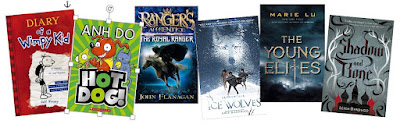

Whatever it is, it sure can work. Books have a wonderful way of calming, and of removing angst and upset. Different children go for different genres. When things are tough the Guinness World Records (no matter the year!), has this marvellous knack of engaging. Magazines too – Kids National Geographic and AMB (mountain biking) are popular class subscriptions. A really good series, that you just can’t put down can also do just the trick. The Rangers Apprentice series is a popular one for escaping into. And the spoken word – story telling too is a marvellous tool for when things get a bit much. And the best ones are often the ones that don’t make any sense at all, but come from a place of spontaneity. As a child, my Dad used to tell a story of his own, about a rocket. To this day, none of us knew where it came from, or what became of it, but the story sure did hit the spot!
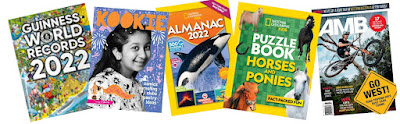

There certainly isn’t a one size fits all ‘calming’ strategy, but what if was as simple as finding the genre fit?


As another school year begins, with the added complexities in our world right now, we will all benefit from having some effective calming strategies to draw on – going for a walk? Listening to music? Counting to 10? Deep breathing? Different strategies fit for different purposes, with that repertoire ever important to have up our sleeve. 

Perhaps we do also need to remind ourselves, ‘You’ve got this!’? It is a popular phrase at the moment. It is simple, yet effective. But what does it actually mean? Maybe it should be ‘You’ve got this. (But when you don’t, just grab a book and all will be well.)’?


Emma Nuttall
Teacher, reader and passionate advocate for children’s literature.

Friday, 28 January 2022

Creators in Schools Workshops

The CBCA Tasmania and the Tasmanian Government partnered Creators in Schools Workshops program enters its final year in 2022. The initial grant, allocated in 2019, is to be fully expended by November 30 2022.


Participating schools reported that the students were enthused by participating in the workshops. The opportunity to meet the creators in person and develop a greater understanding of the creative process increased students’ engagement with literacy; as both consumers and producers. Some schools added to the experience by engaging the creator for additional workshops at their own expense.


If you are an educator in non-government and government schools in Tasmania, you are able to access this program via an institutional membership (visit our website for further information). The cost of a creator workshop is covered by the cost of your membership.


If you are a Creator resident anywhere in Tasmania, you can let CBCA Tasmania know of your availability to provide workshops. Australian Society of Authors (ASA) rates are paid and CBCA Tasmania will advertise your availability on our website and list you on our database for our schools. We connect the school to you!


2021 Feedback:

“Exposure to Tasmanian creators have been invaluable. Being able to engage with a creator and then view/read their books is such a great experience.”

“Inspired…students to learn more about writing and illustrating.” 

“Our students have benefited greatly from this opportunity. As…funding is quite limited in schools, it is often out of the reach of schools to pay for an author workshop. This program gives all schools an opportunity to participate. Our students have really enjoyed the workshops and have incorporated much of what they have learnt into their own writing. It is also wonderful for students to meet authors in person and be able to speak to them directly.”

“[The creator] was engaging and had easy, creative and achievable strategies for story writing. [They were] versatile and well-suited to any age level, definitely an invaluable creative Tasmanian.”


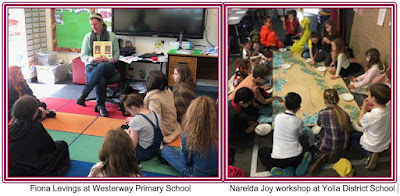
Read about two successful author visits conducted in in 2021:

Schooling the Creator - Fiona Levings

Creating Worlds - Narelda Joy - Artist in Residence


For further information about the Creators in Schools Workshop program please email tas@cbca.org.au or visit our website cbcatas.org. Check out our Creators.

CBCA Tasmania Committee, led by President Steve Martin, will be advocating with state and federal governments to continue to support this programme beyond 2022.


Felicity Sly

CBCA Treasurer and North West Creators in Schools Workshops Co-ordinator


Friday, 17 December 2021

A Top 5 Reading List for Christmas

Our wrap up post for 2021 is from Loretta, who shares the joy of Christmas and the wondrous tales that celebrate the season with a short list of her favourites to read and share.


I love Christmas time! I just love decorating for Christmas at the Burnie Library, but I also love to read the Christmas picture books to the school groups that come in leading up to Christmas. In this blog I’m going to review my top 5 Christmas picture books that I recommend reading! With the help from my dog Cliffy (who did fall asleep on the job!). 


An Odd Dog Christmas by Rob Biddulph

When I first read this story, I thought to myself this is a book that 90% of people would relate to! We have all been there - It’s Christmas, and the Odd Dog is running out of time to find the perfect present for her friend!
Along the way she meets a new friend who needs help, she realises that gifts might not be the most important thing about Christmas after all. The illustrations themselves could tell the story they are bright and colourful, and the children love to point out the different little details on each page of the story.
This is the perfect story for children aged 4+, dog-lovers everywhere and anyone who loves Christmas! 


The Snowflake by Benji Davies

The Snowflake tells the tale of one snowflake and one little girl – both longing for something and looking for their own special place in the world. 


The illustrations are beautiful, and it really does show the power of fate. Everyone should read this book; I guarantee it will warm your heart and make you smile.


A House for Christmas Mouse by Rebecca Harry

I absolutely loved reading this story out loud to the school children who visited in the last month. The story follows the little adventure of a mouse who finds herself helping her friends in their homes for Christmas when she needs to find a home for herself.  Mouse gets very worried along her travel but there is a very happy surprise ending in the story that shows the true meaning of friendship.


Cat and Dog Eat Christmas by Jonathan Bentley

Children absolutely love this funny story of a teeny tiny dog and a grumpy old cat who get up to mischief all on Christmas Eve. This is another great story to read aloud to children and the illustrations will have the children laughing and I must say it does get you wondering if our own pets at home think like this at Christmas time. Very comical and I would highly recommend reading this story. 


The Night Before Christmas by Clement C. Moore

A true classic that could not be left off my top 5. The Night Before Christmas is one of my most treasured Christmas books. I remember my Mum reading this story to me when I was little in the lead up to Christmas and love to share this story with children at the library and every time you announce to the children that you are going to read this story today you can hear the teachers or parents in the background going “Awwww! That’s one of my favourite Christmas stories”. 


I hope you enjoyed my top 5 Christmas stories and hopefully inspired you to read one of them or I have brought back memories for yourself about your favourite Christmas book. I wish everyone a Merry Christmas and a happy safe new year. 


Loretta Brazendale

Information Services Coordinator
Burnie Library | Libraries Tasmania 


From the editor: Thank you to all the contributors to our blog throughout the year and to the many readers who have enjoyed and shared great stories on and about children’s literature. Our best wishes over Christmas and New Year, and with special thoughts to our North West community. We look forward to your company in 2022.


Friday, 10 December 2021

Thoughts on a Year of Creative Writing

Lyndon Riggall, fresh from assessing Creative Writing papers, celebrates the up and coming young writers who are inspired and able to contribute to the wealth of Tasmanian storytelling that we all celebrate and continues to make a mark on the Australian publishing scene. 


In 2019, a review of VCE English recommended a significant overhaul of its program when it was discovered that the essential skill of creative writing was not being taught with enough depth. In Tasmania, we are lucky that we have the dedicated TASC course of English Writing to fill this need, which is double-blind marked at the end of the year through an external folio of work. Students who choose the subject are typically passionate storytellers who wish to develop how they express their ideas—an ambition evidently fulfilled by data that indicates a high level of university success for those who have graduated from the subject, and arguably a demonstration of the power of developing the specific skills of editing and expression that the course provides.


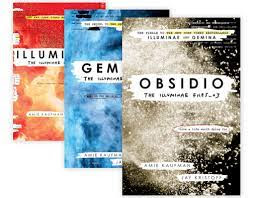
Having taught the subject again this year and marked folios over the last few weeks, I thought it might be valuable to offer some general reflections on the progress of our up-and-coming writers. Certainly—as in years past—our top wordsmiths continue to demand to be noticed, and marking for the subject often leads to an assessor wishing that they knew the identity of the student simply so that they could track their ongoing success and career. It will come as no surprise to readers of this blog that Tasmanian Year 11 and 12 students push their writing into areas that offer depth, relevance and originality, with many pieces featuring diverse protagonists, updating traditional narratives so that their meanings are more relevant in a modern sense, or crafting visions of dystopian futures that highlight the challenges of the way that we live now. Another particularly exciting development is that young writers appear to be increasingly experimental in their use of form. Several stories that I read this year featured a kind of multi-modal design, using text messages presented throughout as characters conversed, or including in their pieces found documents to build a world in a similar manner to writers like Amie Kaufman and Jay Kristoff in The Illuminae Files.


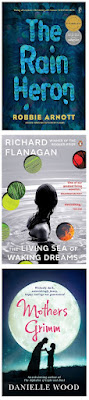
When students were asked at the beginning of their folio to nominate works that had inspired them, there were some excellent examples, including iconic Tasmanian writers such as Robbie Arnott, Richard Flanagan and Danielle Wood, all of whom capture a sense of voice from this island in a way that students clearly strive to emulate. That said, many of the cohort found that they struggled to name any literary influences at all, or offer anything deeper in terms of inspiration than a list of what they had recently watched on Netflix. I have always maintained that a writer who does not read is like a chef who refuses to eat: they will succeed, occasionally, but it will be more as a result of good luck than good management. The struggle of encouraging our young people to engage with the written word recreationally continues to be an English teacher’s toughest challenge, but the best student work this year clearly demonstrated that amongst all of the competing demands for our time (and theirs) there is still, always, a place for literature. 


Over the next couple of years, English Writing is being reinvented. This is an exciting opportunity, but it also comes with a level of danger. I have listened to the young writers of this island and heard their stories, and many of them express that it was in this subject that they found the self-assurance to tell the tales that have been bubbling away inside them. Perhaps a teacher shouldn’t admit to having a favourite class to teach, but the truth is that mine is this one: for the diversity and originality of the work produced by its students, for the confidence they build in their ideas and their own sense of self, and for its simple shared love of story. Having reflected on the power of the pieces that I have had the fortune to read this year, I sincerely hope that fundamental to any new course is one simple philosophical underpinning: that this classroom is a place where students feel safe to find their own authentic voice.


Lyndon Riggall is a writer and teacher from Launceston. He can be found on his personal blog at http://www.lyndonriggall.com and on Twitter @lyndonriggall.


Editor's note: I have just finished listening to an interview with Robbie Arnott, winner of the Sydney Morning Herald Book of the Year Award, where the quality of Tasmanian writing is acknowledged. From Lyndon's observations, this looks set to continue.

Friday, 3 December 2021

An anthem for all

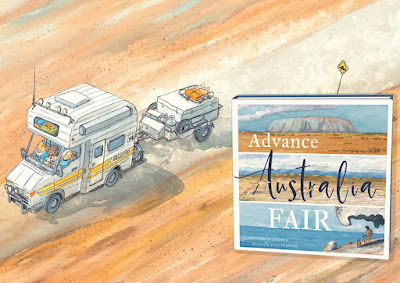
Watch out for this forthcoming publication that celebrates our national anthem and is due for release at the start of the New Year. Tony Flowers shares the research and investigations undertaken to craft a broad and encompassing portrayal of Australia.


Two years ago, I was relaxing after a day of presenting to school groups at the Byron Bay Writers Festival when I received a call from my publisher with a new opportunity for me to consider.


Book cover [insert] - the Nomad on safari. Image © Tony Flowers

I was asked, 'How would you feel about illustrating the national anthem?'. After my initial hesitation, I thought it would be an interesting challenge to see if it was even possible to make the anthem into an engaging narrative. After all, this is a song that is girt by controversy.

After a few hours of scribbling away at my sketch pad, I became quite excited by the idea. One of the challenges was that the Australian Government holds the copyright for the anthem. I created a rough layout and submitted it to the prime minister and Cabinet to get approval to use the text. The biggest challenge lay ahead once this hurdle was passed: illustrating the national anthem without making it look like a cliché, a travel pamphlet or flag-waving festival to everything Aussie - green and gold.

Arctic sketch [insert] and finished version. Image @ Tony Flowers

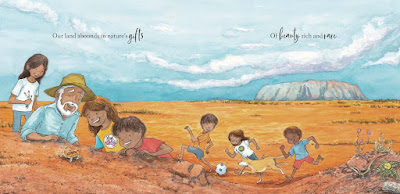
My approach was simple; the book would celebrate the diversity of the Australian landscape and the diversity of people and lifestyles that make up our country. I would also have to include locations from each state. I wanted the images to feel more like a scrapbook of memories rather than a collection of picture-perfect iconic scenes. As a result, the finished book includes:
Images of the red centre.
The frozen ice of Antarctica.
Urban cityscapes.
Rural landscapes
Boats on the high seas.
And much more.

As I set about drawing up the illustrations for the National Anthem, I found myself weaving in friends, family, my motorcycle and my dogs into quite a few pages. There are so many dogs in this book; I jokingly think of it as having the alternative title of 'Advance Australia dogs' as there is a dog (at least one) on every page.

Uluru-Kata Tjuta National Park Permit 554. Image © Tony Flowers

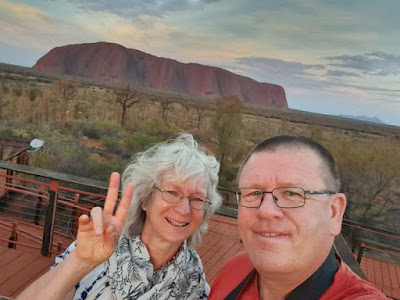
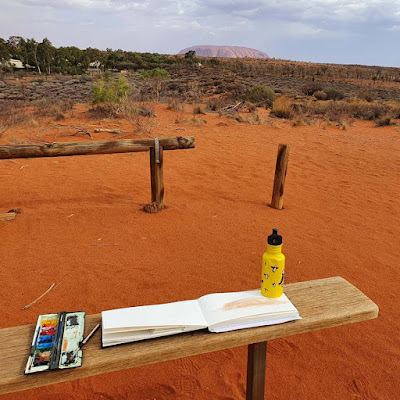
The one image that I desperately wanted to do a site visit on was for the Uluru page. I had never been there, and I knew if I didn't go, my illustration would have been based on a bunch of cliché giant red rock style images. A window of opportunity opened up between rolling Covid lockdowns, and my wife and I flew off to Uluru.

Uluru trip Ceri and Tony. Uluru-Kata Tjuta National Park Permit 554.
Image © Tony Flowers
Many of the wildflowers and reptiles that we encountered on this trip made their way into the illustrations, as did the purple colour tones of Uluru is itself. This was certainly a colour pallet that I wouldn't have used with having been there. On this trip, I also discovered that Uluru is the only place I have ever been so hot and dry that the flies drink the water from your drying watercolour painting!
Uluru trip drawing. Uluru-Kata Tjuta National Park Permit 554.
Image © Tony Flowers

My hope for my version of Advance Australia Fair is that people are surprised by the fantastic and diverse landscape. We are more than a country of harbour bridges and red sand. Hopefully, younger readers will gain a clearer understanding of what the words of the anthem are about. I also hope people feel inspired to get out and see more of our country and its people.

Tony Flowers – Illustrator
Instagram: tony_flowers99


Editor’s note: Read a summary of the book and some historical background on the choosing of Advance Australia Fair as our national anthem. The book will be released on the 1st of January.

Friday, 26 November 2021

Reflecting Reality

One in five Australians live with a disability. The United Nations International Day of People with Disability (IDPwD), held on 3 December each year, aims to promote an understanding of disability issues and mobilise support for the dignity, rights and well-being of persons with disabilities. 


Australian books published in 2021 that are helping to achieve that aim include:


Cuckoo’s Flight by Wendy Orr, Allen & Unwin  (9+) 

Clio, the crippled granddaughter of Leira, the community wise woman, is highly likely to be chosen by the Lady as a blood sacrifice to ward off raiders that are approaching their village.  Orr’s earlier novels, Dragonfly Song and Swallow's Dance, also feature girls living with disabilities.


The Curiosities by Zana Fraillon & Phil Lesnie,  Lothian Children’s Books (picture book 6+)

Miro wakes one morning to find the world isn't quite the way he thought it was. When the Curiosities choose Miro as the one they nest on, Miro is led to discover all the marvels waiting in the shadows where no-one else looks. An allegory representing a neurodiverse experience.


Growing Up Disabled in Australia edited by Carly Finlay,  Black Inc Books  (YA+)

Forty writers with disability or chronic illness share their stories to present first-person experiences of people from a range of marginalised groups.
ARTS Hub Podcast: Carly Findlay on centring disability


100 Remarkable Feats of Xander Maze by Clayton Zane Comber, HarperCollins (YA)

Xander’s beloved Nanna asks him to create a list of 100 Remarkable Feats, ‘simply...list any act, small or large, that was remarkable for me [Xander] and would change my life for the better’. Xander is anxious, probably autistic, bullied at school and has no friends. Achieving even a few of the feats seems unlikely.


Paws by Kate Foster, Walker (9+) 

Eleven year old Alex’s best friend is Kevin the cockapoo, although what Alex wants most of all is a friend at school. As Alex is autistic, that is harder than he ever expected.


Skin Deep by Hayley Lawrence,  Scholastic (YA)

Beautiful Scarlett, permanently disfigured after a car fire, escapes to a mountain where her view on perfection is challenged by  new friend and his non-verbal autistic sister. 


Weekend with Oscar by Robyn Bavati, Walker (YA)

Oscar, Jamie’s younger brother, who has Downs Syndrome, leads a full life mainly due to the efforts of Mum. When Mum is suddenly called away and then doesn’t return, Jamie rises to the challenge  getting Oscar to his activities and appointments. 


IBBY Australia submits books for inclusion in the IBBY Outstanding Books for Young People with Disabilities list


Discover further examples in the following video with Carly Findlay sharing a range of texts for different ages.

Moreland City Libraries. (2020, December 4).
Carly Findlay-Growing Up Disabled in Australia

Nella Pickup

Retired librarian, member of CBCA Tasmania & IBBY Australia 

Friday, 19 November 2021

“Nothing about us, without us” Decolonising Your Library

A snapshot of some important considerations in assessing the Aboriginal and Torres Strait Islander literature in the library collection.

I recently attended a webinar hosted by the Australian School Library Association and delivered by Sharon Davis and Bianca Brim from  Australian Institute of Aboriginal and Torres Strait Islander Studies (AIATSIS) on decolonising the library. This webinar covered many aspects of decolonising libraries, but my focus is on literature  that is respectful and authentic of indigenous culture.

The key factors of identifying appropriate literature are: 

By Us: A title that is developed by Aboriginal people.
Bruce Pascoe, Sally Morgan, Nakkiah Lui, Oodgeroo Noonuccal (Kath Walker) are creators whose works cover a diversity of genres: poetry, plays, history, non fiction and picture books. One particular favourite of mine is Going for Kalta by Yvonne Edwards, Brenda Day and Tjitji Tjuta (all the kids)

With Us: A title that is developed in respectful partnership with Aboriginal people.
Examples include The Story of Our Mob by Sally Dingo (spouse of actor Ernie Dingo) and the collaboration between Boori Monty Prior and Meme McDonald which produced my favourites: Maybe Tomorrow and My Girragundji.

For Us: A title that is developed on behalf of Aboriginal people(s).
I have been unable to locate titles that fit this category of appropriate literature…which I find to be positive. 

Books that are About Us and/or Against Us, where there has been no Aboriginal input and/or which present deficit views of Aboriginal peoples.

Indigenous publications should: be authentic; be a balanced perspective; have Aboriginal participation; be accurate and supportive of Aboriginal culture and exclude content of secret or sacred nature.

Some takeaway ideas: 

  • That any text that use inappropriate words such as ‘aborigines’, ‘those’, ‘their’, ‘them’ or describe the concept of ‘terra nullis’ are red flags to acceptability. 
  • That texts should not over-represent the role of the male in cultural practices.
  • AIATSIS are publishing a catalogue of appropriate indigenous resources. They are also happy to receive donations of inappropriate resources for their archive.
  • The NCACL (National Centre for Australian Children’s Literature) Aboriginal and or Torres Strait Islander Resource catalogue should be used with caution as it includes resources that don’t fit the above criteria for appropriate literature.

Sites to visit for further information and support:

Felicity Sly is a Teacher Librarian at Don College in Devonport, and Treasurer for CBCA Tasmania.

Editor's comment:  The NCACL have provided a statement in regard to the rigorous processes taken to evaluate and select resources for inclusion in the Aboriginal and or Torres Strait Islander Resource catalogue. 

-----------------------

The National Centre for Australian Children’s Literature Inc (the ‘Centre’) received a grant in 2020 from the Australian Government Department of Education, Skills and Employment to create a database of Australian children’s books by and about Aboriginal and or Torres Strait Islander Peoples. The Agreement signed with the Government required the Centre to incorporate the views of Aboriginal and or Torres Strait Islander Peoples. Their views were incorporated through their:

  • membership on the Reference Group leading the project
  • appointment as ‘Critical Friends’ who advised on books to include/exclude, Australian curriculum, cultural sensitivity, appropriate terminology and historical perspective
  • appointment as Contributors who selected, read, annotated, choose subjects and teaching resources for the books.


Dr Belle Alderman AM

Emeritus Professor of Children’s Literature

Director, National Centre for Australian Children’s Literature Inc

Friday, 5 November 2021

New release: Tiny Possum and the Migrating Moths


Tiny Possum and the Migrating Moths
Julie Murphy & Ben Clifford
CSIRO

Ben Clifford, Tasmanian illustrator, provides insights into his investigations of this tiny marsupial and the research undertaken to capture and enthral young readers through rich and detailed art work to illustrate Tiny Possum and the Migrating Moths.


Published by CSIRO Publishing, Julie Murphy's story of the life cycle of the Mountain Pygmy Possum depicts a non-fiction tale of the good and troubled life this tiny creature deals with.


Until 1966 The Mountain Pygmy Possum was thought to be extinct. This tiny survivor lives high up in the harsh cold Australian alps building its nest, raising its young, feeding on seeds, bugs and berries. But most importantly its diet requires the scrumptiously crunchy and fattening Bogong Moth.


© Ben Clifford & CSIRO. Internal pages from Tiny Possum and the Migrating Moth 

As well as hunted by foxes, feral cats and predators in the air, it also has another killer to contend with. Perhaps the most dangerous of all. Humans. For the Mountain Pygmy Possum to survive hibernation the Bogong moth is a major food source that humans are removing. However, probably like you, I do not delight in feeding on the moth at my local restaurant with chips and salad or sprinkling them on my oats. But I do like being able to see at night. Whether it's on the porch, working outside or leaving the light on for a visitor to arrive. Unfortunately these moths prefer those lights instead of their regular homes in the mountains where the Pygmy Possum is waiting to have a moth (or two) for dinner. But without this Bogong Moth, surviving the winter for the Pygmy is highly unlikely.


© Ben Clifford & CSIRO. Internal pages from Tiny Possum and the Migrating Moth

The plants, fauna, landscapes and rock texture were a great match for me to illustrate. Billy buttons, alpine mint bush, yellow anemones and the twisted snow gums all have their place among the boulder fields. As we follow the Pygmy's cycle, the flowers and fauna are on display for the relevant time of year. I've researched for other titles I've illustrated so this was another learning experience. It adds to the fun of putting a book together.


© Ben Clifford& CSIRO. Internal pages from Tiny Possum and the Migrating Moth


The 32 pages finish with an overview about the Pygmy Possum with diagrams and further information on how to contribute to keeping this little creature from extinction.


Many thanks to Julie Murphy and all those at the CSIRO.  


Ben Clifford

Illustrator

W: Ben Clifford Art http://www.benclifford.com.au/

FB: https://www.facebook.com/ben.clifford.art/ 

CSIRO: Teacher Notes available