Welcome to the blog of the Tasmanian branch of the Children's Book Council of Australia!

Saturday, 30 July 2016

Stop Press: CBCA Tasmanian Branch at crossroads

Attention all book lovers – CBCA Tasmanian Branch Inc. needs you!

The Children’s Book Council, Tasmanian branch, has been operating for many years. We have done great things as a branch – organizing author tours, highlighting the Book of the Year Award Shortlist and then the winners, advising on literature for families and the community and collaborating with like-minded organisations to run spectacular events such as Book an Adventure on Bruny Island and the wonderful Year of Celebrating Nan Chauncy in 2015.

Now, like many similar volunteer, not-for-profit organisations, we find ourselves facing the huge challenge of survival. The dedicated, hardworking and capable Executive of Richard Pickup as President, Nella Pickup as Secretary, Helen Rothwell as Vice-President and Patsy Jones as Treasurer need to bow out and get on with their lives. Other members of the Committee, who have given more than 30 years to CBCA Tas. feel the same way. Together, the current Executive members have given over 150 years of service to CBCA!

So, we need you as CBCA Tas. members and supporters to think hard about whether you, or your colleagues or friends, might step up and offer to form the new Executive at the AGM scheduled for 19 November, 2016.

If we are unable to form an incoming Executive in November, CBCA Tasmania will not be able to meet its obligations under the Incorporations Act and the branch will have to be disbanded. We certainly hope that does not come to pass, but branch dissolution is a very real possibility.

To facilitate a discussion about the survival of the Branch, we will hold a Special General Meeting on Saturday 22 October.

Both the AGM and Special General Meeting will be held in Hobart but committee members will look at alternative ways to gather members’ opinions if there is sufficient interest in the north of the state.

What will you lose if CBCA Tasmanian Branch ceases to exist?
  • CBCA is a volunteer-run organisation of teachers, teacher librarians, librarians, authors, illustrators and designers, booksellers, parents and community members advocating for and promoting quality children’s literature.  The organisation is responsible for the prestigious Children’s Book of the Year Awards (BOTYA) which honour the best Australian books for children aged 0-18. Without a state branch, you lose the option of being directly involved with BOTYA developments.
  • Current CBCA Tasmanian Branch members can apply to be a judge for the Children’s Book of the Year awards.
  • The Readers’ Cup which has operated in the north and south of the state, engaging young readers in enthusiastic engagement with quality literature, will no longer be organized by CBCA.
  • Our newsletter which provides regular information on the latest children’s literature, Australian as well as overseas, will cease.
  • Our literary blog focused on children’s literature, published on a weekly basis, will no longer exist.
  • The opportunity to network with authors, illustrators, teachers, librarians, parents and other people interested in children’s literature will be minimised.
  • The ability to purchase discounted merchandise to support the celebration of Book Week will disappear.
  • The opportunity through the CBCA Tas. Board representative to influence directions at the national level will no longer be available.

What do we have to do to remain legal?
  • Fill those four positions.
  • Hold quarterly meetings of the Executive; these can be by teleconference.
  • Manage the finances with due probity and send copies of the annual financial report to Consumer Affairs, Department of Justice.

What would you need to do in one of these positions?
A brief explanation of the roles is attached.  It needs to be downloaded to be viewed.

To decide how we can legally and constitutionally move forward, we need an expression of interest from members willing to take on the crucial Executive positions. Current executive members are prepared to Mentor incoming Executives into their new roles.
So, what can you do at this crisis point?
  • If you're a member, and interested in volunteering, please get in touch.
  • If you know someone who might be interested in volunteering, share this post with them.
  • If you’re not a member but interested? [see http://www.cbcatas.org/membership/ ]
  • PLEASE attend the Special General Meeting on Saturday 22 October (details to be announced) to be involved in discussions about the future of the CBCA Tasmanian Branch (or show your interest by contacting info@cbcatas.org if you cannot attend). 

Current CBCA Executive members continue to ‘toil in the vineyard’ of promoting quality literature for young people. On 7 & 11 September this year, in conjunction with the Tasmanian Writers Centre, and in collaboration with members of the Tasmanian Aboriginal community, we will present two forums titled The Hidden Stories. These will be significant cultural events that celebrate Aboriginal storytelling on this island state and acknowledge the importance of National Indigenous Literacy Day in Tasmania. We have an opportunity for the Hidden Stories events to move to the north of the state in 2017 and NW in 2018, with sponsorship – if CBCA exists, has an Executive and members willing to assist. It would be immensely sad if CBCA has to pull out of these exciting initiatives.
We are genuinely ‘at a crossroads’ – will CBCA Tas. revitalise, thrive and continue to make its mark? Or will it ‘fold its tent and silently steal away? It’s up to you!


If you cannot access the document identifying the role responsibilities and duties of the executive, or want to comment or ask questions, please contact us info@cbcatas.org  and one of the Executive will contact you.

Sunday, 24 July 2016

CBCA/TWC The Hidden Stories Forums

Jenni Connor reports on the forthcoming The Hidden Stories Forums - a significant cultural event that supports Indigenous Literacy Day in Tasmania.

We all have a responsibility to ensure that the ‘stories that are told’ are true and culturally respectful.

CBCA Tasmania has initiated two forums titled ‘The Hidden Stories’ to be held on September 7th and 11th at Moonah Arts Centre. The forums arose because of a concern that the long history of Tasmanian Aboriginal people’s occupation of this island and their continuing contribution to Tasmanian life and culture is not widely understood or appreciated.

For instance, a friend who grew up in Tasmania, commented recently that ‘there are no Tasmanian Aboriginal people’. This is the mythology that has become embedded in the consciousness of the broad Tasmanian community over the past 200 years.

Maggie Walter, a descendant of the Pairrebeenne people of North East Tasmania and Professor of Sociology at UTAS encountered this ‘public unconsciousness’ when she visited her people’s country and heard: ‘I don’t think there were any Aboriginal people here’ – this despite the ‘Bay of Fires’ being named because of the multitude of camp fires being observed by passing European explorers.

Maggie penned a powerful piece for Talking Point in the Mercury, 5 January, 2015, titled ‘Listen to the Stories in the Land’.

Dr Margaret Bromley, from ACT, who wrote a thesis titled Lost and Invisible: Australian Children’s Literature 1950-2001, offered to speak about the silences, confusions and mis-representations of Aboriginality in the field of literature for children and young people. Margaret’s research seemed to connect with Maggie’s personal experience.

Then, Greg Lehman, highly respected academic and Indigenous researcher wrote a Mercury article titled ‘Oath Signed in Oil on Canvas’ (2015, August 20) about the ‘historic deal underpinning a push for constitutional recognition of Tasmanian Aboriginal people’. Greg has a passion for ‘inducting young Tasmanians into the true story of our heritage’ – Indigenous and non-Indigenous – in this beautiful island state.

I began to think: ‘This is bigger than children’s literature; it’s about the public conversation in Tasmania that shapes who we are, and who we want to be as a civic community.
So, CBCA Tas. approached the Tasmanian Writers’ Centre (TWC) inviting them to collaborate on forums to inspire a public conversation about these matters of social significance for the state, potentially providing a platform for ongoing discussions that will lead to greater understanding and contribute to reconciliation.

Chris Gallagher, Director at TWC has enthusiastically supported this idea and the events.
The first forum, from 6-8.30 pm on 7 September, Indigenous Literacy Day will ‘open the conversation’ with Auntie Vicky Green sharing stories from Flinders Island, Greg Lehman giving an inspiring key note, Jim Everett showing his film with Troy Melville, Blood of Life and Maggie and Margaret in conversation about their perspectives. Madelena Andersen-Ward will sing us in and out of the event.

The second forum, from 1-5pm on Sunday 11 September will celebrate Aboriginal storytelling in film, poetry, song, dance and literature.

Details about the programs and how to book will be up on CBCA and TWC web sites soon so keep an eye on the events section of each organisation. We hope many, many people will join in this exciting cultural experience!

Jenni Connor
Writing & Education Consultant

Sunday, 17 July 2016

My Favourite Childhood Books

It is always a treat to read of the books that sparked a love of reading and stories in others as it brings personal favourites to mind. Johanna’s post this week is sure to ring a bell with some of our readers.

“Generally, by the time you are Real, most of your hair has been loved off, and your eyes drop out and you get loose in the joints and very shabby. But these things don't matter at all, because once you are Real you can't be ugly, except to people who don't understand.” 
~ Margery Williams, The Velveteen Rabbit

As I read these words again, after so many times, I still find that familiar lump in my throat forming; the tiny pricks of tears welling at the side of my eyes. Even as an adult I still find myself profoundly affected by the words contained within the magical pages of The Velveteen Rabbit by Margery Williams.

I can’t tell you how old I was when I first read this book, but I do remember it sat in my bookcase for many years before I reached up to the shelf where it sat and took it down. However, once I read The Velveteen Rabbit it was a book I returned to many times. These words comforted me when things in my world were not going to plan; I felt they spoke directly to me.

Like the boy in the book I too had toys that had been so loved they seemed real (to me). I often wondered if they waited until I was asleep and then jumped up and played together, freezing mid activity if I ever awoke. With a grandmother who was a librarian, it made sense that I loved books so much, and I’ve tried to pass this love on to my two sons.

I bought my youngest - who is seven - his own copy of The Velveteen Rabbit, telling him it has always been one of my favourite books. The first time he read it he found himself dealing with a mix of emotions spanning sad to happy, and he questioned why I would buy him a book that made him sad. I explained that I thought he would enjoy it - even though there was sadness in the story - and that life is both happy and sad. He has dipped into it again several times since, so I can see he has come to appreciate the feelings the book evokes.

The Velveteen Rabbit is one of many books that confirmed my love of the written word in childhood. This love affair began with The Very Hungry Caterpillar by Eric Carle when I was a baby; continued with Where the Wild Things Are by Maurice Sendak, Charlotte’s Web by E.B. White and the Narnia Chronicles by C. S. Lewis; and then expanded to Anne of Green Gables by L. M. Montgomery, Bridge to Terabithia by Katherine Paterson and Sadako and the Thousand Paper Cranes by Eleanor Coerr as I approached my teenage years; plus myriad fairytales, Roald Dahl stories and legends about Greek gods and goddesses.

Today reading is still a treasured escape, and I am ever grateful to my mother and grandmother for encouraging me to lose myself in books right from an early age.

Which books did you love as a child?


Johanna Baker-Dowdell

Freelance journalist and author of the book Business & Baby on Board.


Sunday, 10 July 2016

Real guys living real lives

Impossible to put down YA reads reveal themselves layer by layer.
Two recent reads explore male emotions and Australian culture in engaging realistic novels. Scot Gardner creates an awful situation and fills it with humour, raw male emotion, friendship and respect.  David Metzenthen describes the horrific aftermath of war in a compelling and heartbreaking story of a Vietnam Vet’s PTSD.
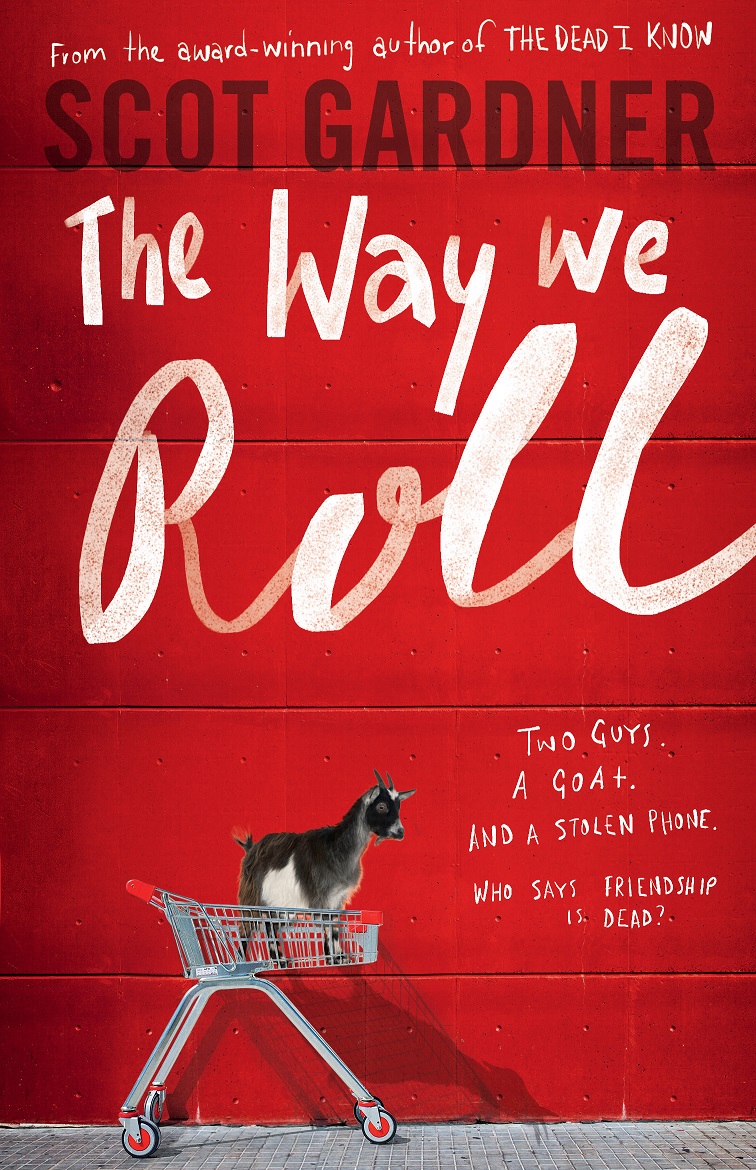
Scot Gardner Way We Roll Allen & Unwin
Will and Julian (Jules) meet at work – a suburban shopping centre carpark; they are employed on a trolley crew. Will, well-mannered and obviously from a wealthy background, is homeless and hiding, living under a bowling alley. Jules is a “Westie” and has spent time in juvie.  He comes from a loving yet unconventional home.  While the mystery of why Will is in hiding drives the novel’s pace, Will’s and Jules’ friendship and loyalty is the highlight of the book. The Way We Roll is filled with hope, brashness and packs an emotional punch.  (Goat lovers miss out – the goat on the cover appears for two pages only.)
David Metzenthen Dreaming the Enemy Allen & Unwin
Johnny Shoebridge’s (Shoey) number was drawn from a barrel by a Test cricketer on TV.  “It was unbelievable that he could be asked to join the army, no questions asked, or answered.” (I read this during Brexit – I wonder if the Australians who voted for conscription for the Vietnam War regretted their decision as much.)

Johnny may have left the actual battle field behind but his thoughts and dreams are populated by his friends Lex and Barry and the enemy – particularly one Johnny has named Khan. Johnny goes bush – to grieve for his mates and, also, to accept that the ‘enemies’ were people defending their country. Johnny imagines Khan’s life during and after the war. The relationship Johnny develops with Khan is poignant and insightful.  This is a tough, sometimes grim and often slow read but highly recommended.
August 18th will be the 50th anniversary of the Battle of Long Tan.
Nella Pickup reader
 

Sunday, 3 July 2016

All Creatures Great and Small

This week Karen looks at how animal stories can influence you in your adult life.

If I had to name my favourite book, Richard Adams’ Watership Down would have to be one of the top contenders for the title. Aside from the pure joy of reading Adams’ beautifully crafted words, a big part of the book’s appeal is the characters. From Hazel’s quietly confident leadership, Bigwig’s bravado, to Kehaar their raucous seagull friend and ally, these animals were relatable and memorable. More than once, when I’ve required courage in my life, an image of Bigwig springs unbidden to mind. Anthropomorphism is the assigning of human qualities and language to animals – and Watership Down is just one example among many of this occurring in children’s literature.

If you think of your own experience of enjoying books in childhood, it’s a pretty safe bet there was an animal story that has stuck with you and influenced who you are as an adult. Maybe your industriousness sprang from an appreciation of The Little Red Hen. Maybe The Three Little Pigs influenced the way you look for quality and durability in your shopping habits. Maybe the characters of George Orwell’s Animal Farm, or Kathryn Lasky’s Guardians of Gahoole, have impacted your political beliefs. Or perhaps Mem Fox’s Koala Lou taught you that being successful doesn’t mean you always have to win.

The use of animals in stories for both adults and children goes back as far as the earliest stories on record. They helped us make sense of the world around us in ancient times and they help children make sense of their world still. Books that use animals as people can help children come to terms with difficult or painful concepts. Through these stories we learn how to deal with difficult people and situations.  Black Beauty was the first book that was written entirely from the animal’s point of view and taught us valuable lessons about empathy, loyalty and loss.

Which all serves to highlight the tremendous power of books in childhood, and the imperative that all children get to experience quality literature. Imagine a childhood without Aesop’s fables, Charlotte’s Web, Wind in the Willows or Winnie the Pooh. Not only would we have missed the valuable life lessons depicted, but also the fabulous introduction to humour, wonder and fantasy that is such a key part of becoming a Booklover.


Karen MacPherson

CBCA Picture Book of the Year Judge 2017


Monday, 27 June 2016

Taking the Creative Route

Johanna Baker-Dowdell shares a wonderful creative writing program currently running across four schools in the Launceston area. Creativity is abundant in not only the student's writing but also the program design and online delivery.

Albert Einstein says, “Creativity is contagious, pass it on!” and that is exactly what is currently happening at four West Tamar schools.

Almost 50 young writers from West Launceston, Trevallyn and Riverside primary schools and Riverside High School have embarked on The Write Road, a 10-week creative writing program. The program is run under the guidance of a teacher from each school and overseen by author, poet and Riverside High School teacher Cameron Hindrum.

The students are given a writing prompt at the beginning of each week and asked to respond in whichever way there are inspired: poem, short story, memory or something else. They then upload their piece to The Write Road blog for feedback, offering the same in return to their fellow writers.

 Kicking off the program, the first prompt was very open: entitled Daybreak, the writers were asked to write a piece based on the photo. To get their minds ticking, the students were prompted to think about the time of day the photo was taken, and who might have taken it. Where was the photographer going? Where had they been? Why?

The second week’s prompt centred around characters, with the writers asked to choose from one of five words and express who they are, considering what makes them interesting, engaging and unique. The words were:
  • Tree
  • Shark
  • The colour red
  • Basketball
  • A wild horse.

For this week - the third - another image prompts the writers. They have been asked what is this, and how did it get here?

My involvement in this program is as a writing mentor for the Trevallyn students, a role I am most excited to have. Even after only a few weeks already I can see the budding writers stretching their wordy muscles. Their questions about word length and writing guidelines shows they are not used to being given such freedom, however I am confident that soon their creativity will overtake doubts.

Some have chosen to hand write their pieces in a journal, others are typing into Word. I’ve encouraged these writers to find the best way to write for them, hoping the program will foster a writing habit that continues for their lifetime.

Anything that inspires children to explore their creativity, especially in a respectful space with their peers, is something I am thrilled to be part of. I can’t wait to see how these young writers develop their pieces over the next two months, and read what they choose to develop further.

Johanna Baker-Dowdell is a freelance journalist and author of the book Business & Baby on Board. 

Saturday, 18 June 2016

Ranging Far and Wide

Inspired by her current geographic location, Maureen Mann connects with the Queen’s birthday celebrations and what's on the English bookshop shelf.

I have been mulling over what to write about for this blog and have wandered from idea to idea. The world seems to have lost many wonderful children’s authors and illustrators recently, including, in March, Peggy Fortnum, who illustrated Michael Bond’s Paddington series and in February Kim Gamble who brought the Tashi series so perfectly alive. But I discarded this idea as, sadly, there were too many to focus on. Or mention Roald Dahl’s centenary in 2016? Not enough time to do him justice.

Queen Elizabeth celebrated her 90th birthday in April, with official celebrations in England last weekend.  Disney has combined the 90th anniversary of Winnie the Pooh with that of the Queen to produce a story combining both characters, only available online. It’s called Winnie the Pooh and the Royal Birthday.

I love The Queen’s Knickers by Nicholas Allan. It was first published in 1995 but has not dated: the child narrator imagines all the kinds of knickers which the Queen might wear for different functions. It’s full of humour suited to both the child and adult reader. In The Queen’s Handbag (2015) by Steve Antony, a swan, dressed in a mask and stripy top, steals her handbag and the Queen pursues the swan across England to try to retrieve her bag. It’s fun, a good introduction to famous places in the UK and encourages the reader to search the page as well. Antony’s previous book was equally humorous: The Queen’s Hat which takes the reader on a chase across London after a strong gust of wind grabs the hat and she and her guards – soldiers, Beefeaters, etc – chase it till it falls on the head of the baby prince. 

And then I ventured into a local bookshop to see what was new in England in the world of children’s books. Lots of titles of course. Here are some which caught my eye.

Archie Snufflekins Oliver Valentine Cupcake Tiberius Cat by Katie Hartnett is the story of a cat, rather like Six Dinner Sid. He has differing names at all the houses on Blossom St but suddenly goes missing and as the reader learns, he befriends lonely Mrs Murray and in doing so, brings the community together.

Tidy by Emily Gravett. 
I have always enjoyed Gravett’s quirky view of life and in this book she maintains her skills, as one would expect from a double winner of the Kate Greenaway award. Tidy is about Pete, an OCD badger who wants to keep the woods tidy, to such an extent that he removes even the trees till he realises that by doing so, he has taken away all that is important. He and his friends combine to return it all to normal. It’s a wonderful story in itself, with a strong environmental message.

Nibbles: The Book Monster by Emma Yarlett. Nibbles loves eating books, entering the stories he finds inside them and causing mayhem. There are many, many flaps to explore as well as holes in the pages as though Nibbles had started work on this book. The reader (child and adult) will enjoy recognising the fractured stories and will have fun with the layout. The cover is really tactile with a lovely feel.

The world’s current refugee crisis is echoed in The Journey by Francesca Sanna. The reader follows a mother and her children as they are forced to flee conflict in their homeland. The reasons are clearly explained for and by the young narrator without losing the power of the story for any adult. The illustrations are a really important addition to the verbal text.

Lane Smith is another of my favourite authors and There is a Tribe of Kids doesn’t disappoint. A boy sets off and comes across a range of animals, including young goats. The language is rich and rhythmical: undulates in a smack of jellyfish, a constellation of stars and other unusual collective nouns. Along the way, the child realises that we all need to spend time and fit in with our own ‘tribe’. The illustrations have been created with a sponge-paint technique.

What’s your favourite book so far in 2016?

Maureen Mann
Retired teacher librarian and avid reader

Sunday, 12 June 2016

Laura Ingalls Wilder and her Tales of Childhood

This week Patsy revisits an old and revitalised favourite - join her as she dips her toes in the prairie wilds of Dakota to explore Wilder's tales.

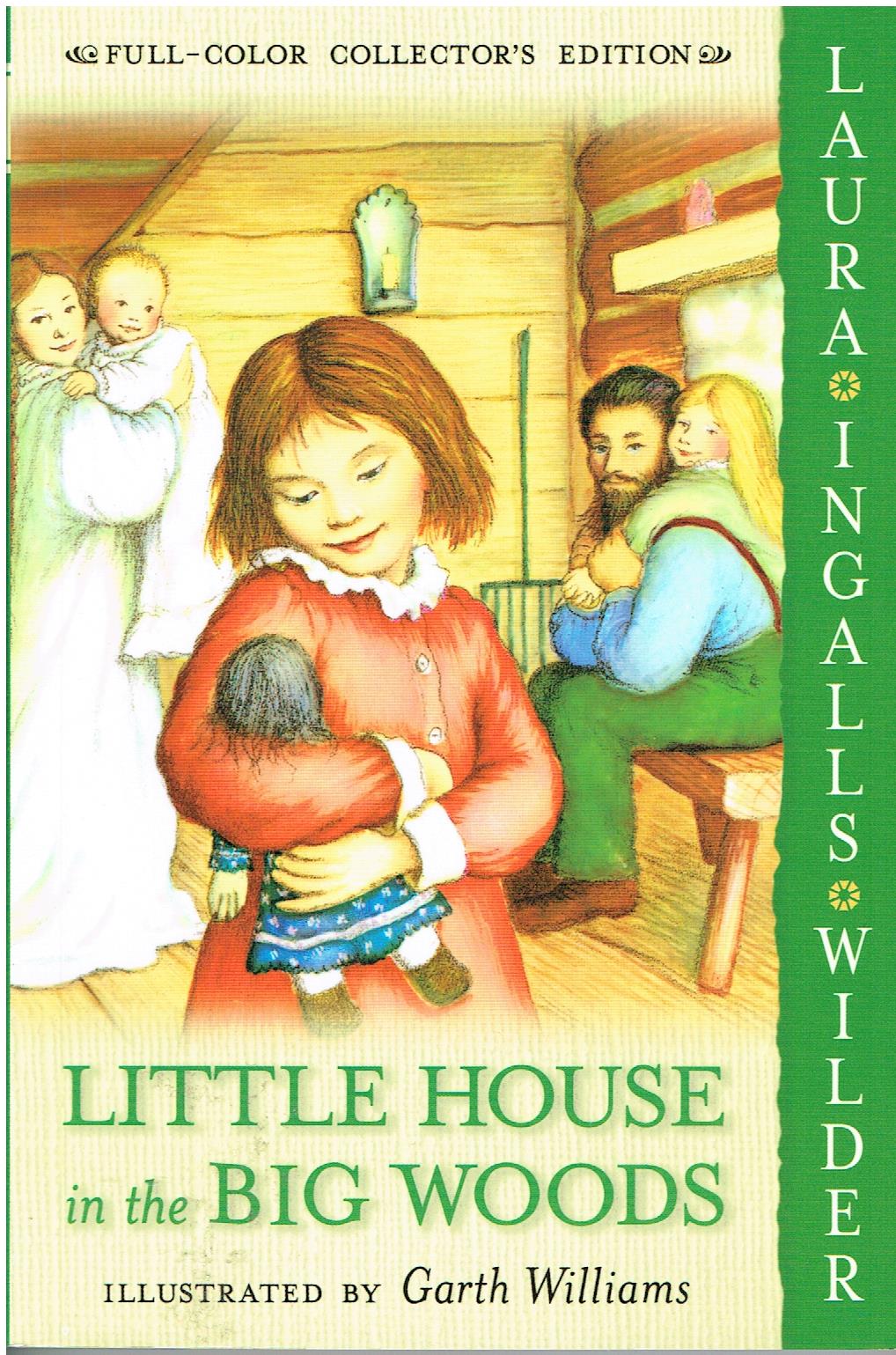
Some months ago I was poking about the young people’s section in our local bookshop, checking, as usual, to see if there was anything wonderful I’d missed, when my eye was drawn to an inviting set of books on a shelf. I recognised the Little house series by Laura Ingalls Wilder, which I had read years ago while my children were the age to read them with me. All paperbacks, same illustrations by Garth Williams, but in cheerful colour this time….

As the grandmother of a fast-aging group of young people, I am pleased to still have a nine-year-old who loves to dip into the suggestions I make for him, so I bought what I remembered as the first two of the series, Little House in the Big Woods and Little House on the Prairie. The publisher had labelled these as 1 and 3 in the set, which surprised me a bit – Farmer boy was now number 2. Still, I thought my selections would provide enough material to assess whether I still enjoyed these books, and whether Tom would or might.

No doubt about that – after I had read these two and thoroughly enjoyed them, I passed them on to him…. Five minutes later – a grunt of surprise, interest, and ‘Nanna, do people eat bears?’  He was hooked!  Not all the titles were available at the shop so we borrowed some from the LINC, which fortunately still has at least one copy of each of the 1930-40 publications (mostly housed in the Fiction Stack, so they have to be requested…)  But I now have the complete set in this new full colour edition, published in 2004.

Tom’s favourite titles, he told me, were Farmer Boy and The Long Winter. It’s not surprising he loved the story of Almanzo as a nine-year-old child on a farm in New York State in the 1860s. Almanzo was the youngest of a family of four children, and life on the farm was not easy. Every child had to be completely immersed in the seasonal demands of producing and preserving the food needed to see the family through a full year, with perhaps a little left over to convert to cash to buy the things the family could not produce. But there were compensations – if Almanzo was needed on the farm, that took precedence over going to school, of course. And he had the task of training a pair of calves to their future function as draught oxen working on the farm. Tom found the description of this process very interesting as he did the collection of great blocks of ice from the frozen pond and its careful storage in the ice-house for the summer.

The Long Winter was of great interest to me as well – for seven months the family was snowed in to their house in the little town! To Tom, the really memorable part of this book was the long and dangerous, but eventually successful, journey made by the teenagers Almanzo and Cap (at least forty miles there and back) across a roadless, snow-covered prairie in search of a store of wheat they had heard about – families were starving in the little town of De Smet, in Dakota Territory.

The series portrays life on the frontier in the Mid-West of what is now the USA and embodies many issues which I found worthy of consideration and which may be of interest in the classroom in twentieth-century Tasmania, with possible parallels between the Australian and American history of settlement.

During the long winter, even the careful settlers with their ethic of self-reliance were in danger of starving during an amazingly harsh and long blizzard period. All the families and communities were independent and had no-one to rely on but themselves. You want to move further west and need a wagon to undertake the journey with your family?  Build it yourself – and the child Laura was able as an adult to describe how her father did this.

Interactions between the natives and the encroaching settlers are described as Laura saw them; and the impact on local wildlife, even through a child’s eyes, might also be a discussion point in the classroom.

 You will understand from the above that I found the series very interesting and thought-provoking on this re-read, and it appears that the material has not become ‘old hat’ in the USA either. In 2014 Laura’s actual autobiography, not previously published, was made available, with annotations, by the South Dakota State Historical Society and editor Pamela Smith Hill, under the title Pioneer Girl: The Annotated Autobiography.

So dig out your old copies, at home or at school – or at the LINC! – and see how you feel about them. And try them in the classroom as well….

Patsy Jones
CBCA(Tas) Treasurer, retired librarian, retired teacher

Editor's note: If you ever happen to be travelling through Dakota you might like to visit the Laura Ingalls Wilder Historic Home & Museum or her birthplace in Wisconsin at the Laura Ingalls Wilder Museum. If not, then at least make a virtual stop. :-)