Welcome to the blog of the Tasmanian branch of the Children's Book Council of Australia!
Showing posts with label creative writing. Show all posts

Friday, 28 November 2025

The Spark of a Story – A Year of Creative Writing with Students

As we move towards the end of the school year, Lyndon Riggall shares the wonderful writing talents of students at Cressy District High School who have engaged throughout the year with a literary program that has seen story writing skills and enthusiasm flourish. There are so many exciting ideas on show!


How do you make a story? That’s the first question that I have asked half a dozen rooms full of students this year. Typically, their answers have included everything from a title and an illustrator to paper, pens, and a really expensive laptop. Those things are helpful, of course, but luckily, they aren’t the most important. People have been telling stories for a very long time, and they haven’t always even had a title, let alone a MacBook Pro.


For me, there are three ingredients that form the basis of our recipe for story: a character, a setting, and a problem. I explain to the students that it doesn’t matter if your character is a person, a frog, or a piece of toast, as long as they have feelings, dreams, and a personality. Our setting can be anything: the house three doors down from yours, the bottom of the ocean, or even an imagined land where everything tastes like cake. Then, the problem of the story gives your character something to do: finding their missing shoe or building a tree house that reaches the moon. Whether the characters solve that problem or the problem solves them is the reason we keep reading.


At Cressy District High School, with the support of our principal Mark, our quality teaching coach Liz, and the team of wonderful teachers I have been working with this year, I have been fortunate enough to have the opportunity to implement a number of new programs with our students around the act of writing. The two that I have most enjoyed have been The Forge and Story Sparks. 


The Forge is a program for our senior cohort, with a number of students committing to spending a couple of lunchtimes each week taking on a creative writing challenge in their own time, such as describing a narrative backwards or writing about the world from the perspective of an object in their house. 

In Story Sparks, our primary school students work with me as a whole class to create a picture book from start to finish, developing and shaping shared ideas and then illustrating them to produce a complete book. Each story starts with those same three parts: a character, a setting, and a problem.

I adore the products of these collaborations with these students and their teachers, racing alongside them as each class pulls its own creation in an entirely different direction. Grade 1’s Simone Slipped! is about a girl who gets lost from her book and tries to find her way back again, while Wayward Sherrin, by one of our Grade 5/6 classes tells the story of a football that is sick of being kicked around and runs away to seek a new life. 

For a taste of exactly how these ideas come together, you can watch a video of Baarbara’s Bad Hair Day by Grade 3/4, which features them reading the story that they created alongside the amazing plasticine models that they made to help represent the different characters in our illustrations with the phenomenal support of their teacher Mrs Greig. 

I am so grateful that I have had the opportunity to embed these programs as part of the work that I have been doing this year. I have often described my own personal philosophy around literacy as the lighting of a fire: if you create the conditions by which students can learn to love stories and storytelling in their own right, I wager, the rest simply follows, and this idea is reflected in the names of each program: The Forge is a place where students use that fire to build and shape something new, while Story Sparks are the first glowing beginnings of realising that anyone can make a story for themselves.

And so we create, following each time those same beginnings to new horizons. A character, a setting, and a problem: it’s true of everything from Where is the Green Sheep? to Hamlet. I try to encourage our young people to see, through these exercises, how simple the act of creating a story is, and how joyful it can be. I am so excited by what they have made. 

Now, here’s hoping that we can keep the fires burning.


Lyndon Riggall is a writer, teacher and co-president of the Tamar Valley Writers Festival. You can find him at http://www.lyndonriggall.com or on social media @lyndonriggall.

Friday, 10 December 2021

Thoughts on a Year of Creative Writing

Lyndon Riggall, fresh from assessing Creative Writing papers, celebrates the up and coming young writers who are inspired and able to contribute to the wealth of Tasmanian storytelling that we all celebrate and continues to make a mark on the Australian publishing scene. 


In 2019, a review of VCE English recommended a significant overhaul of its program when it was discovered that the essential skill of creative writing was not being taught with enough depth. In Tasmania, we are lucky that we have the dedicated TASC course of English Writing to fill this need, which is double-blind marked at the end of the year through an external folio of work. Students who choose the subject are typically passionate storytellers who wish to develop how they express their ideas—an ambition evidently fulfilled by data that indicates a high level of university success for those who have graduated from the subject, and arguably a demonstration of the power of developing the specific skills of editing and expression that the course provides.


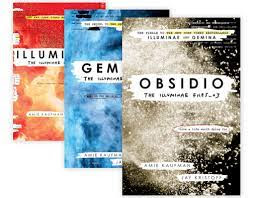
Having taught the subject again this year and marked folios over the last few weeks, I thought it might be valuable to offer some general reflections on the progress of our up-and-coming writers. Certainly—as in years past—our top wordsmiths continue to demand to be noticed, and marking for the subject often leads to an assessor wishing that they knew the identity of the student simply so that they could track their ongoing success and career. It will come as no surprise to readers of this blog that Tasmanian Year 11 and 12 students push their writing into areas that offer depth, relevance and originality, with many pieces featuring diverse protagonists, updating traditional narratives so that their meanings are more relevant in a modern sense, or crafting visions of dystopian futures that highlight the challenges of the way that we live now. Another particularly exciting development is that young writers appear to be increasingly experimental in their use of form. Several stories that I read this year featured a kind of multi-modal design, using text messages presented throughout as characters conversed, or including in their pieces found documents to build a world in a similar manner to writers like Amie Kaufman and Jay Kristoff in The Illuminae Files.


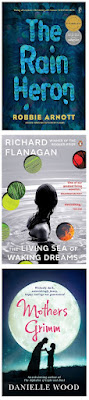
When students were asked at the beginning of their folio to nominate works that had inspired them, there were some excellent examples, including iconic Tasmanian writers such as Robbie Arnott, Richard Flanagan and Danielle Wood, all of whom capture a sense of voice from this island in a way that students clearly strive to emulate. That said, many of the cohort found that they struggled to name any literary influences at all, or offer anything deeper in terms of inspiration than a list of what they had recently watched on Netflix. I have always maintained that a writer who does not read is like a chef who refuses to eat: they will succeed, occasionally, but it will be more as a result of good luck than good management. The struggle of encouraging our young people to engage with the written word recreationally continues to be an English teacher’s toughest challenge, but the best student work this year clearly demonstrated that amongst all of the competing demands for our time (and theirs) there is still, always, a place for literature. 


Over the next couple of years, English Writing is being reinvented. This is an exciting opportunity, but it also comes with a level of danger. I have listened to the young writers of this island and heard their stories, and many of them express that it was in this subject that they found the self-assurance to tell the tales that have been bubbling away inside them. Perhaps a teacher shouldn’t admit to having a favourite class to teach, but the truth is that mine is this one: for the diversity and originality of the work produced by its students, for the confidence they build in their ideas and their own sense of self, and for its simple shared love of story. Having reflected on the power of the pieces that I have had the fortune to read this year, I sincerely hope that fundamental to any new course is one simple philosophical underpinning: that this classroom is a place where students feel safe to find their own authentic voice.


Lyndon Riggall is a writer and teacher from Launceston. He can be found on his personal blog at http://www.lyndonriggall.com and on Twitter @lyndonriggall.


Editor's note: I have just finished listening to an interview with Robbie Arnott, winner of the Sydney Morning Herald Book of the Year Award, where the quality of Tasmanian writing is acknowledged. From Lyndon's observations, this looks set to continue.

Friday, 10 July 2020

How Absolutely Everything Else Can Feed your Writing

Rebel by Dawn Meredith
Tasmanian children's and young adult author, Dawn Meredith, provides a suite of suggestions and diverse ideas to stir creative juices to help the writing flow.

Ever been stuck with writer’s block? Ever felt the terror of the tyrannical empty page? Ever had a deadline that seemed to gallop towards you, while you fumble about trying to put together something decent, with that despairing thought that you won’t make it?

These are some of the challenges we face as writers. Because we’re human and not perfect. Neither are we machines that can churn out top notch writing with little effort.

Writing is a creative process. It’s the process that’s important. We live and breathe and dream through our story development as it evolves. It is a part of us.

But occasionally, something goes wrong.

Of course, there have been gazillions of articles, books, even songs written during, and about, Covid 19. And there are creatives who struggled to produce a single thing during lockdown. I know people in both camps. But it’s not just about achievement – it’s about fulfillment. Satisfaction. Expression. Creation. Why else would we put ourselves through this, at times, nightmarish thing we do called writing?

Over the twenty years I have been writing professionally, I have developed some strategies for dealing with those dark times when nothing seems to happen, or I just seem to produce rubbish. Intrigued? Here goes:

  1. Don’t beat yourself up about it. Guilt is a marvellous passion killer. Self-doubt does not improve your confidence. Accept this is happening but try not to fear it. Everyone goes through this at some point in their career. Even the world’s highest selling author of all time, James Patterson, had to develop some very randomly creative ways of getting through the blocks.

  2. Ask yourself – besides writing, what do you love to do? From surfing to sewing, gardening to garage sales, there is something you love to do that relaxes you. Write a list! Here’s some of mine – Gardening, drawing, knitting, quilt making, pottery, playing the piano, singing along with my favourite bands, walking on the beach collecting bits and bobs, tip shops and op shops, going for a walk on our farm to a favourite spot, playing with my handsome cat Harry, going for a family drive to somewhere I haven’t been before etc. Note, some of these things aren’t strictly ‘creative.’ Who cares? They relax you, free up your brain space, release feel-good hormones into your bloodstream, take you out of your stress for a while.

  3. Watch a TV show or film and analyse what makes it well written or poorly written. Is it predictable? Is that a good thing? What don’t you like? How would you write the characters/scenes/plot your way? Watch your favourite TV show or film and jot down why you love it so much. What’s the best scene? How do you feel when you watch it?

  4. Get your hands in the dirt. Even if you aren’t a gardener! Did you know we humans have the capacity to smell a certain bacteria in soil five parts per trillion? It’s the smell you detect after rain. We are connected to this Earth. We are meant to touch it, grow things in it, appreciate it. Even if you just buy a nice-looking plant, some potting mix and a pot, or a small citrus tree. Whatever. Connect with the Earth! Connect with your natural surroundings, physically, not just visually. Be a part of your planet. Breathe deep. Imagine it replenishing something inside you.

  5. Cut some flowers from your garden and bring them inside where you can admire their beauty and smell their fragrance. What smells do you enjoy? What smells would your characters enjoy/repel them?

  6. Search the internet for images of your characters or setting. Print them out and blu-tack them to the wall. Think about their features - what is unusual or special about them? How cool would it be if they were real? What do you think is their biggest personal flaw? Best asset? Worst nightmare? Dream come true?

  7. Research deeper. Get lost in another world for a while. Go off at a tangent, down an internet rabbit hole. Even if you write non-fiction, this can be loads of fun! I spent a whole day researching weird cultural practices from around the world. It helped me figure out a new race I am writing about, get to know them better.

  8. Talk to your target audience kids, about what they love to read and why. What don’t they like? What’s the best book they’ve ever read?

  9. Go through your old photo albums.

  10. Revisit the music you loved as a teen.

  11. Bake something delicious.

  12. Go for a swim/run/skateboard/walk/kayak.

  13. Think about what your characters like to do as hobbies. How does it make them feel? Or is it unpleasant and a duty?

  14. Re-read your favourite books from childhood. What did you love? Why did you keep reading them?

  15. Write down 10 ridiculous, completely mad situations that fall into your brain, i.e.: your character falls down a rabbit hole, gets abducted by a giant squid, suddenly starts growing and doesn’t stop, grows facial hair in 30 seconds, falls off the edge of the planet, finds out they are part mammoth/ancestor was a turkey etc. Complete and utter nonsense, BUT something in there will spark off an idea you can use. Make it fit your story, force your characters to deal with this random element. Try it! It works for James Patterson!

These are just a few ideas. Maybe one of them will appeal to you. The main thing is to enjoy the process. We put so much of our personal selves into the creative process; our thoughts and feelings, our past, our hopes, our surroundings, our observations. It’s not just about producing something at the end, it’s the rich journey.

However wiggly and unexpected the road.

Dawn Meredith

W: http://dawnmeredithauthor.blogspot.com/

Editor’s note: Discover the wealth of stories Dawn has written and published on her website.

Friday, 12 June 2020

2020 SCBWI Winter Conference in New York City


This week guest author Verity Croker shares a prestigious writers’ event that fell before the pandemic closed international borders and cancelled conferences and events. Find out what happens when the Society of Children’s Book Writers and Illustrators gather together.

The SCBWI winter conference at the Grand Hyatt in New York City, 7-9 February 2020, was a truly inspirational professional development opportunity. 

Verity & Remy Lai

The first official event was the Golden Kite Awards Presentation Gala evening, where we were all encouraged to wear gold. The winners of the awards delivered very thoughtful and emotional speeches. The highlight was watching Remy Lai from Queensland win the Sid Fleischman Humour Award for Pie in the Sky, presented by Chris Grabenstein. It was a privilege to witness the atmosphere in the room when she was presented with this, and I felt very proud to be a fellow Australian. Congratulations Remy! After the Awards presentations, the attendees sipped bubbles and nibbled on chocolate-dipped strawberries, as we networked and perused the talented work in the Illustrators’ Portfolio Showcase.

On the Saturday, we had a full day, starting with the Welcome and Introduction by Lin Oliver, Executive Director of SCBWI, who told us there were 840 attendees from 17 different countries. Next was the opening keynote by author Kate Messner who describes herself as ‘passionately curious’. My main takeaway was to consider: What do you wonder about? Does any of that scare you? Get close to the thing that frightens you, and write about it.

Intensive breakout sessions were next. I attended ‘Marketing your book: What to do, what’s effective, and what’s not’ led by Chrissy Noh, senior marketing director at Simon & Schuster. She suggests asking your publishers to share their marketing plan with you, and discuss with them how you can best supplement what they are doing to promote your book. She also stressed that with school visits, always indicate how your book fits in with their curriculum.

'Adapting your work for film, television, and media’ led by Lin Oliver and Ellen Goldsmith-Vein (founder and CEO of The Gotham Group), was my chosen afternoon session. Ellen explained that you have to realise you are selling your work, and therefore in most cases you will not have meaningful creative input into the project, as distributors and producers want to make it their own. During this session we had the fabulous opportunity to present a one-minute elevator pitch with feedback from Ellen. Listening to her responses to everyone’s pitch proved a valuable insight into her world.

After the formal part of the day ended with a keynote from multi-award winning illustrator Jerry Pickney, we readied ourselves for the Networking Buffet Dinner, in which we were divided into regions so we could mingle with colleagues. Ours was an eclectic bunch with attendees from Australia, New Zealand, and Canada amongst others. Some connections made there continue.

The following day, the first event was an awards presentation for the Portfolio Showcase Awards, Narrative Art Award, Jane Yolen Midlist Author Award, Student Illustrator & Writer Scholarships, and the IPOC Women’s Scholarship. The first keynote was an agent and editor panel with Patrice Caldwell, Susan Dobinick, Connie Hsu, Kirby Kim, Alvina Ling, and Marietta Zacker, moderated by Lin Oliver. There was some agreement that graphic novels are wanted, as is non-fiction. It was recommended to read the last five years of published work, to follow your own compass, know your own ‘wheelhouse’, and don’t compare your journey with those of others.

My final intensive breakout session was ‘Voice, what is it?’ led by Nick Thomas, senior editor at Levine Querido, an independent children’s book publisher. Nick very generously offered us the opportunity to send him five pages of our works-in-progress before the conference, and provided us with very useful feedback. He also encouraged us to edit our work, keeping in mind his suggestions, and to submit to him over the next twelve months. What a fabulous opportunity! He said voice is what it’s like to be with you on the page, including the way you write, the way your character thinks and talks, how you show action, and how you describe setting and atmosphere. He said you must read widely, be authentic, and put in the work, always asking yourself ‘Why do I want to write this story?’.

The closing keynote was delivered by Derrick Barnes, whose book Crown is my favourite new discovery from the conference. This book and his other titles demonstrate the importance of authentic diverse books. His journey was encouraging, as at one point, even though he already had several books published, he entered a period of several years when he wrote twenty to thirty books that nobody wanted. Now, he is very successful. He asks himself, ‘What legacy do I want to leave?’, a key question for us all.


Verity Croker is the author of two young adult novels, Jilda’s Ark and May Day Mine, published by Harmony Ink Press, US, plus two middle grade chapter books, Cyclone Christmas and Block City published by Sunshine Books, NZ. Grammar Worksheet Workout, published by Knowledge Books and Software, is for school students, and Hot Pot is her debut novel for adults.


Verity Croker

Facebook: veritycrokerwriter
Twitter: @veritycrokerwriter
Instagram: veritycrokerwriter
Website: www.veritycroker.wordpress.com

Saturday, 14 September 2019

This is not a fairy tale - Jodi McAlister on Fantasy


Jodi McAlister, using her Valentine series as a springboard, poses an essential question about fantasy writing: ‘What’s it about?” Read on and discover the importance of a central theme and purpose and how these are pivotal to each title in the series.

At the beginning of every semester, I go around my uni classroom and ask my students what they like to write, and what they like to read. Almost every time, more than half the class will reply “fantasy”.

This has been both wonderful and challenging for me. It’s wonderful, because I’m an author of a young adult fantasy series (the Valentine series, published by Penguin Teen Australia), and so this makes me well positioned to teach them what they want to learn. But it’s also challenging, because it makes me interrogate my own love of fantasy: what is it about fantasy that’s so appealing?

The answer, on the surface, is obvious: it’s magic. The generally accepted definition of fantasy is that it includes an element of the impossible, something that could not exist in our world (as opposed to science fiction, which is a vision of a future which is possible but has not yet come about). That impossibility at the heart of fantasy is one of the things that draws us in, and thinking about how the impossible elements of the story operate is key to worldbuilding. If you could take the impossible parts of your story out and it wouldn’t have much effect, I frequently tell my students, then it’s probably not fantasy.

That said, if we focus on the impossible – on the magic – of fantasy too hard, we miss one of the most important things about it. Indeed, this is true of any kind of story: if we focus too hard on the mechanics, then we can lose sight of something truly central. All stories – fantasy or otherwise – have to be about something.

I thought about this a lot when I was writing my Valentine series. Beneath the trappings of fantasy (which in this case, are tied to some very scary, very powerful, and very murdery fairies), I wanted to be sure that there was a central thematic concern running through all three of the books. What I ultimately decided to focus on were emotions and attitudes that teenage girls are generally societally discouraged from feeling and/or expressing, but which I think are hugely powerful and important and which I wanted to embody not just in my teen girl heroine Pearl but in the people around her.

Valentine, the first book, is about desire: not just sexual and romantic desire, but that specific adolescent frustrated yearning for things you can’t quite name.

Ironheart is about rage. Girls are generally socialised to be nice and smooth things over, to not make a scene, but under that is an incredible wellspring of anger I wanted to express.

And Misrule is about ambition. If the recent heroism of teen girls like Emma Gonzalez and Greta Thunberg has shown us anything, it’s that teen girls have great capacity for leadership, even when people are trying to shut them up, and that’s something I think is incredibly potent.

This is a provocation I’d throw out to all aspiring fantasy authors – and, indeed, all aspiring authors in general. Setting aside the mechanics of how your story works: what is it about?

Jodi McAlister is the author of Valentine (2017), Ironheart (2018), and Misrule (2019). She is also an academic, and works as a Lecturer in Writing and Literature at Deakin University in Melbourne.
Twitter: @JodiMcA
Instagram: @jodimcalister

Editor’s note: Get the inside story from one of our bloggers who reviews Valentine and takes a look at the series: If this post has piqued your interest, discover more about Jodie and her writing in this interview.


Friday, 16 November 2018

Giving voice to young writers

This week Kate Gross and Emily Bullock share an inspiring project that nurtures young Tasmanians in the creative process around creating stories - whether writing, illustrating, designing or publishing. You may also have something to offer to the group - worth thinking about!

For more than three years, the Story Island Project, a not-for-profit organisation based in Moonah, has run free creative storytelling projects with disadvantaged young people in the broader Hobart area. Through these projects, in which young people’s written and illustrated stories are widely celebrated through publication or public display, we have witnessed the power of story to open up opportunities for young people to enhance their creativity and writing skills and, so, imagine their worlds differently.

The focus of our work is on communities that are often overlooked, where people may experience poverty and disadvantage or are marginalised in other ways. We have taken inspiration from a successful model from the US, 826 Valencia, that aims to develop the confidence and writing skills of young people. This model has inspired other organisations around the world. Close to home, we have 100 Story Building in Melbourne and Story Factory in Sydney. Like these organisations, we also see a need to transform young people’s relationship to writing and creativity.
We established The Story Island Project in 2016 with the aim of confronting some of the underlying factors of Tasmania’s deeply entrenched disadvantage, including confidence in writing, communication and creative capacity. A growing body of international research demonstrates that quality arts-based learning experiences for young people can significantly improve confidence and engagement in writing, while also providing considerable social and emotional benefits. Our projects are always provided free of charge to ensure equity of access, reducing barriers to participation and engagement in quality arts education.

In our workshops in schools and community centres, children and teenagers are empowered to create their own stories. Our storytelling workshops provide a fun, safe and inclusive environment, where young people feel free to be creative. We build their confidence by giving them ‘real life’ roles as authors, illustrators, editors and designers in creative projects that have a ‘real life’ outcome: a book, an exhibition, a public reading. Local writers and artists join us in our workshops to work alongside young people, giving them advice and encouragement – not as teachers or other authority figures, but as ‘fellow creatives’.


One of the most powerful aspects of our storytelling workshops is that participants receive individualised support with their writing from expert storytellers and enthusiastic volunteer tutors. All of our projects use trained adult volunteers – many of whom are published authors or creative professionals – to significantly lower the teacher–student ratio. This has allowed us to forge transformative partnerships where young people are given permission take ownership of the creative process. And the results, so far, have been transformative: at a recent book-making workshop at Moonah Primary School, one student, who is usually reluctant to participate in literacy activities, completed their book and promptly asked to make another to take home to fill with another story!

If you are interested in volunteering with us, please get in touch with us via our website: http://storyislandproject.org/volunteer/

Kate Gross & Emily Bullock
Co-founders of the Story Island Project
FB: https://www.facebook.com/storyislandproject