Welcome to the blog of the Tasmanian branch of the Children's Book Council of Australia!
Showing posts with label Tasmania. Show all posts

Saturday, 22 November 2025

Celebrating Tasmania’s Wild Side

Looking for some uniquely Tasmanian content to share with young ones this Christmas? Bronwyn, from The Hobart Bookshop, presents an array of newly released and glorious information books that celebrate Tasmania.


One of the best things about working in The Hobart Bookshop is getting to meet people from all over the world — travellers, students, and families who’ve come to Tasmania to experience its magic. Everyone is drawn here for different reasons, but the common themes to most people’s interests are our wildlife and natural environment.


For those of us lucky enough to live here, it’s easy to take for granted the potoroos in our gardens or the auroras that grace our skies. But Tasmania’s unique creatures and natural wonders deserve to be celebrated — and this November, several new books are doing just that.


Monica Reeve, whose Feathered Alphabet was shortlisted for the Tasmanian Premier’s Award, returns with Wild About Tasmania. This delightful new book explores the diverse habitats of Tasmania’s furry, feathery, and scaly residents. Also celebrating our native animals, artist, author, and biologist Johanna Simkin brings her expertise and creativity together in Wild Tasmania, an illustrated nonfiction book bursting with facts about the island’s creatures — from Weedy seadragons to pademelons and, of course, Tasmanian devils.

You may have noticed that quolls are having a well-deserved moment in the spotlight, gracing the covers of both the new releases listed above. We must also highlight Christopher Cheng’s Quoll released earlier this year which tells the story of the Eastern Quoll. This species is native to Tasmania and is now present on the mainland, but only due to the population being reintroduced to the area. Written in narrative nonfiction style, it pairs beautifully with Claire Saxby’s much-loved Tasmanian Devil. These books are all brilliant resources about our native wildlife.

Anne Morgan and Lois Bury, the creative duo behind The Way of the Weedy Seadragon, return with another gem — a joyful story in which children dress up as native Tasmanian birds to attend a ball. This is a book that aims to inspire children to learn about the wild birds of their local environments.


Tasmania’s connection to nature also extends beyond the land and one way to interact with our marine environment is by engaging in the outdoor sport of surfing. Tasmanian Big wave surfer Marti Paradisis, author of When the Ocean Awakens, has now written Lenny the Shredder, a picture book about a boy learning to surf — and to respect the ocean. Importantly, it includes a section on ocean safety, a topic rarely covered in children’s books.

Rounding out this wonderful collection is Roy G. Biv (yes, a playful pseudonym based on the RGB colour scheme), whose illustrated poetry book explores the science and wonder of rainbows. This book, due to be released in late November, continues the trend of combining narrative with nonfiction, exploring the science of rainbows and encouraging curiosity about the natural world.  A perfect reminder by another Tasmanian author that science and poetry often share the same spark of curiosity.


Together, these new releases celebrate our local environment, creatures, and the curiosity that defines Tasmania. They remind us that the best way to connect with our island — and to protect it — is to keep learning, reading, and sharing its stories.


Bronwyn Chalke

The Hobart Bookshop 

W: https://www.hobartbookshop.com.au/

FB: https://www.facebook.com/HobartBookshop/ 

T: https://twitter.com/HobartBookshop 

Friday, 11 March 2022

Tyenna: Through My Eyes – Australian Disaster Zones

Julie Hunt, co-author of Tyenna, talks about the inspiration and key messaging in writing this first riveting title in a new segment of Allen & Unwin’s Through My Eyes series. Discover a unique wilderness in Tasmania through the eyes of Tyenna and be inspired to investigate this series further as future titles are published. 


Anxiety is the currency of our times; social media and endless news footage give us no respite from pressing contemporary issues: the global pandemic, climate-change-generated extreme weather events, civil unrest and war. How to help young people develop resilience, hope and agency is a question with which parents, educators and mental health practitioners grapple. Story offers one possibility. Stories of children facing and successfully navigating challenging events. 


Tyenna fits that brief as do all the Through My Eyes novels. The series was created by Lyn White with the idea of inspiring and informing young readers as they follow kids their own age into dangerous real-world situations. The first series looked at children in conflict zones and although I’m way beyond the target age group I can’t forget the main character in Emilio and everything I learned about crime in Mexico after his mother was kidnapped. The same goes for Shaozhen, a book from the next series which is about natural disasters. I could picture that village in China at the moment when the well ran dry, and feel what the character felt as he realised the implications. The stories are real, immediate and all too believable. 


Tyenna (2022) by Julie Hunt &
Terry Whitebeach.
Allen & Unwin

Our book is the first in a new series set in Australia. The story takes place in the summer of 2019 when a series of dry lightning strikes started fires all over Tasmania. No human life was lost and only a few buildings were destroyed but over 200,000 hectares of bush was burned, much of it in world heritage areas. 


Thirteen-year-old Tyenna loves pencil pines, bushwalking and hanging out with her best friend Lily. She arrives from Melbourne to stay with her grandparents in the Central Highlands of Tasmania expecting a fun summer holiday but the threat of fire changes everything and when she discovers a runaway boy hiding out and promises to keep quiet about his presence she finds herself facing a life and death dilemma. 


Floods, fires, droughts, cyclones – as the planet gets warmer what were once one-off events are becoming alarmingly frequent. Add Covid to the mix and we seem to be lurching from one disaster to the next. We are certainly in a climate crisis and this week floods on the eastern seaboard were declared a national emergency. The future is uncertain and it’s a difficult time to be growing up. How to allay fear and give young people hope?


Co-authors of Tyenna, Terry Whitebeach and Julie Hunt
© Image: Daniela Brozek

With Tyenna we tried to create a courageous and resourceful character who is torn between keeping her word and remaining loyal to her stalwart grandparents, a tense situation at any time but worse in the midst of an emergency. We hope the story will raise questions in the classroom and beyond, and will encourage creative thinking, both about immediate fire safety and in response to the pressing issue of climate change. We’re in the Pyrocene now, Tye reads in a text from her friend. To quote from the book: 


‘The Earth hurtling into a new geological epoch. So much change in just a few decades – time speeding up. It’s certainly sped up for Tye and whirled her into a brand-new life... It’s only a year since Greta Thunberg first protested outside the Swedish parliament, and now teenagers the world over are organising school climate strikes. Hope lies only in action – that’s the Swedish girl’s message. Tye agrees.’


We gave our character agency through engagement. She helps with the community response during the fires despite her own private crisis, and she works to repair the damage afterwards. 


The story has an upbeat ending. Tye plants a tiny pencil pine seedling, hoping it will not just survive but thrive. She has found her place in the world, working for the future and the challenges that lie ahead.


Julie Hunt

Tasmania children’s author

W: http://www.juliehunt.com.au/


Editor's note: Watch a brief but informative introduction to the book by the authors and read a review of Tyenna.


Friday, 10 December 2021

Thoughts on a Year of Creative Writing

Lyndon Riggall, fresh from assessing Creative Writing papers, celebrates the up and coming young writers who are inspired and able to contribute to the wealth of Tasmanian storytelling that we all celebrate and continues to make a mark on the Australian publishing scene. 


In 2019, a review of VCE English recommended a significant overhaul of its program when it was discovered that the essential skill of creative writing was not being taught with enough depth. In Tasmania, we are lucky that we have the dedicated TASC course of English Writing to fill this need, which is double-blind marked at the end of the year through an external folio of work. Students who choose the subject are typically passionate storytellers who wish to develop how they express their ideas—an ambition evidently fulfilled by data that indicates a high level of university success for those who have graduated from the subject, and arguably a demonstration of the power of developing the specific skills of editing and expression that the course provides.


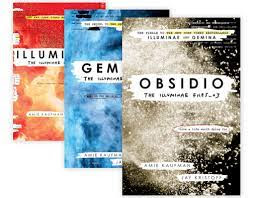
Having taught the subject again this year and marked folios over the last few weeks, I thought it might be valuable to offer some general reflections on the progress of our up-and-coming writers. Certainly—as in years past—our top wordsmiths continue to demand to be noticed, and marking for the subject often leads to an assessor wishing that they knew the identity of the student simply so that they could track their ongoing success and career. It will come as no surprise to readers of this blog that Tasmanian Year 11 and 12 students push their writing into areas that offer depth, relevance and originality, with many pieces featuring diverse protagonists, updating traditional narratives so that their meanings are more relevant in a modern sense, or crafting visions of dystopian futures that highlight the challenges of the way that we live now. Another particularly exciting development is that young writers appear to be increasingly experimental in their use of form. Several stories that I read this year featured a kind of multi-modal design, using text messages presented throughout as characters conversed, or including in their pieces found documents to build a world in a similar manner to writers like Amie Kaufman and Jay Kristoff in The Illuminae Files.


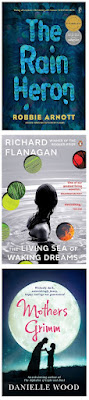
When students were asked at the beginning of their folio to nominate works that had inspired them, there were some excellent examples, including iconic Tasmanian writers such as Robbie Arnott, Richard Flanagan and Danielle Wood, all of whom capture a sense of voice from this island in a way that students clearly strive to emulate. That said, many of the cohort found that they struggled to name any literary influences at all, or offer anything deeper in terms of inspiration than a list of what they had recently watched on Netflix. I have always maintained that a writer who does not read is like a chef who refuses to eat: they will succeed, occasionally, but it will be more as a result of good luck than good management. The struggle of encouraging our young people to engage with the written word recreationally continues to be an English teacher’s toughest challenge, but the best student work this year clearly demonstrated that amongst all of the competing demands for our time (and theirs) there is still, always, a place for literature. 


Over the next couple of years, English Writing is being reinvented. This is an exciting opportunity, but it also comes with a level of danger. I have listened to the young writers of this island and heard their stories, and many of them express that it was in this subject that they found the self-assurance to tell the tales that have been bubbling away inside them. Perhaps a teacher shouldn’t admit to having a favourite class to teach, but the truth is that mine is this one: for the diversity and originality of the work produced by its students, for the confidence they build in their ideas and their own sense of self, and for its simple shared love of story. Having reflected on the power of the pieces that I have had the fortune to read this year, I sincerely hope that fundamental to any new course is one simple philosophical underpinning: that this classroom is a place where students feel safe to find their own authentic voice.


Lyndon Riggall is a writer and teacher from Launceston. He can be found on his personal blog at http://www.lyndonriggall.com and on Twitter @lyndonriggall.


Editor's note: I have just finished listening to an interview with Robbie Arnott, winner of the Sydney Morning Herald Book of the Year Award, where the quality of Tasmanian writing is acknowledged. From Lyndon's observations, this looks set to continue.

Friday, 25 June 2021

The Great Maternity Leave Project

New-to-the-scene Tasmanian author and illustrator team, Hannah Coates and Claire Neyland, on education, motherhood and self-publishing
A Home for Little Penguin.

Hannah Coates & Claire Neyland. A Home for Little Penguin [front cover]

I was heavily pregnant and impatiently awaiting the arrival of my first child, when I started playing around with a few little story ideas.  I wrote and re-wrote a few drafts, adding a character here, removing an adjective there. But then baby Eddy was born, and the project went into hiding for a few months whilst I learned how to be a mother. It wasn’t until Claire was also on maternity leave from teaching and looking for a creative outlet that I remembered the tale about the Little Penguin I’d been working on. There was a picture hanging on Claire’s living room wall that I had always admired, and I was blown away once I realised that she had actually painted it. 


Hannah Coates & Claire Neyland. A Home for Little Penguin [back cover]

What followed was truly a huge collaborative effort. Claire gave feedback on the text drafts, as well as encouragement and reassurance that what I had visualised was worthwhile pursuing. We visited the locations that would be depicted in the book (Douglas-Apsley Waterhole, Whaler’s Lookout, Coles Bay, Diamond Island). She sent me photos of her sketches and works-in-progress, wanting to make sure she created exactly what I wanted. In truth – she did better. 

 © Claire Neyland. Douglas-Apsley Waterhole [image]. A Home for Little Penguin 

Once we had a few images and a well edited manuscript, I set about looking for a publisher. What I found was that it is extremely difficult to crack into the oversaturated world of children’s picture books! There were only a handful of Australian publishing houses who were accepting unsolicited manuscripts. In the end, we decided to self-publish. It was a risky decision, but we believed that we had created something good, and wanted to see it through. We loved the idea of being able to read our children something that we had created. We were lucky to have the support of Tasmanian Publisher Forty South; it was a good fit for us, because we still had a certain amount of agency during the editing, and Claire did a lot of the design work. 

I’m so glad that we backed ourselves. It has been a long and sometimes frustrating journey to get here, but it feels so unbelievably rewarding. 

A Home For Little Penguin is dedicated to our first children, Eddy and Kate. Now that we are both mothers of two – another project is certainly overdue!


© Hannah Coates & Claire Neyland 
A Home for LIttle Penguin [title page]

Hannah Coates

Storyteller & Bookworm

BIO: Hannah Coates is a Tasmanian storyteller, teacher and mother. She lives on the beautiful East Coast, where her love for the ocean inspires her in all things. A Home for Little Penguin is her first book. 


Editor's note: A Home for Little Penguin is available in local Tasmanian bookstores and online. All images used with permission from the creators.

Saturday, 10 April 2021

Our Convict Past

Delve into Australia’s colonial history through children’s literature. This week Maureen Mann presents a range of texts filled with facts and fictional stories representing our convict history.


Apart from children’s literature, one of my other passions is history, and especially Australia’s convict heritage. I am currently teaching the subject to a group of older adults. Wanting also to introduce them to some children’s literature I have revisited books for children. In the process I discovered several “new” ones. I hope you do too.


One of my favourites since it was published in 2014 (it was also the winner in the Eve Pownall category of the 2015 Book of the Year Awards) is A-Z of Convicts in Van Diemen’s Land by Simon Barnard. This large format book gives us an insight into all levels of life in the convict era using detailed digital drawings to supplement the text. All research is based on contemporary records. Where relevant, the illustrations spread over a double page spread. Along the way, there are interesting snippets about individual convicts. Barnard’s own website gives further information and reading if required.


Another of Simon Barnard’s titles is Gaolbird (2017). This time he tells the chaotic story of William Swallow from his arrival in 1821 aboard the Malabar as William Walker. He escaped several times, became a pirate, returned to England; was recaptured and re-transported on the Georgiana to Van Diemen’s Land (1831). He again escaped and was transported a third time on the Kains. This is wonderfully researched “stuff of Aussie legends”, aided and abetted by interesting cartoon-like illustrations.


Jackie French’s 2021 title Convicts: Fair Dinkum Histories - All the Stinky Bits brings together some of the less pleasant parts of our history, starting with smelly, crowded transport ships and continuing to the tough and smelly life after arrival. French’s background research is not as obviously detailed as Barnard’s (there’s no index or bibliography), but it is all based on fact. Dave Hackett’s cartoon illustrations add humour but also focus on facts.


Beth: The Story of a child Convict by Mark Wilson (2016) tells the story in picture book format of a child convict, based on Elizabeth Hayward, the youngest female convict in the First Fleet. Wilson also used the journals of William Bradley and Arthur Bowes Smyth, the surgeon and artist of the Lady Penryn. Wilson’s moving text shows the hardships of the first months in the new colony and the challenges of late 18th century life but for me, his illustrations don’t convey the desperation of life in those times. 


My Name is Lizzy Flynn by Claire Saxby and Lizzy Newcomb (2015). The fictitious Lizzie Flynn tells her own story on the 1841 voyage of the Rajah, to Van Diemen’s Land. During this trip, some of the women created a large quilt which is now housed in the National Gallery in Canberra. Lizzie details her perceptions of the long trip, with friendships and animosity, from England to her new home.


Convict Girl: The Diary of Mary Beckwith 1801-1803 by Chrissy Michaels. Mary’s fictitious diary details her life from her conviction at London’s Old Bailey and transported with her mother (also Mary) on the Nile to Sydney in 1801.Through her mother’s connections she is connected to the explorers Nicholas Baudin and Matthew Flinders. Many of the details of the real Mary’s story are suspect, but it makes for an interesting link between a convict girl and early Australian explorers.


What do you think I have missed?


Maureen Mann
Retired teacher librarian and avid reader


Editor’s Note: Tasmanian writer, Net Brennan, has also contributed to this theme with her book Child Convicts (2013).