Welcome to the blog of the Tasmanian branch of the Children's Book Council of Australia!
Showing posts with label Aboriginal and Torres Strait Islanders. Show all posts

Sunday, 2 July 2023

NAIDOC Week - Time to read on Country

It’s NAIDOC Week and time to enjoy and celebrate Aboriginal and Torres Strait Islander histories and culture. Why not start with a book – there are so many to choose from!


Do you regularly select Aboriginal and Torres Strait Islander stories and information books to share with children and teens? With the amazing array of Aboriginal and Torres Strait Islander literature available it is easy to include these books into every child’s reading diet. NAIDOC week is an excellent stimulus to celebrate Country, and engage with contemporary and historical First Nation perspectives.


The first week of July is marked as National NAIDOC week and is a time for Australians recognise and celebrate the history, culture and achievements of Aboriginal and Torres Strait Islander peoples. As well as getting involved at a local level (visit the NAIDOC website to found out what is happening in your area) reading and sharing literature is an ideal way engage young readers and start conversations.


A useful starting point for finding Aboriginal and Torres Strait Islander stories for children and young adults is the National Centre for Australian Children’s Literature (NCACL) via the database available in the Aboriginal and Torres Strait Islander Resource. If this resource is new to you, read  previous CBCA Tas posts including A Gateway to Aboriginal and Torres Strait Islander Children’s Literature (Alderman, 2022) and Discover Engaging Stories on the Aboriginal and Torres Strait Islander Resource Database (Mann, 2022).

CBCA award and notable titles regularly include Aboriginal and Torres Strait Islander fiction and nonfiction for all age groups. Shortlisted in 2023 Our Dreaming (Saunders & Leffler, 2022) in the Picture Book category, We are Australians (Smith, Godwin & Cadd, 2022) for the New Illustrator award and Come Together (Firebrace & Biumwiwai, 2022) an Eve Pownell title. This book was a particular favourite of mine for the wealth of highly accessible and current information and the contemporary Aboriginal design motifs employed by Biumwiwai. On the Notable list, Thank you rain! (Morgan & Malibirr, 2022) and Open Your Heart to Country (Seymour, 2022) are two titles that celebrate Country with striking illustrations in both to support the texts.

Past CBCA winners and notable titles  that I have found valuable for my own personal growth and appreciation as well as for sharing with students and recommending to independent readers include:


Heroes, Rebels and Innovators (Wild & Biumaiwai, 2021) – Eve Pownall Honour book

Where We Begin (Mieman, 2020) – Older Readers Honour book – contemporary realistic fiction (mature themes) with excellent historical coverage on the impact of white farming immigrants in rural Victoria on the local inhabitants and the long term impact on the community.

Strangers on Country (Hartley, Myrrat & Leffler, 20210 – Eve Pownall Honour book

Bindi (Saunders & Leffler, 2020) – Younger Readers shortlist

Shirley Purdie: My Story, Ngaginybe Jarragbe (Purdie, 2020) – New Illustrator shortlist

Baby Business (Syemour, 2019) – Notable Picture Book.


Further inspiration can be found on the CBCA Tas blog – check out On Country in Alice Springs  Mann (2021) and With Opened Eyes: Snapshot 3 (Bales, 2022) for some background information and some more great reads.

Many of these titles will be on school library shelves and all of them are available in Libraries Tasmania collection – in print and with some also in ebook format and as a retelling in Story Box Library and therefor easy to access from home and via the Sora app. There are also titles featured this week on the Libraries Tasmania home page to support NAIDOC. If you have a favourite title please share in the comments.


Jennie Bales

CBCA Tasmania Social Media Coordinator.

Retired teacher librarian and adjunct lecturer

Saturday, 16 July 2022

With Opened Eyes: Snapshot 3 follows the Aboriginal Dreaming trail

The 2022 CBCA Conference brought together a range of speakers and covered significant topics deftly woven together with connections to country and an Australian Aboriginal presence that aptly encouraged participants to dream of possibilities and look at the world with open eyes to consider different points of view. As a virtual attendee Jennie Bales draws together some of these Aboriginal perspectives.


I heard some wonderful things about the launch of the conference on the Friday evening, understandably not accessible via video link, but fortunately I had a colleague happy to share a little about the opening ceremony. 

Duncan Smith OAM delivered the Acknowledgement of Country as a Wiradjuri man on Ngunnawal Country and together with his daughter Jakida, performed the Sweeping and Cleansing Dance to a rapt CBCA audience. Both Duncan and Jakida are members of Wiradjuri Echoes and they performed several dances beautifully illustrating Wiradjuri culture. Duncan introduced his stunning new book, We Are Australians, which was written in collaboration with Nicole Goodwin and incorporates the artwork of Jandamarra Cadd. The previously created paintings are stunning illustrations for the book and Duncan acknowledged how grateful he and Nicole were to be able to use Cadd's work. Both Duncan and Jakida were gracious with their time following the performance, staying around for photos and answering questions. It was an exciting and entertaining way to open the conference. (Thank you Louise Saint-John for sharing your experience)
We Are Australians, 2022, published by Simon and Schuster

Respect, 2020, Magabala Books
The first day opened with an informal and insightful conversation between Sue Lawson and Aunty Fay Muir : Hearing our First Nations Voices and Sharing their Dreaming with the two ‘Zooming’ in from Victoria. The session included Aunty Fay sharing of her 2020 picture book Respect which explores the importance of learning about respect for yourself and family, of sharing knowledge, and that families come in all sizes. Identifying visual literacy cues in the book highlighted the importance of the guiding students to know where different texts come from, to build an appreciation of the vastness of Australia and the diversity of different cultures and stories. The Indigenous Map of Australia is great resource to support this. Where possible Aunty Fay encouraged educators to connect with local First Nations people and to seek out stories reflective from that area. Her preferred terminology is First Nations or Aboriginal and Torres Strait Islanders. 
Guidance provided:

Reconciliation -  you have to go on a journey of learning yourself as a prelude to teaching y our students. All students need to know about county and culture as it is everyone’s history – visit places and read books.

Authority - Know about the author – current practice is to include that info in the blurbs, contact the publisher and inquire. First Nations people tend to write in a different way and with a different flavour.

Aboriginal English - need to take in account aboriginal expression and language – elders may not have a strong literacy background, and today many kids just write down their thoughts and ideas in Koori English – often spoken at home. It is a recognised language and needs to be accepted.

Oral tradition and reading aloud – oral storytelling a traditional practice that continues today. Encourage and exemplify in practice. Model how to ‘read’ the illustrations, young people need more storytelling to fuel the imagination.

Dreaming stories – understand which country each story comes from -e.g., Rainbow Story is from northern Australia – not all communities have Rainbow Story as their creator. Important that the author knows this as well. Remember that some stories are sometimes individual stories of personal dreams. If doing in class, speak to a local person and find out about the creator spirit of that country.

Be respectful of art and culture in displays and activities. Find out styles that are representative of the land you are on. E.g., Dot painting are reflective of First Nation people living in desert country, hatch work found in Victoria. It is first nations art and should reflect the country on which they are situated.

Useful information sources:

Deadly & Proud Victorian State Government

Deadly Questions

miss.gibbs - resources for curriculum shared on Instagram


Our Dreaming, 2022, Scholastic
Also presented via Zoom, Dub Leffler had a conversation about his newest collaboration with Kirli Saunders: Our Dreaming to be released in August. Dub used the virtual platform to share close ups of story boards, illustrations as works in progress, and in their final form, that were truly mesmerising to behold. His love of nature and use of natural elements in combination with water colour and pencils shone through. Watch out for this captivating picture book that shares the Yuin and Gundungurra Dreamings 


Professor Belle Alderman session Dreaming of Finding, Celebrating and Preserving Australian Children’s Literature provided fascinating insights into the work of the National Centre for Australian Children's Literature which included coverage on the creation and development of the Aboriginal and Torres Strait Islander Peoples Database. Belle has written about this frequently including a post on this blog. This presentation also covered the work of the Centre to preserve and promote Australian Children’s Literature and the valuable contribution of volunteers in the process. 


Open your Hear to Country
2022, Magabala Books

Other sessions that continued to help us open our eyes to First Nations peoples included Jasmine Seymour reading her recently released Open Your Heart to Country where the combination of  words and illustrations appears as poetry in motion. Jasmine discussed the importance of investing in indigenous languages and how multilingual texts support students from diverse backgrounds and celebrate country. 


Adam Goodes and Ellie Lang talked about their new series Welcome to Our Country in their session on Sharing our First Nations Dreaming with all Students. The second title Ceremony has been published and each book has detailed supporting teachers notes. The authors talked about the power of language to convey culture and how the books are designed to make Aboriginal language accessible for readers to pronounce the words. There are QR codes in the books to connect to Adam reading the texts. The books convey a strong message about caring for country – being sustainable and only taking what you need, and Adam pointed out that there is so much we can learn from Indigenous people that have lived on this land for 1000s of year. They also advise to take the books for what they are – different ages will absorb what  they are ready for, and the teachers’ notes add a  further dimension for them to be used for  learning more about people and country to learn about what we can do for reconciliation and   caring for country.

Welcome to Our Country series, Allen & Unwin

Writing this post has helped me revisit some of the key sessions and reflect on the strong messages that were conveyed by passionate presenters. This snapshot focuses on opening our eyes to Aboriginal culture, country, reconciliation and unity – a truly memorable and worthwhile thread woven into the program. A wonderful conference experience!


Jennie Bales

Adjunct lecturer, retired teacher librarian and reader,

CBCA Tasmania Social Media Coordinator.

Saturday, 19 February 2022

Discover engaging stories on the Aboriginal and or Torres Strait Islander Resource database

Maureen Mann has been inspired by the diverse voices represented on the NCACL Aboriginal and or Torres Strait Islander Resource database and follows up last week’s post by Dr Belle Alderman, to share some of her thoughts on a selection of titles located on the database.

I have been dipping in to the Aboriginal and or Torres Strait Islander Resource. Explore it here NCACL’s database.  (See last week’s blog from Dr Belle Alderman- A gateway to Aboriginal and Torres Strait Islander children’s literature) I’ve had some fun exploring the resource and then finding items to read. There were a few which I had already reported on in my blog last year while travelling in the Northern Territory but there were many more new-to-me titles. And there are many more which I haven’t had a chance of finding and reading – yet! 


The database is easy to use. Searches are easy. Look back at Dr Alderman’s listing last week for the details. Click on the cover after your search and a summary appears, with audience range listed. Then there’s more detail in subjects, annotation and teaching notes. 

Here are some of my choices, focussing more on books for early childhood and primary readers but something for secondary readers as well.


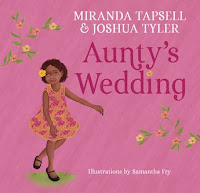
Aunty’s Wedding by Miranda Tapsell, Joshua Tyler & Samantha Fry. Allen & Unwin, 2020.

Everyone’s getting ready for the wedding. Maningawu describes what everyone will wear, and why there is a wedding. It’s a good introduction to Tiwi language with simple words woven into the narrative. Lovely illustrations, using bold colours. Great use of ‘white space’.


Azaria: A true story by Maree Coote. Walker Books, 2020.

This is a stunning description of the disappearance of baby Azaria Chamberlain at Uluru in 1980, the resultant police and justice investigation and how ignorance and the perils of mob thinking influenced the carriage of justice. The book tells all sides of the story: the family, the police, the indigenous trackers; its brilliant illustrations introduce many aspects of culture from across the world.


Backyard Birds by Helen Milroy. Fremantle Press, 2020.

Helen Milroy introduces the reader to many familiar birds. Each bird is shown on one page with an action statement opposite, often with rhyme or alliteration. Bright colours and swirling images attract the reader. 


Bindi by Kirli Saunders & Deb Leffler. Magabala Books, 2020.

This verse novel is one year in the life of indigenous girl Bindi Hoskins, her friends and family as they face the challenges of drought, fire and the complex world. The use of Gundungurra language enriches the reading experience and the pencil drawings enhance the reader’s understanding of Bindi’s world. 


Brother Moon by Maree McCarthy Yoelu & Samantha Fry. Magabala Books, 2020.

Told while sitting in a house beside the sea, this is great-grandpa Liman’s story about his brother, who slowly unfolds as the reader learns more details: wise, never growing old, brightest at night, changing shape, a helper during the hunt and a protector from unwelcome visitors. There’s a great double-page spread showing the moon’s phases and a joyful realisation by Hippy. Lovely evocative illustrations are done in pencil on dark paper. Both creators of this book are from the Northern Territory. Yoelu is a Wadjigany woman and Samantha Fry is descended from the Dagiman people.


Dry to Dry by Pamela Freeman & Liz Anelli. Walker Books, 2020.

Winner of the Eve Pownall Award in 2021. This is a wonderful depiction of the changing seasons in Kakadu in northern Australia. The reader sees the change from dry season through all the stages of the wet and back to the dry season. Along the way the myriad of animals, insects and birds are introduced to the reader. There’s a short summary of the six seasons recognised by indigenous inhabitants. 


Landing with Wings by Trace Balla. Allen & Unwin, 2020.

This is a complex and multi-levelled long picture book, or is it a graphic novel? Miri Blossom is forced to leave her beloved tea tree to move to the Goldfields, and doesn’t want to go. Miri, or Bloss, and her mum travel the train to get there, arriving in the dark. And then we, the reader, see her adjust to her new life, exploring, meeting new neighbours, and making a great adjustment – better than her mum, at times, who wants to move again. Bloss documents the changing seasons and landscape in her sketchbook, and we slowly see Mum adjusting and making friends. Details of cultural life in Dja Dja Wurrung country are incorporated seamlessly, with Balla guided by local elders. Created in Balla’s signature graphic novel format, full of detail and memorable characters.


Tell ‘em by Katrina Germein and Rosemary Sullivan and the children of Manyallaluk School. Harper Collins, 2020.

This exuberant celebration of all the things which the children of the Roper River region of the Northern Territory enjoy doing. As an adult, the reader will recognise the shouts from the children wanting to include their favourite activities, but younger readers will recognise many things. They will also learn about some Indigenous ceremonies, stories and how life in this remote area differs from their own.


Putting Australia on the Map by Carole Wilkinson. Simon & Schuster, 2020.

Wilkinson documents the slow discovery by European explorers of the existence of Australia, while also acknowledging that First Nations people had lived here for over 50,000. She comments on van Diemen’s timidity because he had been warned to expect ‘fierce savages’ and Dampier’s surprise that the Indigenous people didn’t envy the British way of life or admire their possessions. Throughout the book there are reproductions of contemporary maps which slowly expose the outline of what we now know as Australia. A highly readable non-fiction book which adults and younger readers will enjoy.


The Boy from the Mish by Gary Londesborough. Allen & Unwin, 2021.

This debut novel is the story of Jackson from the NSW South Coast after his Aunty Pam and his cousins on their annual visit from Sydney arrive with an extra person, Tomas. The growing attraction between Jackson and Tomas is the basis of the story. But there is more than their emerging relationship, including the definition of masculinity, identity, culture and the role of art in expression and healing. 


Maureen Mann
Retired teacher librarian and avid reader


Editor's note Each image is linked to its record on the database where you will discover intended audience, curriculum links, related subjects, an annotation and a link teacher resources if available.

Monday, 14 February 2022

A gateway to Aboriginal and Torres Strait Islander children’s literature

 Have you had a chance to explore the Aboriginal and or Torres Strait Islander Resource? This extensive database, hosted on the National Centre for Australian Children’s Literature (NSACL) is the focus of this week’s post. Belle Alderman, a Director of the Centre shares insights into the development of this significant resource. 

The Australian Government’s Department of Education, Skills and Employment provided a grant to the National Centre for Australian Children’s Literature (NCACL) in 2020. They tasked the NCACL with creating a database of children’s books by and about Aboriginal and or Torres Strait Islander Peoples aimed at teachers and others interested. 


Associate Professor Robert Sommerville AM, Martu Aboriginal man from WA, an educator and academic at Edith Cowan University, described this resource as ‘first class’ advising:


‘The resource will be a bonus for educators and caregivers alike. Educators are not only provided with numerous titles to be explored but also a host of support features that will certainly enhance the educative process. These features include links to national curriculum and the EYLF, teaching resources such that the book can be used as an anchor point for topics as diverse as ANZAC Day to Dreaming stories, as well as handy summaries pertaining to the author and in most cases the illustrator. As a planning tool it really does enable the embedding Aboriginal and Torres Strait Islander content into everyday teaching. For parents it provides easy access to a range of exciting Titles that reflect contemporary Australian society.’


The NCACL developed quality assurance methods. A Reference Group, Critical Friends and 18 culturally diverse, experienced and knowledgeable people across Australia participated. This strategy ensured various perspectives, including those of First Nations People. 


Extreme challenges beset this project, including bushfires and COVID lockdowns but the highly committed individuals persevered in spite of libraries closing, family lockdowns, tight deadlines and challenging technology. They collectively created a unique and much needed resource. Every resource was researched, reviewed and moderated to ensure a respectful, high quality collection. First Nations Critical Friends reviewed and advised throughout. 


By February 2022, the NCACL’s database featured 525 titles. Books continue to be added. The last two years reveal a remarkable growth in publications in this area from both specialist and mainstream publishers. For example, 55 books published in this area since 2020 have been added to the database. An excellent overview of this remarkable growth appears in this article, ‘What’s the hottest trend in book publishing right now? 


Every book in the database includes 


  • bibliographical details 
  • content summary 
  • audience 
  • subjects
  • creators’ cultural background, story location and Aboriginal language (where identified)
  • teaching resources
  • Early Years Learning Framework and the Australian Curriculum


Search filters retrieve these details for an individual book or for a collection of related books. Search results can be shared via social media or via email. Quick Tips for Searching provides detailed guidance.


These latest books reflect the power of children’s stories to reconcile our differences and bring us together. Here are a few examples.


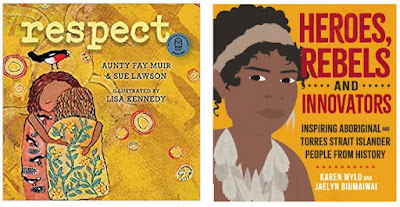
Respect written by Aunty Fay Muir and Sue Lawson, illustrated by Lisa Kennedy, Magabala Books, 2020 

Aboriginal and Torres Strait Islander Culture, Family and the need to listen, learn and share with each other includes deeper concepts including respect, stories, songs, elders and Country.


Heroes, Rebels and Innovators : Inspiring Aboriginal and Torres Strait Islander People from History

written by Karen Wyld, illustrated by Jaelyn Biumaiwai, Lothian Children’s Book, 2021 

Seven stories of Aboriginal and Torres Strait Islander heroes and heroines from the eighteenth-twentieth century include interactions between the original inhabitants and newcomers to Australia. 


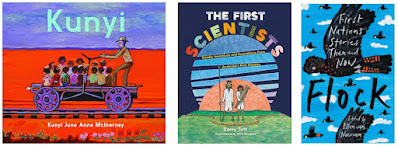
Kunyi written and illustrated by Kunyi June Anne McInerney, Magabala Books, 2021 

Kunyi illustrates her life as a Stolen Generations child through 60 paintings revealing stories about her childhood. 


The First Scientists : Deadly Inventions and Innovations from Australia’s First People written by Corey Tut, illustrated by Blak Douglas, Hardie Grant Explore, 2021 

Inventions and innovations developed by the First Nations People reveal cultural practices finely tuned to living on Country and understanding the environmental impact of people. 


Flock : First Nations Stories Then and Now edited by Ellen van Neerven, University of Queensland Press, 2021 

Twenty-one fictional short stories reveal First Nations’ historical, social and cultural concerns, opening conversations about the treatment and culture of First Nations People.   


Dr Belle Alderman AM, Emeritus Professor of Children's Literature 

Director, National Centre for Australian Children’s Literature Inc.

Friday, 19 November 2021

“Nothing about us, without us” Decolonising Your Library

A snapshot of some important considerations in assessing the Aboriginal and Torres Strait Islander literature in the library collection.

I recently attended a webinar hosted by the Australian School Library Association and delivered by Sharon Davis and Bianca Brim from  Australian Institute of Aboriginal and Torres Strait Islander Studies (AIATSIS) on decolonising the library. This webinar covered many aspects of decolonising libraries, but my focus is on literature  that is respectful and authentic of indigenous culture.

The key factors of identifying appropriate literature are: 

By Us: A title that is developed by Aboriginal people.
Bruce Pascoe, Sally Morgan, Nakkiah Lui, Oodgeroo Noonuccal (Kath Walker) are creators whose works cover a diversity of genres: poetry, plays, history, non fiction and picture books. One particular favourite of mine is Going for Kalta by Yvonne Edwards, Brenda Day and Tjitji Tjuta (all the kids)

With Us: A title that is developed in respectful partnership with Aboriginal people.
Examples include The Story of Our Mob by Sally Dingo (spouse of actor Ernie Dingo) and the collaboration between Boori Monty Prior and Meme McDonald which produced my favourites: Maybe Tomorrow and My Girragundji.

For Us: A title that is developed on behalf of Aboriginal people(s).
I have been unable to locate titles that fit this category of appropriate literature…which I find to be positive. 

Books that are About Us and/or Against Us, where there has been no Aboriginal input and/or which present deficit views of Aboriginal peoples.

Indigenous publications should: be authentic; be a balanced perspective; have Aboriginal participation; be accurate and supportive of Aboriginal culture and exclude content of secret or sacred nature.

Some takeaway ideas: 

  • That any text that use inappropriate words such as ‘aborigines’, ‘those’, ‘their’, ‘them’ or describe the concept of ‘terra nullis’ are red flags to acceptability. 
  • That texts should not over-represent the role of the male in cultural practices.
  • AIATSIS are publishing a catalogue of appropriate indigenous resources. They are also happy to receive donations of inappropriate resources for their archive.
  • The NCACL (National Centre for Australian Children’s Literature) Aboriginal and or Torres Strait Islander Resource catalogue should be used with caution as it includes resources that don’t fit the above criteria for appropriate literature.

Sites to visit for further information and support:

Felicity Sly is a Teacher Librarian at Don College in Devonport, and Treasurer for CBCA Tasmania.

Editor's comment:  The NCACL have provided a statement in regard to the rigorous processes taken to evaluate and select resources for inclusion in the Aboriginal and or Torres Strait Islander Resource catalogue. 

-----------------------

The National Centre for Australian Children’s Literature Inc (the ‘Centre’) received a grant in 2020 from the Australian Government Department of Education, Skills and Employment to create a database of Australian children’s books by and about Aboriginal and or Torres Strait Islander Peoples. The Agreement signed with the Government required the Centre to incorporate the views of Aboriginal and or Torres Strait Islander Peoples. Their views were incorporated through their:

  • membership on the Reference Group leading the project
  • appointment as ‘Critical Friends’ who advised on books to include/exclude, Australian curriculum, cultural sensitivity, appropriate terminology and historical perspective
  • appointment as Contributors who selected, read, annotated, choose subjects and teaching resources for the books.


Dr Belle Alderman AM

Emeritus Professor of Children’s Literature

Director, National Centre for Australian Children’s Literature Inc

Saturday, 19 October 2019

Connecting to Culture: Indigenous Literacy Foundation


Dive into culture this week as Patsy highlights some of the significant work of the Indigenous Literacy Foundation and the quality publications available.

The Indigenous Literacy Foundation is a ‘not-for-profit charity which respects the unique place of Australia’s first people and draws on the expertise of the Australian book industry’. One example of support you can offer is by engaging in the Great Book Swap to celebrate reading and raise funds for remote communities. 

You can find out more about this organisation on Indigenous Literacy Foundation website website. It is a registered charity so donations made are tax-deductible, and I have been a monthly donor for some years now. The website is very attractive and informative with an online shop with lots of reasonably priced objects, not just books, to buy to suit all ages, so have a look, now that Christmas is getting near…..

Not long ago I received in the mail a copy of Deadly Sisters of Worawa, published in 2018 by the Foundation. Did I know anything about the Worawa Aboriginal College before I read this book? No, nothing at all…..

I felt ashamed of my ignorance and wondered how many schools have copies of this book and other ILF publications, all of which are listed on the website, in their libraries.

Some things have changed in my lifetime. When I was attending a primary school in country Queensland in the 1940s, we students knew there was a school for aboriginal children somewhere in the local area, but our only contact with the pupils there was on sports day, when all the local schools took part.

In the 1970s when I lived in country New South Wales, at least the local school was attended by all children in the area, indigenous or not…..

Now in the 21st century still more change is required to attain educational equality for all Australians. We are taking baby steps in this direction, but much is still required. So have a look at your school library – what Indigenous Literacy Foundation titles are available for your students to read and consider?

Patsy Jones
Retired librarian, retired teacher & avid reader of children’s literature


Editor’s note: A timely post to support the 2019 International Year of Indigenous Language – with some excellent examples in the ILF shop.