Welcome to the blog of the Tasmanian branch of the Children's Book Council of Australia!

Monday, 12 September 2022

A Canadian Perspective

This week we have a global perspective as Maureen Mann  shares some special finds while exploring libraries and bookshops in Canada. There are some great authors and illustrators to discover!


I’m back in Canada visiting family and have some spent some enjoyable time browsing the local bookstore (Part of a large chain, with a large children’s section), chatting to the staff and coming up with some books to share with you. It’s always interesting to see how bookshops in different parts of the world create and organise their displays. 


Lizzy and the Cloud by The Fan Brothers (Terry and Eric).
Simon & Schuster (2022)

Lizzy buys a plain cloud complete with tethering string, as her pet, and Milo (as she names him) comes with an instruction manual, which she follows carefully. Even though he waters her collection of rare plants, and is useful inside, like all pets, Milo grows. And that’s what Lizzy does: releases him to the sky. From then on, she wonders if he returns to visit her, and hopes to see him again. Beautiful soft illustrations with bursts of colour, indicating mood. It’s a gentle book, with a message and sparks of humour. 


In the Clouds by Elly MacKay
Penguin Random House (2022)

Though this is essentially a book of fiction it is filled with curiosity about clouds. Where do they come from? Do they float? Where do they go when they disappear? There are other scientific and philosophical questions. The small child flies into the sky on the back of a bird, to be nearer the clouds. As she journeys the questions are posed, answered and reflected upon. It’s more than a bedtime story book and primary-aged children will enjoy the challenges of the questioning. Lovely sometimes ethereal illustrations. MacKay has included a bibliography and answers to some of her questions.


I’m Not Sydney by Marie-Louise Gay
Groundwood Books UTP Distribution (2022)

A group of children are playing outside, their imaginations take on the persona of animals and they venture into a huge spider’s web. Sydney becomes a sloth; Sami is a spider monkey. Others join them sharing the banter of a group playing together in this magical world. But when Edward becomes an elephant he fills his trunk with water, destroys the tenuous spider web and sends them all home “like a herd of small wet animals”. However, there’s always tomorrow … The illustrations are whimsical and fun. I wonder which animal I’d be.


The Darkest Dark by Chris Hadfield and the Fan Brothers
Penguin Random House (2018)

This is inspired by Chris Hadfield’s own childhood when he was fascinated by the moon and the universe, and pretends to be an astronaut. At the same time, he was scared of the dark and possible aliens hiding under his bed; unable to sleep alone and returning to share his parents’ bed. This continues until he watches the landing of the first man on the moon. From then on, he realises that the darkness holds secrets and adventure. Chris Hadfield went on to become an astronaut, highly respected space photographer and NASA director. The illustrations reflect the darkness of the night but maintain the excitement that night-time can bring. 


The Worm by Elise Gravel
Penguin Random House (2016)

This is one of the Disgusting Critters series of books by Gravel which takes one of nature’s less likeable animals and presents information in easily readable formats for the early childhood age group. Each looks at the habitat (inside and/or outside the human body), its anatomy and role in the environment. Facts are presented with humour and accuracy, so readers find they are learning as well as being amused. Other critters are headlice, spider, rat, slug, toad and the fly.


Everybody
by Elise Gravel
Scholastic Canada (2022)

Gravel uses quirky monsters to show that we are all different but we all share the same things: fear and joy; sadness; making mistakes and we can learn from them; the need to be valued and feel safe. At first, I felt the book was too didactic, but the humour and the situations became very child-centred and empathetic.


The Most Magnificent Idea by Ashley Spires
Kids Can Press (2022)

The girl loves to make things and spends her days creatively, until one day she runs out of ideas, and panic and depression set in. She tries to convince herself that the inspiration will return but it seems to have deserted her, despite her brainstorming, changing location, gathering new supplies. Not even her faithful pet can help her, until … Creativity and her mojo return just as she is beginning to think she will never be able to build again. Spires’ illustrations are great complements to the text, leaving plenty of white space for the reader to fill in some of the details.


I’s the B’y: The beloved folk song illustrated by Lauren Soloy
Greystone Books (2022)

This is a very Canadian song, from Newfoundland. The boy (b’y) comes in with his catch and takes it to guitar-playing Liza, and is accompanied by other creatures – violin-playing fish, dancing people, humpback whales, moose. All dance in circles. The sky and the sea suggest movement. Everything is full of energy. The illustrations are digitally produced but give an impression of being hand-created. I was impressed as a newcomer to the song, because there is an explanation at the end of the book of the relevance of the main items on each page and their place in society. The book also includes the music and all the words 

I hope you’ve enjoyed my brief look at some Canadian children’s books. I’ve certainly had fun finding them and look forward to discovering some more while here.  


Maureen Mann
Retired teacher librarian and avid reader

Saturday, 27 August 2022

Book Week – A time for joy

This week Emma Nuttall provides a glimpse into this magical celebration in her school.


"Book Week is a very special time in schools. It must be one of my most anticipated weeks of the year!"

That is how I started my Book Week blog last year, and this year the sentiment remains. 


Schools are busy. Schools are fun. Schools are colourful. And Book Week is all of them rolled in to one!


In our school, we are always on the lookout for opportunities to connect across classes, not just within them. COVID has made gathering more challenging, and indeed interacting more generally, with limitations put on numbers, venues, activities and so on. And gathering is such a key part of what schools are about, so for us to be able to host our annual Book Week Parade this year, was all the more exciting!


Every year, we look for ways to add to the excitement of Book Week. Once again, we ran our Quiz – as hotly contested as ever. My eldest son even asked to see the quiz, despite having left the school last year – who knew it would provide such a lasting memory? And all day long, children have been asking me about this question or that question – eager to know if they were correct (or not). Our annual Parade was as colourful as ever, and our daily reading roster has taken a new, but special format. 

Mem Fox, (1994 / 2019). Tough Boris. Penguin Books.

This year, against my better judgement, my wonderful colleague also suggested we dress up in our Parade costumes (Tough Boris, the pirate, if you’re wondering) a day early and visit the classes to read the Mem Fox classic, and to do a bit of Parade reminding and marketing. Now despite being a teacher, a career known for being in the spotlight, I despise the spotlight. I dread it. I get that funny feeling in my tummy - you know the one. But as we moved from class to class, in full pirate costume and personality, I came to enjoy it. I think I even loved it. And I loved it because of the looks on the faces of the children (and staff!) that we visited. And that is what Book Week is all about. That awe and wonder. That magic. That magic, only stories can provide.


So cheers to Book Week, and until next year, keep on Dreaming with your Eyes Wide Open, because you never know when Tough Boris, or any other magical story book character may appear!


Emma Nuttall

Teacher, reader and passionate advocate for children’s literature.


Editor's note: If you missed the announcements, visit the CBCA website for Book Week, the Award winners and the Shadow Judging results.

Friday, 12 August 2022

Where do we go for book recommendations?

This week’s post focuses on finding good books — Felicity Sly shares some strategies and sources to help you find the next best read — for children and yourself!


Image used with permission
© Hobart Bookshop

In the past the first stop for most readers looking for their next read was to make a visit to their school library staff, their local bookseller or their state library staff. But in the digital age this process seems to have migrated online.


I belong to a couple of facebook communities that focus on all things books…and when I say ‘all things books’ I’m referring to a diversity of topics: the personal library, the reading room/corner, the TBR (to be read) pile, the DNF (did not finish) titles, tools/apps for recording titles of the library/books read, the number of books owned, the number of books purchased for the least financial outlay. It’s a competitive world in the digital arena.  


There are frequent posts along the lines of: what’s all the hype about [insert title of popular book]; I’m ‘x’ way towards meeting my reading challenge of ‘y’ books this year; how do I increase the speed at which I read?; Why does anyone want to read fiction/genre/non fiction; How many books are too many to read concurrently?…and on it goes.


I am dismayed by the posts: asking for recommendations of books for children and tweens, when anyone in facebook land makes suggestions, many of which are wildly inappropriate for the age group mentioned; when the asker is compiling a ‘reading list’ for their child. How I would love to steer these information seekers to the safety of their school library, their local bookseller, their state library – but too many of these locations have either been shut down, have reduced staff number to unmanageable levels; and to suggest that a child should have autonomy over most of their reading list.


There seem to be an increasing number or creators asking for feedback: on their manuscripts; cover art; content to write.


So where do we go for book recommendations?

I work on the theory of three. If I see a title mentioned three times, I check it out, especially if I’ve seen it in a variety of sources.

If the person is enthusiastic about what they have read, then I’m interested to learn more.

I follow Booksellers on facebook or subscribe to their email lists. These reviews and recommendations are usually high quality.


Below are just some of the many websites devoted to great reads and popular vote books:

CBCA Notables; Reading Time; Better Reading; Yabba Awards; BILBY; APS Children’s Peace Literature Award

Children's Book Council of Australia.
CBCA Book Awards Notables List 2022

For adults: Annabel Crabb and Leigh Sales recommendations in the Chat 10 Looks 3 podcast are usually great reads.


And tucked away on the Libraries Tasmania website under What’s New is  the New Lending Arrivals and Good Reads page, with links to Which Book, What Shall I Read Next, Literature-Map and Fantastic Fiction. I say ‘tucked away’ because you need to scroll down to find What’s New.


Don’t forget the 2022 CBCA Awards announcements:

Noon August 19 the CBCA Book of the Year Award winners will be announced.

Noon August 26th Shadow Judging Vote will be announced. This SUN Shadow Judging Project was detailed in the May 13 blog.


Please share in the Comments section where you go to find your next read.


Felicity Sly is a Teacher Librarian at Don College in Devonport.


Sunday, 7 August 2022

Finding the Balance – Can Books help Save the Planet?

With climate disasters at home and abroad and media reporting on global warming, children can’t help but be affected and concerned. This week, Jennie presents some recent, and some not quite so new, publications dealing with sustainable issues that can help parents and teachers navigate this challenging topic. 


Environmental problems permeate our daily lives – through political debate, news reporting and social media bombardment but also in the lived experiences of many of us as extreme weather and natural disasters affect our own lives and TV screens and computer monitors stream images of loss and destruction. Such exposure must impact young people – it can lead to despair and anxiety (ecophobia) or become a call for positive action. Arteaga (2020) states “Our students will be the ones to protect the future of our planet, so how do we give them hope and help them take action? How do we equip them with the tools they’ll need to take on this challenge while also maintaining optimism?” Children’s literature can provide the stimulus to not only inform young people about global issues to but to also inspire them to consider solutions. 


Haq (2018) argues that children’s books must do more than explain climate change and highlight issues of concern. “Stories not only develop children’s literacy but convey beliefs, attitudes and social norms which, in turn, shape children’s perceptions of reality. They allow children to move from a position of powerlessness to a position of possibility. Through fiction, children are able to explore different perspectives and actions beyond what they know by living in the story world of characters for whom they care. ”(Haq, 2018, para. 7).  


The following titles have been chosen because they provide stimulus for discussion and positive environmental action to different degrees. Their selection intends to counteract feelings of helplessness to nurture resilience and mindfulness to not only imagine, but contribute to, a better world (Ljanta, 2019, para. 4). All of them help readers build knowledge about the health of the planet and some go further to engender a sense of collective responsibility and purposefulness to make a change – at a personal level and also as activists and a starting point to make a stand for the good of the planet. 


~~~~~~~~~~~~~~~~~~~~~~~~

Marine pollution is a connecting theme across most of these titles with the effects of plastic on marine life the major issue presented.


I Love You, Blue. (2022) by Barroux. Otter-Barry Books.

Barroux tells the story of young boy who loves the sea and sailing upon it, and in particular, the whale that inhabits the water. When the whale does not appear he searches the water and finds a very sick whale. He enters the whale and discovers a belly full of plastic bags which he removes, and the whale recovers. Although the story is implausible the message is cleverly illustrated with the boy’s diagram comparing a floating plastic bag with a jellyfish. Barroux provides factual information and practical advice to encourage children to protect whales and other sea life.


A Bag and a Bird (2017) by Pamela Allen. Penguin 

Allen vividly demonstrates the almost tragic effect of a plastic bag picked up by the wind and dropped in the sea where an ibis becomes entangled. The environmental messages are implied rather than stated providing a subtext to be explored between adult and child rather than make clear statements about the overuse of plastics. The boy’s careful placement of the offending bag in the bin provides a starting point for a discussion. Five years on, I would expect many youngsters to indicate that they should have packed the lunches in reusable containers rather than ones that need to be disposed.


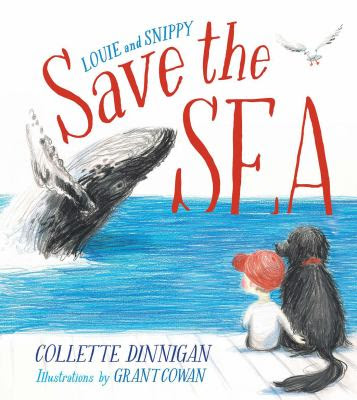
Louie and Snippy Save the Sea (2019) by Collette Dinnigan and Grant Cowan. Berbay 

The creators present a strong message on the effects of pollution – particularly plastics – in the ocean, on sea life. Louie and his dog are on the beach, and the boy dreams of travelling underwater, but the dream is nightmarish as he meets many sea creatures in life threatening situations due to the many forms of plastic in the ocean. Once awake, Louie and Sniffy set out to educate others on the beach with an action plan to make a difference. The characters taking up the cause, rather than advice at the end by the author, presents a more powerful message of taking responsibility through positive actions. The book is gloriously illustrated by Grant Cowan in pencil to portray a series of distressed but relatable creatures. Although a little  didactic in tone, there a many teachable moments between its covers – on the ocean, sea creatures, pollution and looking after our Earth.


Walk of the Whales
(2021) by Nick Bland. Hardie Grant

Bland sends a very strong message about human responsibility for the state of our oceans when the whales leave the polluted ocean and move onto the land. At first a curiosity, this becomes a disaster as shopkeepers go out of business, farms are flooded with water and salt, and people shout horrible, anti-whale words. The message is saved to the final pages, and the reader is mesmerised by the various antics of an array of different whale species as the leave the ocean to inhabit the land. Tongue in cheek humour, wonderful perspectives to indicate scale and simple straightforward language recount the exodus from the sea, the impact on human lives and then puts forward a solution. 

It is interesting to note that it is only when human lives are seriously disrupted that they start to take some responsibility rather than just blaming the whales. Although marketed as a book for young readers Bland sends a powerful message that will stimulate debate with older readers.


~~~~~~~~~~~~~~~~~~~~~~~~

On the theme of being responsible for our actions the following three recent publications are worth investigating.


The Tantrum that Saved the World (2022) by Megan Herbert and environmental scientist Michael E. Mann. Penguin


Targetting younger readers, Sophia is visited by and listens to the stories of misplaced animals that turn up on her doorstep. She learns that this is her fight, too…and discovers the power of collective action, the strength of her own voice, and how all of us are stronger together. The second part is particularly useful to adults sharing this book as it provides information on climate change and the final section introduces positive action for building a better world together.

Lynwood Music. (2019, December 7). The Tantrum that Saved the World.
https://youtu.be/eIK1HZZtsw8 


Flooded. (2022) by Mariajo Ilustrjo. Murdoch Books.

Ilustrjo has created a stunning allegorical tale that speaks to sophisticated readers and adults alike. Visualised through the perspective of a marmoset, and told from an outside observer stance, the city gradually floods. Ignoring the prompting of the marmoset seeking help, the animal inhabitants adjust to the worsening predicament. First with gumboots, then oxygen tanks and helmets as the waters rise and treasures are lost or destroyed. The giraffes, as the tallest animals, can’t see what the problem is until they too are immersed. As the numbers of affected animals increases, they finally start to band together to complain. It is the marmoset, who has been waiting for this moment, that finally gets the animals to cooperate and work together to solve the problem – evocatively portrayed via a fold out page to present all the animals across a triple page spread. The underlying message is a wake call to humanity – that we can’t ignore the suffering of others until it affects us – like the ostrich with his head in the sand – and the power of working together to find and enact solutions. The intriguing illustrations, in muted greys and watery blues, effectively extend the text to convey the intended message. Some examples of the art work can be viewed on Ilustrio’s website.  Older readers will be able to make many connections to current global issues in this allegorical tale. The Western world’s (as the superior giraffes) response to COVID, or dealing with climate change – the point is that it needs to be a united and cohesive response. A sophisticated book that


It’s Up to Us: A Children’s Terra Carta for Nature, People and Planet (2021) by Christopher Lloyd and lavishly illustrated by numerous illustrators from around the globe. What on Earth Books / Walker (AU)

Endorsed by HRH The Prince of Wales and designed in partnership with the Prince’s Foundation the book presents the road map to sustainability that has be created by the Prince and his Sustainable Markets initiative and included at the end of the book. The book aims to promote the importance of re-establishing harmony between Nature, the People and the Planet. The forward by HRH The Prince of Wales highlights the connection children have to Nature and his intent is for this literary non-fiction book to inspire young people to discover, celebrate, support and care for our Planet. The book is divided into four sections with the first three reflecting nature, people and the planet in both celebration and in concern showing how the balance between these elements has been lost. Part 4, the Terra Carta, presents ways we can bring Nature back into balance. As well as presenting the Terra Carta, the end pages also provide images and brief biographies and locations of the 33 illustrators, information on the Prince’s Foundation, a glossary, information on the carbon footprint of the book and an explanation of the Fibonacci spiral. Visit the What on Earth Books website for a downloadable poster to start mapping your action plan now.


The book sends a clear and pressing message for communities to work together to ensure a sustainable future and to bring Nature back into balance. This section explains and illustrates key elements in the Terra Carta road map. The final message, as a poster brandished by a diverse group of children states (p. 49):


We CAN do this.

We MUST do this.

And we have to do it NOW.

Because…

IT’S 

UP

TO US!


What on Earth Books. (2021, October 26). Book Trailer: It's Up to Us.
https://youtu.be/0RL5Eawqsos

References


Arteaga, A. (2020, February 28). Thinking bigger solutions. Climate Interpreter. https://climateinterpreter.org/content/thinking-bigger-solutions


Haq, G. (2018, June 4).  Children’s books can do more to inspire the new generation of Earth warriors. The Conversation.

https://theconversation.com/childrens-books-can-do-more-to-inspire-the-new-generation-of-earth-warriors-97580


Ljanta, A. (2019, July 1). Book list: Kids with climate change anxiety. The Sapling

https://www.thesapling.co.nz/single-post/2019/07/01/book-list-supporting-kids-climate-change-emotions


Jennie Bales

Adjunct Lecturer, Charles Sturt University

CBCA Tasmania Social Media Coordinator

Friday, 22 July 2022

Getting ready for the celebrations – it’s nearly Book Week!

With just four weeks until Book Week kicks off, Loretta Brazendale is making plans for  celebrations in libraries on the north west coast of Tasmania. She shares some past costume ideas and her thoughts on shortlisted Early Childhood titles. Have you predicted a winner yet?


Well, it’s getting close to my favourite time of year Book Week!!! 

What to wear for this year’s book week is a very hard decision and I always think of a costume that I need my Mum to help make. Don’t get me wrong my Mum loves to help make and design my Book Week costumes but often comments, “I didn’t ever think I would still be making Book Week Costumes for my daughter who is nearly 36!” Good old mum! 


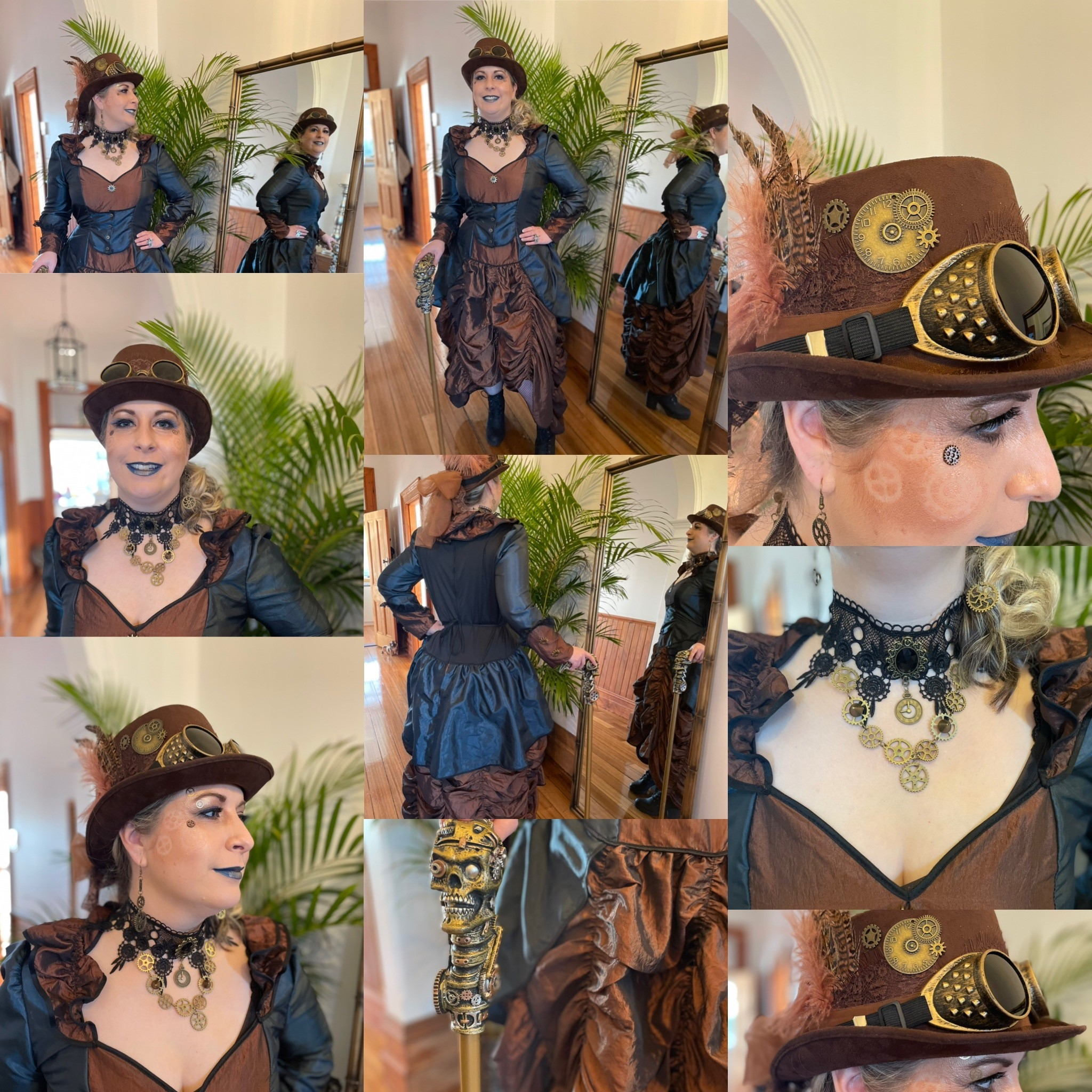
Thought I would share the 2 costumes I wore last year at the Burnie Library for Book Week. The Cockroach costume even caught the eye of Author Maggie Hutchings who then shared my picture on her Instagram page. 

I wish everyone a happy 2022 Book Week and good luck to all the Shortlists for this year. 


Book of the year shortlist – Early Childhood 


When the Waterhole Dries Up – Kaye Baillie (illus. by Max Hamilton). Windy Hollow Books

The tale of a little boy in the Australian outback, where its dusty and dirty and lots of Australian animals live. But the water hole has dried up, so the animals try to share his bath but spill all the water... good thing it’s raining!

Nice fast-moving story that could generate fun for younger readers. Ideal for bedtime or just before bath time. Very well illustrate with lots of local Australia wildlife. 


What Do You Call Your Grandma? – Ashleigh Barton (illus. by Martina Heiduczek). Harper Collins

A beautiful book with a double page spread of each country and its landmarks and how a child refers to their grandma in that country.
Will suit multi-cultural, diversity and Harmony Day themes.
Nicely illustrated and well written I feel older children above ages 5 and up will love it. I think the story would be too long to hold the interest of younger children. 


Walk of the Whales – Nick Bland. Little Hare / Hardie Grant

My favourite book by far for 2022! 

Great illustrations and a very meaningful story. A lesson for everyone, not just children. Easy to read and the illustrations themselves tell the story. 

I loved the whale reading in the swimming pool. I also loved the whales on bikes. They were wearing helmets! Safety first.

(Hopefully a Winner)


Amira’s Suitcase – Vikki Conley (illus. by Nicky Johnson). New Frontier 

Amira finds a sprouting seed growing inside a suitcase, she lovingly begins to nurture and look after the seed. As the seed grows and grows, so does Amira’s happiness, her friendships with the other children in the camp. A heart-warming story of children contributing what little they have for the greater good. Beautiful Illustrations.  


Jetty Jumping – Andrea Rowe (illus. by Hannah Sommerville). Little Hare / Hardie Grant

Really nice book with a good story & great illustration. Plus, it told a good story of a child conquering her fear. I would say that this story would suit children 3 years and over. 


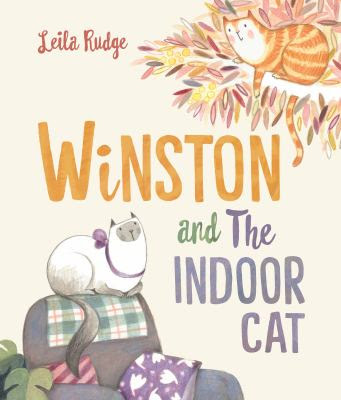
Winston and the Indoor Cat – Leila Rudge. Walker Books

A cute, simple story. There is probably a message about understanding and accepting each other's differences. The small amount of repetition was used well. Nicely illustrated but the story didn’t really appeal to me but that might be – because I’m more of a dog lover than a cat lover. 


Loretta Brazendale | Information Services Coordinator
Burnie Library 
and West Coast Libraries including King Island | Libraries Tasmania 


Editor's note: I too think Walk of the Whales is an outstanding entry and one well suited to older readers - would have loved to see this title in the Picture Book of the Year category and do hope that secondary schools include this book in their collections as a a sophisticated picture book to engage older readers,