Welcome to the blog of the Tasmanian branch of the Children's Book Council of Australia!

Monday, 18 March 2013

Crossing the Divide ... or, Writing for young people and adults

The release of J K Rowling's The Casual Vacancy marks a dramatic change from young people's fantasy to adult fiction and it started me thinking about just how many authors have managed to cross the divide between young people's and adult books, and vice versa.

Most of us would know that Mark Twain (Samuel Clemens) wrote Adventures of Huckleberry Finn, as well as A Connecticut Yankee in King Arthur's Court. A A Milne, famous for Winnie-the-Pooh also wrote detective novels and short stories for adults as well as war poetry. And Ian Fleming, who of course immortalised James Bond on paper, also wrote the children's classic, Chitty Chitty Bang Bang.

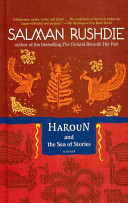
Adult authors who write/wrote for young people include Salman Rushdie (Haroun and the Sea of Stories), Oscar Wilde (The Happy Prince and Other Tales), T S Eliot (Old Possum's Book of Practical Cats), Margaret Atwood (Up in a Tree) and James Patterson (the Maximum Ride series).

And young people's authors who write/wrote for adults include Anthony Horowitz (the thriller William S, a string of screen plays for television and a series of graphic novel horror stories called Edge), Roald Dahl (My Uncle Oswald in addition to short stories, one of the more successful being The Man from the South), Dr. Seuss (The Seven Lady Godivas: The True Facts Concerning History's Barest Family), R L Stine (the horror novel Red Rain) and C S Lewis (The Discarded Image, and a revision of John Bunyan's Pilgrim's Progress called The Pilgrim's Regress).
 
David Galef, a writer and English Professor in the US, researched this topic. And in Crossing Over: Authors Who Write Both Children's and Adults' Fiction, which he wrote for the Children's Literature Association Quarterly, he placed such authors into three main categories.

1. Writers of adult fiction who 'take up children's literature in mid-career’. Galef says that some even manage the transition with grace, Roald Dahl for example;
2. Those who start out writing for children and then only later write for adults. He says, 'those who achieve sufficient fame in children's literature ... will attract adult readers for anything they have written'. Maurice Sendak is an example; and
3. Those authors 'who can balance an array of diverse projects and have done so since the start of their careers.' Louisa May Alcott and C S Lewis.

I guess this tells us that some authors can/could be flexible in their thinking, their imagination and their writing. But the real question is - did they cross the divide successfully?

What do you think?

Penny Garnsworthy


Monday, 11 March 2013

A BEGINNER'S GUIDE TO CROWD FUNDING

There was a time when publishing a book was all about agents, contracts and the negotiation of advances. Then, as now, publishing was an expensive enterprise that required an investment, and that investment was found at a publisher. Of course now the shifting emphasis from paper to electronic publishing has opened up a new way of thinking about how a book might be made, but there is another equally interesting form of publishing underway, that often brings us traditional ink-and-paper books, but through new-world means: crowd funding.

Anyone interested in modern art should be keeping an eye on websites like Kickstarter, Pozible and Indiegogo. In the last few years these websites have become absolutely central to a new kind of creation model in which the artist is king, and as such artists from all tiers of fame have been giving it a try. I have been delighted by the results of the projects I have crowd funded. Although I've given my money across multiple mediums, the publishing offerings have been notably beautiful - on the shelf they are indistinguishable from books I've been sent by mainstream publishers.

So how does it work? Crowd funding has a very simple premise: the creator makes an argument for the product that they wish to create, explaining the time-frame that they plan to make it in, and offering a comprehensive levelling system through which patrons might "opt-in." These start at the very simple, such as a small-change contribution getting you a tweet of thanks, through to copies of the product signed, and then at a much higher tier, dinner with the author when they next visit your area. If a minimum amount of "pledges" are gained, the product is created, and many offer "stretch goals," so that as the product makes more money, its quality increases. One of the nice aspects of this system is that the artist is more connected to his/her audience. Many projects I have funded have offered the patrons the opportunity to comment upon designs and aspects of the finished product, with regular email updates explaining how things are going.

Eventually, the product is sent out to all of the people who have supported it, and then it often enters the traditional market as well. The advantage of attaching yourself to it early is that you get opportunities the general public won't have; signed copies or additional trinkets that are sent out with the product. Occasionally I have pledged at a level that allowed me to be listed in the acknowledgements section of a book; you can imagine what this might mean as a gift… though you do need to be careful and make sure you know how far away the product is. It will likely take months to make.

I don't necessarily recommend that writers approach crowd funding in preference to traditional publishing houses. In many cases, to allow funding to reach its goal, a level of public support is required prior to beginning a project. That said, as a book collector and a person who enjoys supporting artists (and being more involved in the process of them creating their art), I think crowd funding represents a remarkable opportunity to engage with writers, illustrators and creators of all kinds.

In fact, it may not even be that new. Mozart, after all, was visiting subscribers in the 18th Century and offering them services in exchange for an outlay of funds: concert tickets and copies of concertos now replaced by ebooks and dedicated YouTube videos. An old art has been digitised and globalised. The world is calling out with great ideas. If we listen, we can be a part of them.

Where to start:


Lyndon Riggall

Monday, 4 March 2013

BINGO! I have found another great book for older teens and young adults

‘The Convent’ by Maureen McCarthy
When I hit upon a book that :
a)      Is a good story that keeps you interested and eagerly awaiting developments
b)      deals with social issues relevant and close to your own heart
c)       is set in a familiar location where you have spent time and is therefore recognizable
d)       has an historical bent
then as far as I’m concerned I am onto a winner.
I was handed such a book just last week.  ‘The Convent’ by Maureen McCarthy is a young adult novel published last year by Allen and Unwin.
Recently I have come to the conclusion that some of the best writing is actually produced for younger people.  For some reason in YA novels the issues are clearer and more realistic or perhaps I have become lazy and need my literature to be easily accessible. On the other hand perhaps I haven’t yet left teen age.  But seriously, I would strongly recommend adult readers to browse through the YA section in your library; it’s not all about vampires and werewolves.  Or better still go to the CBCA website (www.cbca.org ) and look up the past few years of notables and shortlisted books for older readers. This is a fail-safe guide and you won’t be disappointed.  Take ‘Kill the Possum’ by James Maloney or ‘Jasper Jones’ by Craig Silvey to name just two.
But back to ‘The Convent’.  The action and the several stories intertwined in ‘The Convent’ take place at the Abbotsford Convent which is situated next door to the Collingswood Children’s Garden in Melbourne. I know this place, having visited the garden one afternoon on a family outing ending with afternoon tea at a very trendy coffee shop, probably the actual one described in the book.  Today the elegant but still  faintly daunting buildings are a far cry from the sad and tortured past enclosed within its wall and for many visitors completely unknown or just forgotten.
Based to a degree on McCarthy’s own family history and involving the issues which led to the recent political apologies to women whose illegitimate or ‘fatherless’ children were forcibly removed from them, the stories of Sadie, Ellen, Cecelia and Peach emerge stark and poignant.
Issues of women’s rights are prominent but the patronizing, sometimes inhumane, attitudes adopted by society and especially the Catholic Church come into play as well, as do the intriguing issues of faith, belief in a God and religious dedication. 
McCarthy deftly maneuvers between her central characters, the different eras in which they live and the vastly differing social climates in which each lives, but she still manages to keep all the different components related and connected.
This is definitely a book for girls, but in 2013 when statistics are showing that women’s rights and equality are actually declining this is a book which is a timely and important reminder of what went on before and startlingly not so long ago.
And since I happen to be in Melbourne as I write this, I will be revisiting Abbotsford convent again at the weekend but this time with a lot more understanding and a more profound appreciation of, and more appropriate anguish about, the history of the building and its former occupants.
Carol Fuller
 

Sunday, 24 February 2013

The Other Heroes – the Reading Heroes


On Friday, the bookshop held the launch of Poppy Gee’s Bay of Fires (Headline).  In her comments in the back of the novel and also in the words written on the night, she thanked a number of people, but especially those teachers who helped her discover her love of stories. 

In March, Reading Hero Justin D’Ath will come to Launceston to launch his new Lost World Circus series. The launch is being organised by a young reader – the same young man who organised the launch of Devil Danger in 2009.  Justin, who is paying his own way to Launceston, has been corresponding with this reader and many others over the years – encouraging them in both their reading and their own creative writing.  

The library in Louisville in USA gives a sign to put in their garden to every child who participates in the reading program.  The sign reads “A reading champion lives here”.   The person who instigated that is a Reading Hero.

In the current issue of Reading Time (Vol 57 No1) on pages 12-13 & 36, we see some current Reading Heroes – the Judges for the 2013 CBCA Book of the Year Awards.

Walker Books have created a website www.heroesofreading.com.au where they wish to celebrate anyone who has inspired children to read.  Go ahead, write a blog; thank your reading hero.

Nella Pickup

Sunday, 17 February 2013

Some Non-fiction Titles : Some Great Picture Books

For some time, I’ve been thinking about making non-fiction the topic for one of my blogs, but when it came to checking on what to write about, I found relatively few new titles. This really is a pity because I think it is essential that excellent information books are published for younger readers.
We recognise that not every adult is a fiction reader, and that we need a range of genres available to satisfy everyone’s preferences. However, it seems that this choice is not consistently produced for those whose reading skills are not fully developed. I’m sure that those of us who have been teachers remember many students, particularly boys, who have been turned off the process of learning to read by the subject matter of the books on offer. They have really wanted to read about real things not imagination.
I realise that the cost of production of non-fiction books is probably higher than for fiction titles. I also realise that many children try to get all their information needs from the internet. However I am sure that there are many children who may find a new interest or obsession by browsing through a well-produced book.
So, which titles did I come across?
Angel of Kokoda by Mark Wilson : this paperback re-issue (first published 2010) tells the poignant story of hardship along the Kokoda Track during World War 2, as seen through the eyes of the young Papua New Guinean, Kari. Kari doesn’t understand why the fighting has happened but he does recognise the kindness offered to him and then the suffering of an Australian soldier. It’s a great picture book introduction to a serious subject.
Lyrebird: a true story by Jackie Kerin, illus Peter Gouldthorpe (Museum Victoria) :  this picture book combines factual information about lyrebirds with the story (set in the 1930s) of the friendship between Edith, the Dandenong gardener, and James, the bird, as he performs for her, displaying lyrebirds’ great ability to dance, and mimic other sounds. Gouldthorpe’s detailed realistic illustrations add to the historical setting as well as creating accurate landscapes.
The Beetle Book by Steve Jenkins (Houghton Mifflin) : this book has great hand-drawn illustrations (as opposed to photographs) with plenty of white space and clear explanations. It’s sure to entice the enthusiastic bug-collector, even though most of the beetles included are not ones found in our backyards. The major drawback for me is that it is not Australian and I haven’t seen it her in bookshops. But it can, of course, be ordered through your local bookseller.

Don’t Flush!: Lifting the Lid on the Science of Poo and Wee  by Mary and Richard Platt (Science Museum) :  I love books like this (it’s full of toilet humour) which have lots of information about body functions, and I know that young readers do too. They are sure to be fascinated (as well as sometimes repelled) by some of the information they’ll find in this book. For example, there’s a scale of hardness for excreta; making poo paper from elephant dung; eating and drinking body excretions around the world; use of urine in leather manufacture. There’s lots more too, combined with cartoon-style illustrations and short text boxes.

When walking past one of my local bookshops, my eye was taken by part of their window display. The books I noticed were the Zen Tails series written by Peter Whitfield. These are classical philosophical tales which include a moral, presented in picture book format. I look forward to sharing them with my five year old grandson, who I believe is now ready for a first introduction to them. If you haven't seen them please search them out.

And now, a few that aren’t information books, and of course, in my favourite picture book format.

Tom and Tilly by Jedda Robaard (Walker): Tom goes on an adventure on the high seas with his bear, Tilly. Lovely watercolours and a simple but reassuring story. I love the fact that the boat is made from a page from an atlas – southern Tasmania. Older readers may recognise some of the places.

Treasure box by Margaret Wild and Freya Blackwood (Viking) : here we have a wonderful picture book for more mature readers. Peter and his father are forced to flee when war reaches their town but they can carry only one thing with them: their treasure box. During his exile, Peter can no longer even carry this and many years later he returns to find it.  Blackwood’s illustrative technique is masterful in this book, creating a sense of serenity and beauty which is strongly countered by theme of the desolation of war.

Maude, the not-so noticeable Shrimpton by Lauren Child, illustrated by Trisha Krauss (Puffin) : this is another picture book for mature readers. Younger ones would understand the words and enjoy the pictures but may not get the subtleties. Maude is the only one of her family who doesn’t want to stand out. For her birthday she asks for a goldfish but instead is given a tiger, whose behaviour isn’t at all acceptable. Maude manages to avoid the treatment given to the rest of the family. This is the first of Child’s texts that I’ve read which she hasn’t illustrated too, but she has obviously had some input into the finished product.

Open This Little Book by Jessie Klausmeier  and Suzy Lee (Chronicle books) : what a fun introduction to colours and books, as a book to share. It probably wouldn’t work well for a large group.  It creates a story within a story within a story and carries the ideas from one cover to the next.

Enjoy them – I hope there are lots of new titles which you can savour through your local bookshop or library.


Maureen Mann

Monday, 11 February 2013

Superheroes and pop culture: Should we be worried?


Storylines for children’s play
I work a lot with early childhood educators and they often express concern about young children’s preoccupation with the superheroes of popular culture.

Their concerns relate to:
·         the domination of children’s play time by watching, playing video games and/or acting out scenarios deriving from their electronic media experiences
·         the gendered nature of many characters and actions – where boys can be powerful, but girls have to be rescued
·         the attraction of associated commercial costumes and products, which raise equity issues and create young ‘consumers’
·         the promotion of aggressive behaviour and the potential of game scenarios to exclude other children on the basis of age, gender or skill level
·         repetitive storylines that may limit children’s imagination and creativity.

These concerns are legitimate, but given that play is an important way of learning in early childhood and, given that play themes are changing, what can adults do about it?

Work out why these themes appeal
Most of us are attracted to the idea that a smaller, weaker person can triumph over adversity and defeat the evil forces that threaten them and others; we have a long affinity with Bilbo Baggins, Rowan of Rin and Harry Potter, for example; Dora, Diego, Superman, Spider Man et al fulfil a similar human need to feel powerful in a scary world.

We all enjoy shared experiences where we don’t need to negotiate the rules, roles, characters or plot because it’s shared knowledge; even strangers at the park can play superheroes if they’re wearing similar costumes; running and following the action pattern of the group makes you part of the game.

For young children, the nature of contemporary superheroes offers a glorious physicality – an excuse to run, chase, leap, shout, capture and rescue.

And there is the lure of the forbidden; magic capes and dangerous missions are not quite acceptable in everyday reality when you’re a child, but in a fantasy world you can feel courageous and in charge.

Identify minuses and pluses and act accordingly
The way in which animated stories are transmitted provides an inherent limitation; everything is visualised and nothing is left to the imagination. Children’s play based on electronic storylines largely calls for imitation and re-creation rather than interpretation or extrapolation; there is no room for wondering.
Such stories generally lack narrative flexibility; they are written to an unvaried formula and even the costumes and artefacts come with instructions for their use. This constrains children’s creative use of other objects for symbolic purposes.

Animated characters tend to be two dimensional and not psychologically complex; superficial information is provided about different cultures and settings, with problems being solved all too easily by magic or technological devices.

On the positive side, Dora the Explorer, for example, is an empowered female protagonist. She is a Spanish- speaking Latina girl who demonstrates that being multilingual is a social and cultural asset. She uses networks of friends to solve the problems she faces and models wholesome values of collaboration and cross-cultural unity. The programs are designed to engage young viewers in physical actions and verbal responses, discouraging passive, sponge-like absorbed watching.

 Advice to parents and educators
  • Set clear boundaries: if running with sharp objects and jumping off heights are recognised normally as unacceptable risks, they are also prohibited in superhero games.
  • Monitor and manage children’s screen time, including TV, video games and electronic board games.
  • Negotiate entry to children’s fantasy scenarios, challenging stereotypes and behaviours that are unkind and developing rich narrative possibilities beyond the prescribed formula.
  • Invite children to draw, paint, write about and construct in relation to their heroes – Do Power Rangers need a box plane? Is a space craft necessary for Star Wars? Could we paint this cloth with a Superman emblem?
  • Talk, talk, talk with children; ask questions to check their sense of reality – Can people really jump off tall buildings safely? Is this fair or kind? Could the problem have been solved in another way?
  • Discuss, model and guide children’s conflict resolution, talking about how others feel and building empathy; suggest strategies to ensure that everyone has a turn at being ‘the Good Guy’.
  • To quote Spiderman: remind children that ‘With great power, comes great responsibility!’

Balance the diet
There are three main sources for young children’s imaginative and socio-dramatic play:
  • Real life experiences;
  • Cultural resources such as stories told and read; &
  • Electronic media.
To create ‘a balanced diet’, it is important that adults working with young children encourage them to talk about, sequence and elaborate on everyday experiences such as family holidays, camping, going to the doctor’s, vet’s or hospital etc. Helping children to articulate their own life story enables them to deal with any unpleasantness and work through what the experience means for them through play.

Equally, it is important that adults tell and read stories to children, including traditional tales, family histories and contemporary picture and story books. Sharing these in interactive ways where children can ‘act out’ aspects of the narratives, promotes the use of such rich storylines in play. (In WA, I saw a wonderful example in a 4-5 year old class where roles were taken and costumes created to enact My Cat Likes to Hide in Boxes, by Eve Sutton & Lynley Dodd, Puffin 2010)

Focus on positive themes and bring in appealing, constructive games such as some of the Lego-franchised games and Moshi Monsters which involves creating a monster and then caring for it, buying food with points earned in the game.

If you can’t lick ‘em, join ‘em!

References
Barnes, H. (2008) The value of superhero play. NCAC. Retrieved 10/02/13
Chappell, D. (2008) Better Multiculturalism Through Technology: Dora the Explorer and the Training of the Preschool Viewer/s. Red Feather. Retrieved 10/02/13
Cupit, C. G. (1989). Socialising the superheroes. Watson: Australian Early Childhood Association.
Kearney, J. Superhero play- Good or evil? http://www.parenting express.com Retrieved 10/02/13
Levin, D. (2006) Beyond Banning War and Superhero Play: Meeting Children’s Needs in Violent Times. NAEYC
www.education.com Retrieved 10/02/13 

Jenni Connor

Tuesday, 5 February 2013

No vampires or fantasy or anything upsetting...


“I want to buy a book for my teenage niece” she said.  “No vampires or fantasy or anything upsetting.  Do you think Poor Man’s Orange would do?”  So if poverty, rape, attempted abortion, drunkenness, corruption, adultery and the Church are acceptable topics, she could try:

Maureen McCarthy The Convent (Allen & Unwin)
The story of four generations of women who were associated with the Abbotsford Convent.  McCarthy tells it as it was – no modern day disgust for the evils perpetrated by “the good sisters” in the name of the church. 

And for a church of a different kind:

Libba Bray The Diviners (Allen & Unwin)
Evie O'Neill, exiled from her hometown, has been sent to live in New York City with her Uncle Will, curator of The Museum of American Folklore, Superstition, and the Occult--also known as "The Museum of the Creepy Crawlies." New York is the city of speakeasies, shopping, glamorous Ziegfeld girls and rakish pickpockets and occult-based murders.  A big book with many characters, whom we will hope to meet in the sequel.
(PS Libba Bray will be at the Reading Matters conference)

Assuming the niece has read Suzanne Collins’ Hunger Games trilogy (Scholastic) and wants action, self-sufficiency, friendships, girl empowerment, she could read:

Divergent and Insurgent by Veronica Roth (HarperCollins)
Society is divided into five factions, each dedicated to the cultivation of a particular virtue- Erudite, Candor, Abnegation, Dauntless, and Amity. On an appointed day of every year, all sixteen-year-olds, including Beatrice Prior, must select the faction to which they will devote the rest of their lives.

Marie Lu Legend and Prodigy (Penguin)
June and Day are born into opposite sides of a war in a futuristic Los Angeles in the Republic of America. June is the military prodigy; Day is the “criminal” who supposedly killed June’s brother.

Veronica Rossi Under the Never Sky and Through the Ever Night (Atom)
Exiled from the enclosed city of Reverie, Aria knows her chances of surviving in the outer wasteland, with cannibals, disease, mutated people, and violent storms, are slim. Then Aria meets an Outsider named Perry. He's wild - a savage - and her only hope of staying alive.

Laini Taylor Daughter of Smoke and Bone and Days of Blood and Starlight (Hachette)
An age old tale of forbidden love: Karou is a demon; Akiva is a Misbegotten and an angel.  They meet for the second time in the human world.  Perhaps Auntie should be aware that the second book has many days of blood and not much starlight.

Or maybe the niece enjoys retellings:

Marissa Meyer Cinder (Puffin)
First in the Lunar Chronicles series.  Cinder is a talented teenage mechanic and cyborg—part human, part robot—living in New Beijing with a demanding adoptive mother and two stepsisters.  Throw in the evil Lunar Queen Levana, the handsome Prince Kai, a plague and a secret Cinder doesn’t know  - the makings of a fairy tale with the breakneck speed of dystopian fiction. (The second in the Lunar chronicles, Scarlet, was released last week.)

Meg Cabot Abandon and Underworld (Macmillan)
Pierce Oliviera is in the Underworld, the place between heaven and hell where spirits gather before their final journey.  The Furies have tried to kill Pierce to hurt the gatekeeper of the Underworld, John Hayden.

Or maybe more contemporary realism stories would be more to her taste: 

Gayle Forman If I Stay and Where She Went (Random House)
Mia is in ICU, waiting to die. As the events from the car accident that killed her family unfold, she examines her relationships with everyone to determine whether or not it's worth staying.
Where she went is set three years later . . . three years since Mia walked out of Adam's life forever. A study of grief, loss and forgiveness.
(PS Gayle Forman will be at the Reading Matters conference)

Megan Abbott Dare Me (Macmillan)
It was Keir Graff’s description of cheerleaders as “Spartan warriors with eating disorders.... cheerleading as blood sport... Shakespearean tragedy with friendship bracelets” that alerted me to Dare Me.  There is a death, there is a mystery, and everyone is implicated.  Beth is an unforgettable villain; Addy is her lieutenant.

Michael Grant and Katherine Applegate Eve and Adam (Random House)
Evening Spiker is recuperating in her mum's medical facility. She is healing at a remarkable rate, faster than physically possible. Joining forces with the hot lab assistant, Solo, she realises that things at Spiker Biotech are not quite as they seem.   Maybe not quite realism but it is an intriguing sci-fi novel touching on genetics.
 
Jesse Andrews Me and Earl and the Dying Girl (Allen & Unwin)
Seventeen-year-old Greg is able to disappear at will into any social environment. He has only one friend, Earl.  They spend their time making movies, their own incomprehensible versions of Coppola and Herzog cult classics. He is pushed by his mother into befriending Rachel, a leukaemia sufferer.  Greg’s lack of profundity, and the struggle to overcome it, makes this frequently hilarious and absolutely heartfelt debut profound.

And as dragons are real..... may I suggest?

Rachel Hartman Seraphina Random House
The 40 years of peace between human and dragon kingdoms is on the verge of collapse. Seraphina, a gifted court musician, wants only to go unnoticed; she is the unthinkable, a human-dragon half-breed, and her secret must be protected. But when Prince Lucian Kiggs asks for her help to investigate the murder of Prince Rufus, she has no choice but to become involved. The beginning of an exciting new series.

And auntie? – she chose Ruth Park’s Playing Beatie Bow (Penguin).

Nella Pickup


Tuesday, 29 January 2013

Some comments on YA Historical fiction

Ask a bunch of teenage students who Julius Caesar was and they will answer “Who is she?” You need not blame the inadequacy of the history curriculum -  it is simply that they do not read much.
An understanding of history for most people probably comes from stories. I did not “do” history of ancient Rome much less Genghis Khan or the Vikings at school. (I think my early school history stalled on Blaxland, Wentworth, and Lawson).  Yet, however imperfect our knowledge, we usually know something about them. I DO at least recognise where John Flanagan gets his inspiration for the exciting Rangers Apprentice series.
If one reviewer in Reading Time is correct, that young readers have been on a diet of futuristic and Celtic fantasy for many years, it is no wonder historical understanding may be missing.
I have always been fond of historical fiction. Probably the earliest and still one of my favourite reads was Robert Louis Stevenson’s Black Arrow won as a Sunday school prize and read that afternoon.
I remember borrowing Geoffrey Trease and homophonic Henry Treece from Stanley Lady Clark Memorial Library, may it rest in peace. Enthralled with the adventures in historic times, I did not know I was learning about history, I was just reading stories. Merely writing about it reawakens my interest to read them again as an adult.
Coincidentally I recently picked up Rosemary Sutcliff’s Shield Ring while I was reading Robert Ferguson The Hammer and the Cross: a new history of the Vikings London, Penguin, 2010. Sutcliff’s fiction made me much more aware of Viking history.  In Sutcliff’s story of the resistance to the Norman invasion by the Lake District descendants of the Vikings, the history supports the story.  The story is not a device for teaching.
This has opened my eyes, though I admit not necessarily my mind/heart, to some contemporary YA historical fiction.
A story should need no explanations; it should explain itself. My adult science-trained brain bridles at the paradoxes of the popular time travel device which interferes with my enjoyment of these stories.
However, Maureen McCarthy in her The Convent really hits the spot.  It is never didactic and uses the stratagem of telling the story from four generations of “Catholic” women’s points of view with nary a Tardis in sight. 

Like Bernard Shaw, my education was interrupted by schooling. I hope that the Australian curriculum does not spawn historic fiction in which the story is the device to “teach” history rather than history being  a device to tell a story. 
My appetite however has been whetted (not wetted) for more YA historical fiction.  Go to http://www.theatlanticwire.com/entertainment/2013/01/literary-tour-through-historical-y/60731/ and see for yourself.

Richard Pickup (President, Children's Book Council of Australia (Tas. Branch) Inc.