Welcome to the blog of the Tasmanian branch of the Children's Book Council of Australia!

Monday, 27 June 2016

Taking the Creative Route

Johanna Baker-Dowdell shares a wonderful creative writing program currently running across four schools in the Launceston area. Creativity is abundant in not only the student's writing but also the program design and online delivery.

Albert Einstein says, “Creativity is contagious, pass it on!” and that is exactly what is currently happening at four West Tamar schools.

Almost 50 young writers from West Launceston, Trevallyn and Riverside primary schools and Riverside High School have embarked on The Write Road, a 10-week creative writing program. The program is run under the guidance of a teacher from each school and overseen by author, poet and Riverside High School teacher Cameron Hindrum.

The students are given a writing prompt at the beginning of each week and asked to respond in whichever way there are inspired: poem, short story, memory or something else. They then upload their piece to The Write Road blog for feedback, offering the same in return to their fellow writers.

 Kicking off the program, the first prompt was very open: entitled Daybreak, the writers were asked to write a piece based on the photo. To get their minds ticking, the students were prompted to think about the time of day the photo was taken, and who might have taken it. Where was the photographer going? Where had they been? Why?

The second week’s prompt centred around characters, with the writers asked to choose from one of five words and express who they are, considering what makes them interesting, engaging and unique. The words were:
  • Tree
  • Shark
  • The colour red
  • Basketball
  • A wild horse.

For this week - the third - another image prompts the writers. They have been asked what is this, and how did it get here?

My involvement in this program is as a writing mentor for the Trevallyn students, a role I am most excited to have. Even after only a few weeks already I can see the budding writers stretching their wordy muscles. Their questions about word length and writing guidelines shows they are not used to being given such freedom, however I am confident that soon their creativity will overtake doubts.

Some have chosen to hand write their pieces in a journal, others are typing into Word. I’ve encouraged these writers to find the best way to write for them, hoping the program will foster a writing habit that continues for their lifetime.

Anything that inspires children to explore their creativity, especially in a respectful space with their peers, is something I am thrilled to be part of. I can’t wait to see how these young writers develop their pieces over the next two months, and read what they choose to develop further.

Johanna Baker-Dowdell is a freelance journalist and author of the book Business & Baby on Board. 

Saturday, 18 June 2016

Ranging Far and Wide

Inspired by her current geographic location, Maureen Mann connects with the Queen’s birthday celebrations and what's on the English bookshop shelf.

I have been mulling over what to write about for this blog and have wandered from idea to idea. The world seems to have lost many wonderful children’s authors and illustrators recently, including, in March, Peggy Fortnum, who illustrated Michael Bond’s Paddington series and in February Kim Gamble who brought the Tashi series so perfectly alive. But I discarded this idea as, sadly, there were too many to focus on. Or mention Roald Dahl’s centenary in 2016? Not enough time to do him justice.

Queen Elizabeth celebrated her 90th birthday in April, with official celebrations in England last weekend.  Disney has combined the 90th anniversary of Winnie the Pooh with that of the Queen to produce a story combining both characters, only available online. It’s called Winnie the Pooh and the Royal Birthday.

I love The Queen’s Knickers by Nicholas Allan. It was first published in 1995 but has not dated: the child narrator imagines all the kinds of knickers which the Queen might wear for different functions. It’s full of humour suited to both the child and adult reader. In The Queen’s Handbag (2015) by Steve Antony, a swan, dressed in a mask and stripy top, steals her handbag and the Queen pursues the swan across England to try to retrieve her bag. It’s fun, a good introduction to famous places in the UK and encourages the reader to search the page as well. Antony’s previous book was equally humorous: The Queen’s Hat which takes the reader on a chase across London after a strong gust of wind grabs the hat and she and her guards – soldiers, Beefeaters, etc – chase it till it falls on the head of the baby prince. 

And then I ventured into a local bookshop to see what was new in England in the world of children’s books. Lots of titles of course. Here are some which caught my eye.

Archie Snufflekins Oliver Valentine Cupcake Tiberius Cat by Katie Hartnett is the story of a cat, rather like Six Dinner Sid. He has differing names at all the houses on Blossom St but suddenly goes missing and as the reader learns, he befriends lonely Mrs Murray and in doing so, brings the community together.

Tidy by Emily Gravett. 
I have always enjoyed Gravett’s quirky view of life and in this book she maintains her skills, as one would expect from a double winner of the Kate Greenaway award. Tidy is about Pete, an OCD badger who wants to keep the woods tidy, to such an extent that he removes even the trees till he realises that by doing so, he has taken away all that is important. He and his friends combine to return it all to normal. It’s a wonderful story in itself, with a strong environmental message.

Nibbles: The Book Monster by Emma Yarlett. Nibbles loves eating books, entering the stories he finds inside them and causing mayhem. There are many, many flaps to explore as well as holes in the pages as though Nibbles had started work on this book. The reader (child and adult) will enjoy recognising the fractured stories and will have fun with the layout. The cover is really tactile with a lovely feel.

The world’s current refugee crisis is echoed in The Journey by Francesca Sanna. The reader follows a mother and her children as they are forced to flee conflict in their homeland. The reasons are clearly explained for and by the young narrator without losing the power of the story for any adult. The illustrations are a really important addition to the verbal text.

Lane Smith is another of my favourite authors and There is a Tribe of Kids doesn’t disappoint. A boy sets off and comes across a range of animals, including young goats. The language is rich and rhythmical: undulates in a smack of jellyfish, a constellation of stars and other unusual collective nouns. Along the way, the child realises that we all need to spend time and fit in with our own ‘tribe’. The illustrations have been created with a sponge-paint technique.

What’s your favourite book so far in 2016?

Maureen Mann
Retired teacher librarian and avid reader

Sunday, 12 June 2016

Laura Ingalls Wilder and her Tales of Childhood

This week Patsy revisits an old and revitalised favourite - join her as she dips her toes in the prairie wilds of Dakota to explore Wilder's tales.

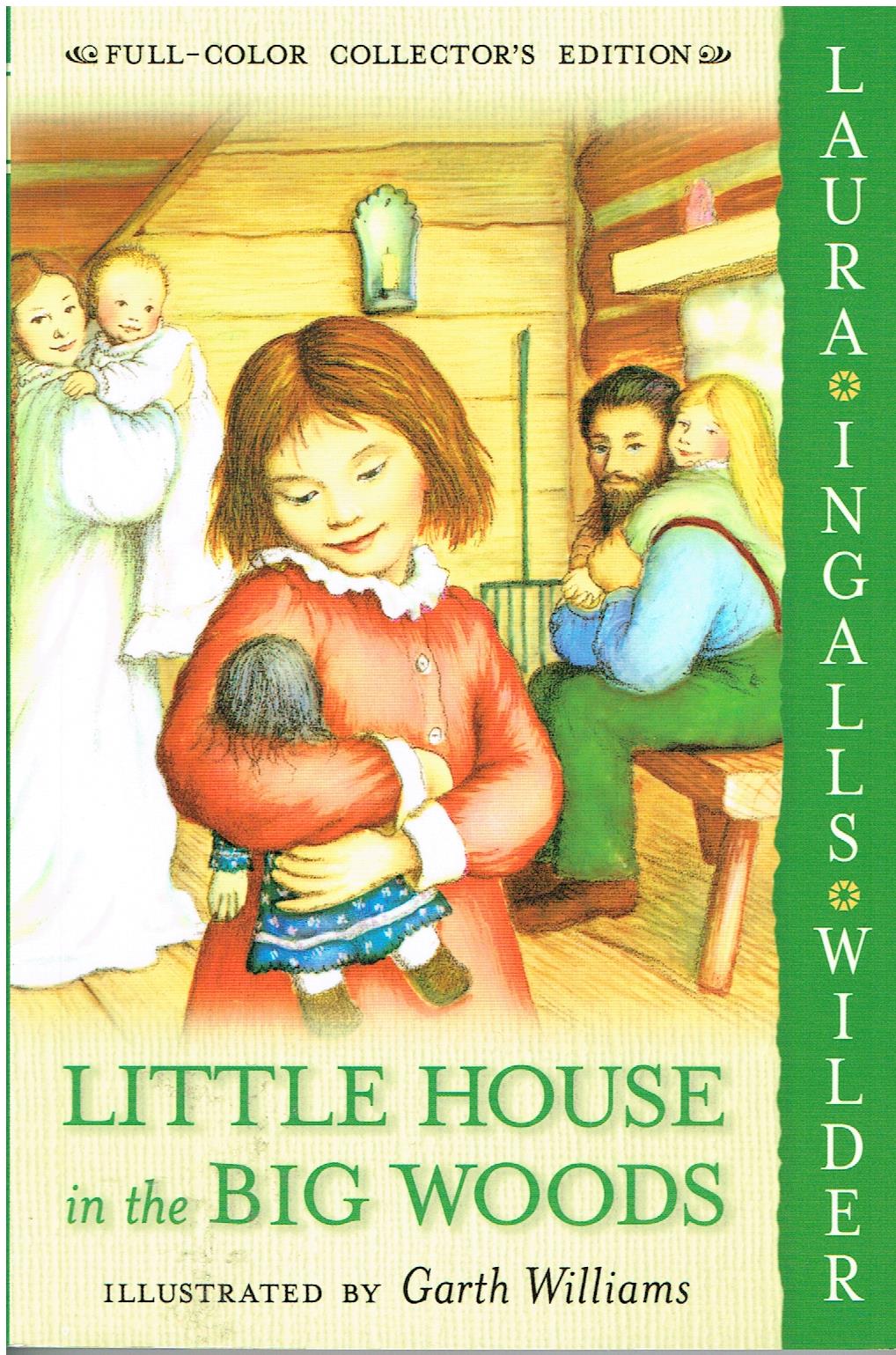
Some months ago I was poking about the young people’s section in our local bookshop, checking, as usual, to see if there was anything wonderful I’d missed, when my eye was drawn to an inviting set of books on a shelf. I recognised the Little house series by Laura Ingalls Wilder, which I had read years ago while my children were the age to read them with me. All paperbacks, same illustrations by Garth Williams, but in cheerful colour this time….

As the grandmother of a fast-aging group of young people, I am pleased to still have a nine-year-old who loves to dip into the suggestions I make for him, so I bought what I remembered as the first two of the series, Little House in the Big Woods and Little House on the Prairie. The publisher had labelled these as 1 and 3 in the set, which surprised me a bit – Farmer boy was now number 2. Still, I thought my selections would provide enough material to assess whether I still enjoyed these books, and whether Tom would or might.

No doubt about that – after I had read these two and thoroughly enjoyed them, I passed them on to him…. Five minutes later – a grunt of surprise, interest, and ‘Nanna, do people eat bears?’  He was hooked!  Not all the titles were available at the shop so we borrowed some from the LINC, which fortunately still has at least one copy of each of the 1930-40 publications (mostly housed in the Fiction Stack, so they have to be requested…)  But I now have the complete set in this new full colour edition, published in 2004.

Tom’s favourite titles, he told me, were Farmer Boy and The Long Winter. It’s not surprising he loved the story of Almanzo as a nine-year-old child on a farm in New York State in the 1860s. Almanzo was the youngest of a family of four children, and life on the farm was not easy. Every child had to be completely immersed in the seasonal demands of producing and preserving the food needed to see the family through a full year, with perhaps a little left over to convert to cash to buy the things the family could not produce. But there were compensations – if Almanzo was needed on the farm, that took precedence over going to school, of course. And he had the task of training a pair of calves to their future function as draught oxen working on the farm. Tom found the description of this process very interesting as he did the collection of great blocks of ice from the frozen pond and its careful storage in the ice-house for the summer.

The Long Winter was of great interest to me as well – for seven months the family was snowed in to their house in the little town! To Tom, the really memorable part of this book was the long and dangerous, but eventually successful, journey made by the teenagers Almanzo and Cap (at least forty miles there and back) across a roadless, snow-covered prairie in search of a store of wheat they had heard about – families were starving in the little town of De Smet, in Dakota Territory.

The series portrays life on the frontier in the Mid-West of what is now the USA and embodies many issues which I found worthy of consideration and which may be of interest in the classroom in twentieth-century Tasmania, with possible parallels between the Australian and American history of settlement.

During the long winter, even the careful settlers with their ethic of self-reliance were in danger of starving during an amazingly harsh and long blizzard period. All the families and communities were independent and had no-one to rely on but themselves. You want to move further west and need a wagon to undertake the journey with your family?  Build it yourself – and the child Laura was able as an adult to describe how her father did this.

Interactions between the natives and the encroaching settlers are described as Laura saw them; and the impact on local wildlife, even through a child’s eyes, might also be a discussion point in the classroom.

 You will understand from the above that I found the series very interesting and thought-provoking on this re-read, and it appears that the material has not become ‘old hat’ in the USA either. In 2014 Laura’s actual autobiography, not previously published, was made available, with annotations, by the South Dakota State Historical Society and editor Pamela Smith Hill, under the title Pioneer Girl: The Annotated Autobiography.

So dig out your old copies, at home or at school – or at the LINC! – and see how you feel about them. And try them in the classroom as well….

Patsy Jones
CBCA(Tas) Treasurer, retired librarian, retired teacher

Editor's note: If you ever happen to be travelling through Dakota you might like to visit the Laura Ingalls Wilder Historic Home & Museum or her birthplace in Wisconsin at the Laura Ingalls Wilder Museum. If not, then at least make a virtual stop. :-)


Sunday, 5 June 2016

Rollicking Regency Fun

Nella laughs her way through some Regency romps.

In my teens, I was a fan of Georgette Heyer and Baroness Orczy. Serendipity made me read Garth Nix’s Newt’s Emerald (Allen & Unwin) (CBCA Notable 2016) and Cindy Anstey’s Love, Lies and Spies (St Martins Press) consecutively. Both are throwbacks to Georgette Heyer – witty language, predictable plots, little character development yet thoroughly enjoyable.

On her eighteenth birthday, Lady Truthful, nicknamed “Newt,” inherits her family’s treasure, the Newington Emerald, which bestows its wearer with magical powers. The emerald is stolen; a disguised Truthful (with magical moustache) sets off to find the gem; on her journey she meets a handsome man, confounds an evil sorceress, has many adventures and falls in love. Garth Nix is a brilliant writer layering the story with many tongue-in-cheek moments including the obligatory elderly chaperone with swordstick. Join Garth Nix as he talks about his Newt’s Emerald and the background research and writing process.


Cindy Anstey’s Juliana is in London for the Season, but rather than find a match, her ambition is to publish her findings on ladybugs and then return home to nurse her ailing father. Meanwhile, Juliana has to cope with driving her buggy off a cliff, dealing with mean girls determined to ruin her and finding a friend in trainee spy, Spencer Northam. 

Both books are witty light-hearted romps, part comedy of manners, part adventure stories and for Nix, part fantasy. (PS much tamer than Gail Carriger’s Parasol Protectorate and with as much verbal sparring as the later Pink Carnation novels of Lauren Willig).

Nella Pickup
Avid reader

Sunday, 29 May 2016

I am not a fan of books…

Karen MacPherson presents three essential ingredients to switch children onto literature – a great recipe for success.

“I am not a fan of books…I am a proud non-reader of books.” This quote has been attributed to musician Kanye West (Mr Kim Kardashian). When I first saw it online I thought it must not be genuine, but as best I can ascertain, he did indeed make this sad announcement. My mind simply cannot come to terms with the idea that a person could think this way. To me, and I suspect any of you reading this blog, a life without reading and books would be unimaginable. Yet we cannot deny that Mr West is not alone in his thinking and that unfortunately, we often see that kind of attitude to reading start to develop among school students.

I suspect that if I wrote about the importance of reading to anyone likely to be browsing this blog, I would be ’preaching to the converted.’ We all appreciate that reading is not just a core skill for succeeding in life, but is in fact an enjoyable pass time that can open whole new worlds to those of us who partake. So how do we make sure that our children value books and reading and grow into adults who retain that pleasure and sense of curiosity? Here are my top three suggestions – I’d love to hear your ideas.
  1. Books and reading are things seen to be valued by significant role models in a child’s world. I believe it is vitally important that children see people around them reading for both purpose and pleasure. It sends a powerful message when a person of influence in a child’s life can talk about their love of reading and the wonderful things it brings to them. Reading aloud to children, even as they get older, exposes them to books they may not gravitate to normally and creates a bond with the person doing the reading. Laughing over silly words in Roald Dahl’s The BFG together, or exploring Tolkien’s Middle Earth with a parent or teacher will create memories that last a lifetime and encourage children to explore reading on their own.
  2. Children are offered choice of reading material and allowed an opinion on it. When I first started teaching, I was surprised that many students saw reading as something that the teacher made them do. They were used to being told what to read and felt obliged to report back that they enjoyed it - even if they did not. No wonder some of them were already switching off from reading! Encouraging students to self-select reading material and giving them the skills to do so effectively goes a long way toward engaging them in the process. As adults we have developed favourite authors and genres and will put a book back on the shelf if it doesn’t appeal to us. While children are still exploring and discovering their favourites, I believe it is vitally important we allow the freedom to do so too. Such freedom emboldens them to experiment and explore and is highly motivating.
  3. Access to quality literature that engages the reader. Perhaps this ought to go without saying, but sadly so many children are not exposed to books at home. (I wonder how many books the West children have at home?) This means it becomes even more important for educators and communities to advocate for and provide quality literature for children. The CBCA plays a crucial role in reaching out to the community, providing information and events to promote reading to young people and their carers/ educators as well as advocating for quality Australian literature and the groups who support it.  As individuals, it is worth reflecting on what we do for the children around us to support these ideals. 

I wonder what you would add to this list?

Karen McPherson

CBCA Picture Book of the Year Judge

Sunday, 22 May 2016

Author Visit – Sarah Brennan

Visiting authors are always a treat in schools as they provide students and teachers with a personal connection between the author, their works and the reader. Chris shares some of the magic of such and event.

Term 1 heralded a special two-day event at Dominic College in Hobart when the school community was privileged to be entertained by, and learn from, children’s author Sarah Brennan, a Tasmanian who lives, writes and publishes in Hong Kong. She currently has 12 children’s picture books available, written in verse and illustrated by Harry Harrison, who is principal cartoonist with the South China Morning Post.

The main subject matter of her books is perfect for the Asian focus of the school’s K-6 campus, telling important stories in an amusing and interesting format that encourages understanding of another culture and its history in a way that is woven within the tales, each of which conveys different perspectives and time periods.

Sarah’s most popular titles are in a series called The Chinese Calendar Tales, each one about a character from the Chinese Zodiac. The latest in this series, The Tale of Ming Kee Monkey, celebrates the Chinese Year of the Monkey celebrated this year. She has three more Zodiac characters to write about to complete the series. One book, The Tale of Pin Yin Panda, tells the story of how the 12 Zodiac animals gained their places, in a race organised by Lord Buddha. It also explains why there is no Panda represented in the Chinese calendar.

It is a wonderful experience having authors perform and interpret their own books as they give an insight that is not possible just from reading about and/or reading the books. Sarah communicates amazing love for her characters, and for the culture, history and beauty of China. She has a great sense of humour and builds rapport and an atmosphere of respectful and excited attention from her audiences. These ranged from Prep to Year 6, and also included a workshop on writing and publishing for the Year 9/10 Creative Writing class. She encouraged them all to read and to listen, to shut their eyes and imagine, to get outside and make their own adventures, and spend as much time as possible away from ‘screens’, above all to do and experience for themselves.

A highlight of her presentation was her vivid description of falling in love at the age of 7 with a bearded white-haired gentleman whose writing showed that reading and language can be fun – that gentleman was Dr Theodore Seuss Geisel, the famous Dr Seuss!
Year 2 students were entertained by The Tale of Run Run Rat, which was written for the Year of the Rat, also that of the Beijing Olympics, which is again topical for us as we are currently in an Olympic year. Some Year 2 students made a beautiful rat for the display, which Sarah really loved, as much as she was impressed by the children themselves. 

Sarah Brennan is planning another visit to Tasmania in early 2017. Visit Sarah’s funny and fabulous website at http://www.sarah-brennan.com and blog at http://www.sarahbrennanblog.com! Watch Sarah in action on https://www.youtube.com/watch?v=RhqxWLZkVd8. Follow Sarah’s tweets @Sarah_Rhymes.

Chris Donnelly
Teacher Librarian, Dominic College, Hobart.
 

 Editor's note: Find out more about the The Chinese Calendar Tales series. 


Sunday, 15 May 2016

Finding Nan Chauncy’s Lorenny


Join Richard as he explores the geographical location of Nan Chauncy’s Lorenny series in the deep south west of Tasmania.
One of the unexpected outcomes of the 2015 Nan Chauncy celebrations was my discovery of the Tiger in the Bush / Devils’ Hill / Roaring 40 trilogy (thanks to Patsy for lending me the series). The mingling of fact and fiction certainly had me scouring the maps, Google Earth, and old photos of the area.

The series is about the adventures of Badge Lorenny, (short for badger, a misnomer for wombat) and his family who live in an isolated valley in South West Tasmania. My interest was piqued when I became aware that access to this isolated valley was a wire rope, “The Wire”, over the Gordon River. I immediately (and quite erroneously) thought this was a direct reference to a flying fox over the Gordon River that I had used in 1983 to walk into the Vale of Rasselas.
 
My obsession with the geography of the series began. My first impression that Lorenny farm was approached northwards over a flying fox at Gordon Bend was incorrect; it was approached from Badge’s uncle Link’s farm near Ouse. Is it too long a bow to think Lorenny derived from Lawrenny, a hamlet just south of Ouse? On a map, Badge described it as “the dingy space between the upper bend of the Gordon River and Denison Ranges”.  
Badge’s Dad describes a track from Uncle Link’s place down the Vale of Rasselas to Gordon Bend past Gordon Vale “where Ernie Bond used to live” to Adamsfield. Ernie Bond was a real character who lived in the Vale of Rasselas until 1950. The track is the Frodsham Track, cut in 1896.

Arches Hill where Badge and his sister Iggy walked in Tiger in the Bush are probably inspired by the arch on Mt Wright. The approach to this arch is clearly not bush as in the Tiger in the Bush nor could two children get there in a day from the farm.

In the Author’s Note in Tiger in the Bush, Nan thanks amongst others “the first woman to scale Mt Anne, Eve Masterman”. She omitted to say that Eve was Nan’s sister. I had the honour of meeting Eve at a CBCA picnic at Chauncy Vale in February 2012. Though deaf she was still quite spry and very interested in bushwalking. I expect much of the inspiration for the “geography” of this series was derived from Eve and her bushwalking friends. Much more inspiring than the geography of New York or dystopian Chicago which appears in many YA books (even by Australian authors).
Richard on top of the Arch

Richard Pickup
Bushwalker


Monday, 9 May 2016

Have You Got Your Hat Ready? - National Simultaneous Storytime 2016

Are you getting ready to enjoy NSS at your local public or school library? Find out what's happening in your area, make a hat, take a child or two along if you like, and enjoy the fun. Jessica has lots of ideas to get you inspired.

I have, and I am counting down the days until May 25th because it’s National Simultaneous Storytime (NSS) and that means lots of reading fun! 

The NSS is run by the Australian Library and Information Association (ALIA) and this year their chosen title is I Got This Hat by Kate and Jol Temple, illustrated by Jon Foye, and it is just delightful.

Yes, it is a picture book aimed a younger audience, but that certainly doesn’t mean they are the only ones who can enjoy this book. I will be sharing this story will all of my students aged from 4 to 12 and based on my past NSS experiences including The Brothers Quibble, Too Many Elephants in This House, The Wrong Book and The Very Cranky Bear, it will be a big hit regardless of age.

If you are not convinced that this book hits the mark for an older audience, why not approach it as a “Buddy” activity, with older children sharing the book with younger children, or completing an activity as a follow up together. Readers’ Theatre type activities are a great way to encourage read aloud skills in our older children. Setting up an environment where they feel permitted to have fun is important too, and a hat theme is perfect to help achieve this due to the broad nature of this topic. (Note - please be mindful of head lice issues if you are planning to use actual hats as props).

There are loads of great ideas to support this year’s NSS at the ALIA website and I highly recommend the blog post devoted to I Got This Hat by The Book Chook, Susan Stephenson, for an amazing range of activity suggestions – well worth a look.

Another of my favourite resources, online story-telling platform Story Box Library, will also be adding I Got This Hat to their fabulous library in time for NSS.

For those with an ipod or ipad, my children, aged 8 and 10, have enjoyed using the free I Got This Hat App to create a range of hat themed images which mix the quirky illustration style of Jon Foye with a photo of the user’s face. Images can be saved to the device. (Unfortunately not available for android devices).

We all know that reading aloud is vitally important and having fun with books is a great way to hook children into reading. ALIA have succeeded with the difficult task of selecting an NSS title that is age appropriate for the youngest library patrons across Australia, but is still relatable for an older audience – so I say, hats off to them!

Jessica Marston
Parent & Teacher Librarian at Hagley Farm School


Footnote – I have just started reading the latest collaboration between the I Got This hat team, an adventurous tale full of humour, Captain Jimmy Cook Discovers Third Grade.  Keep an eye out for this and future Jimmy Cook titles.

Editor's note:
If you celebrate NSS this year, why not share one happy hat snap - (no faces without approval) and email to info@cbcatas.org and I will put together a celebratory page on the blog.