Welcome to the blog of the Tasmanian branch of the Children's Book Council of Australia!

Sunday, 30 August 2015

Children’s Books - in action!

Penny Garnsworthy, freelance writer and editor of the CBCA Tas Newsletter, highlights the far-ranging benefits of Hobart's Risdon Prison's reading programs.

It isn’t just children who benefit from children’s books. Since 2008, Hobart’s Risdon Prison has been running the No Bars on Books literacy program, which was launched by Speech Pathology Australia. Inmates at the prison are allowed to record themselves reading picture books aloud and the CDs, as well as the books, are then shared with their children and families.

Rosalie Martin, the chair of the Tasmanian Branch of Speech Pathology Australia and Simon Burnett, Risdon Prison’s literacy co-ordinator, came up with the idea. They were looking for a way to connect prisoners to their families whilst behind bars.

Rosalie says: ‘The impact is enormous. We know that babies’ brains and children’s brains and their relationships are all developed by interconnectivity between parent and child.’ She said the opportunity to be able to hear their parent’s voice, while separated from them, was important to develop a connection that could change the social, educational and employment outcomes for the child later in life.

But it isn’t just the children who are benefiting from this program. Another program at the prison, Just Sentences, is helping to raise the level of literacy in our prison population. By helping inmates to process sounds and crack the code of language on a page, Rosalie says inmates' reading is improving in just three to four months.

She says: ‘When we have access to different kinds of information it opens up new doors and new worlds.’

What wonderful programs and it all started with a picture book!


The 'No Bars on Books' program is open to book donations to support their program. Details are available at Speech Pathology Australia.


Sunday, 23 August 2015

News from abroad

It’s Book Week – Add a little lightness to your world and enjoy the celebrations!
This week, Maureen Mann shares some snippets of publishing trends from the northern hemisphere.

Congratulations to all the authors and illustrators of the CBCA winners and honour books, announced last Friday. There are some wonderful books there. Do you agree with the judges’ decisions? However we feel about their choices I know that really good diligence has gone into the process.

I read a couple of interesting articles in an English newspaper last weekend.

The Rabbit who Wants to Fall Asleep by Carl-Johan Forssen Ehrlin. Forssen Ehrlin claims that this book is ‘the verbal equivalent of rocking a baby to sleep’. The author, a Swedish behavioural psychologist, suggests instructions for reading the book: to use the child’s name, yawn frequently, read calmly and slowly and emphasise certain words. The book is said to work with a kind of hypnosis, lulling the child’s mind. It seems that many many parents agree with his ideas and for them, bedtime has changed from being a long drawn-out process to a simple one. Of course, there are some for whom it hasn’t worked. Reviews about the book seem to imply that the concept works for older children better than it does for younger ones. It’s an interesting theory which I hope not to have to test! This book is also incidentally the first self-published book to reach the top of the Amazon best-sellers list.

The second article was about the number of books being released 8 October in England in readiness for the Christmas market, and that children’s publishing is bucking the trend towards digital books. The number of children’s titles on the ‘Super Thursday’ list has doubled since last year, rising from about 50 in 2014 to 115 this year. It’s a British list, so the predicted successful authors are familiar names there (and of course for us in Australia), including Michael Morpurgo, Eoin Colfer, Jacqueline Wilson, Julia Donaldson and Rainbow Rowell. 

Over the same period there is to be a celebration of books and booksellers, with a specially printed carrybag: Books are My Bag and there’s a series of literary events and parties to promote reading. I look forward to seeing the 2015 version of the bag: both the adult one designed by Grayson Perry and the children’s version by Lauren Child. It will be interesting to see how accurate these sales predictions are.

What would be on your 2015 ‘best books’ list?

Maureen Mann
Retired teacher librarian and avid reader


Saturday, 15 August 2015

Interacting with the book

This week, Tasmanian judge, Tricia Scott, considers the engagement of 'choose your own adventure' stories.

One of the joys of reading and sharing picture books is the interaction that the experience generates. Pages can be flipped backward and forward to revisit favourite illustrations; rhythmic text and key lines can be recited by young and old; and alternate adventures or endings can be explored. As children move into more text-based books the reading process can often become solitary – yes, novels can be read aloud and shared - but often the reader starts at the beginning and works their way through to the end and then reflects on the experience. 

The re-emergence of  ‘choose your own adventure’ style novels enables readers to again be part of the story as they have the opportunity to determine the course of the plot and ultimately the ending. This format of book can also be shared over-and-over again. 

The following titles are examples of this format.

You Choose series by George Ivanoff  - a range of titles for Primary to Lower Secondary in the traditional format of ‘choose your own adventure’.


To entice reluctant readers a series based on the computer game of the same name: Temple run, run for your life?

For much younger readers two wonderful books by Nick Sharratt and Pippa Goodhart that can be shared many times – You choose and Just imagine.

Happy Reading!

Tricia Scott

Teacher Librarian


Saturday, 8 August 2015

Nan Chauncy Travelling Suitcase comes to Kingston LINC


Jane Dobbs shares the setting up of this memorable display at Kingston LINC and some of the personal stories it is generating. Worth a visit, especially on the 18th August to listen to Nan's daughter, Heather Chauncy.

As soon as it was confirmed that Kingston LINC would be a stopping point for the Nan Chauncy Travelling Suitcase exhibition, all the staff were thrown into a frenzy of activity in preparation.

Glass display cabinets were firstly allocated, then buffed and polished in anticipation.

Books were quickly ordered in – both from our lending collection and our very cherished and precious Children’s Literature Collection.

Preparations were made to ensure the collection was situated in a suitable and prominent location within the LINC

It was decided that the display be situated in the entrance of the LINC, so that, when our customers came into the LINC, they were enveloped into a world of Nan Chauncy.

The area includes a large internal window which I usually try to decorate to complement the display or theme that surrounds it. To celebrate the work of Nan Chauncy I researched her work through both the Children’s Book Council of Australia site and, of course, through the powers of Google!!! Finding the facsimile of the original of the movie poster for ‘They found a Cave’, I decided that I could utilise the graphic image of the silhouette of the children at the entrance to the cave. Thinking I may have bitten off more than I could chew, I got one of the printing companies to blow up the image, used that as a template and headed off to the local newsagent to buy up their supply of black card, traced around the photocopy…and after a frenzy of scalpel and scissor work (think Edward Scissorhands crossed with a bit of twister thrown in for good measure!) the piece was completed.

Sadly it was on the floor in my spare room at home…a friend and I somehow managed, with the help of a large bedsheet and an even larger four wheel drive boot, to get the work into the LINC unscathed and then there was another frenzy this time involving vast amounts of blutack before the work was positioned centrally and straight on the window.

Phew!!! Mission accomplished! High fives all round!!!

Patsy Jones from the CBCA (Tas) then arrived to set up the display ….luckily we were able to hang the amazing and colourful banner produced by Jill McElwee to complement the book display. The banner, showing through the glass of one of the cabinets, is a lovely backdrop and so perfectly suits the mood and feel of the items in the cabinet.

The Nan Chauncy Travelling Suitcase display has reached out to the community in a unique and inclusive way.

One of our customers who is also a member of the Friends of the Library Kingston (FOLK) allowed us to display an ‘uncorrected’ version of ‘The Roaring 40’ with a lovely story behind the book:

“This came from my parent’s books when their house was sold. We used to sell chickens to Nan Chauncy and bought a milking goat from her. We would visit Chauncy Vale for deliveries – late 50s or early 60s.”

A few days after installing the exhibition, a gentleman was looking at the display and asked a question about one of the pieces. Whilst chatting to him, I discovered he was an avid collector of Nan Chauncy’s first editions and that he was willing to add his collection of 15 books to our display!!

Asking him how he came to start collecting Nan Chauncy novels prompted this anecdote which was told to me with great warmth and fondness:

“A home-sick mother and her six year old son sat in a Brisbane movie theatre in early 1963 and enjoyed what was probably this young boy’s first movie experience. As the years passed by, about the only things that the boy remembered was that the children, “the goodies” won the day and the absolutely amazing colour of the cave. Little did that boy know that many years later he would return to Tasmania (via six primary schools, two high schools and three tertiary institutions in three different states) and train to become a primary school teacher. During the next nearly forty years he married a gorgeous lady, raised two beautiful sons, taught a thousand students and never forgot the colourful cave which was home to the children who triumphed over adversity. He even shared a few of Nan’s stories along the way, showed her two films, visited Chauncy Vale and met one of the cameramen from ‘They Found a Cave.’”

Another customer came in with the story that he was interested in the display as he had worked side by side with Heather Chauncy, Nan’s daughter a few days prior, volunteering at the Maritime Museum.

Finding Heather Chauncy’s phone number on white pages, I promptly made a call to see if she would agree to come to Kingston LINC to talk for an hour about her memories of her mother and the books. She agreed and will be talking at Kingston LINC on Tuesday 18th August at 2pm-3pm. It is such an amazing opportunity and we are so very grateful for her involvement…but it seems that this is exactly what this exhibition has done – generated community interest, involvement, generosity and togetherness and isn’t that just what libraries do best…

Jane Dobbs
Customer Service Officer at Kingston LINC involved in organising Display and Events at the LINC 


Saturday, 1 August 2015

World Through Picture Books

The Children's and Young Adults' Librarian at Gosford City Library shares a wonderful multicultural celebration of children's picture books in this week's post.

Gosford City Library was thrilled to launch the “World Through Picture Books” exhibition at Erina Library on March 5th 2015. This exhibition is a collection of favourite picture books from 36 nations worldwide as voted by librarians. Bruce Whatley entertained a large audience of children’s' literature professionals including a strong contingent of librarians and teacher librarians.
Library on March 5


Bruce had illustrated two of the top ten Australian picture books Pete the Sheep by Jackie French and the Little Refugee by Ahn and Suzanne Do. His extensive experience and compassion shone through an informative and emotional presentation. Bruce shared the process of taking texts from authors and transforming their words into the final production to complete award winning books. 

This is the first time this fabulous exhibition has been in Australia. Children and young adults have had opportunities to share stories from many cultures, complimenting the current curriculum and supporting Harmony Day celebrations. A greater appreciation of the diversity of children's books in regard to their style, format and content has been a major outcome for many visitors.

Programs to showcase the exhibition included special story times for Erina library's three regular sessions each week featuring books from the United Kingdom, USA, Singapore and the Australian titles. Several special events with the large home school community provided an opportunity to showcase African, Canadian, Korean and German books from the exhibition. Council preschool visits were a delight as the children kept requesting more stories.

Many high school students were able to experience a variety of the visual literacy components of the titles during several interactive sessions. The entire year 7 cohort from Gosford High School toured the exhibition then explored titles themselves.

The exhibition of over 300 titles was viewed by many local and visiting library patrons during the month, including authors, artists, illustrators and patrons from the countries represented. Hosting the local primary teacher librarians meeting gave these professionals a unique chance to enjoy a new aspect of children's literature.

A special Japanese family afternoon saw parents and children alike relish the books on display. Mothers then took turns sharing some traditional stories on the kamishibai story telling screen. During the month a feature display of state library banners, bookmarks and examples of the book boxes available informed many patrons of this special language service.

A special event “A World of Stories” was held in Kibble Park in Gosford with local community members and language students sharing books with school and preschool groups in Russian, French and Colombian. The park was decorated and the event bought the project and exhibition outdoors to the wider community.

For library staff it was sad to say farewell to this wonderful exhibition but our professional knowledge and passion for quality children's literature has been enhanced incredibly.

View the latest edition of the catalogue The World Through Picture Books and more pictures of the Erina Library event. 

Claire Stuckey 
Children’s & Young Adults' Librarian 
Gosford NSW


Saturday, 25 July 2015

Creating Stories with Preps

Tasmanian author Johanna Baker-Dowdell visits her son's classroom and inspires and leads the students into creating a wonderful story about a tiger and a puppet.

As a child, do you remember how thrilling it was to meet an adult whose job was something really special, like a singer, an artist or TV star?

When my youngest son, Ethan, started Prep this year he excitedly told me his class would focus on a specific author every few weeks. Everything excites him about school (which is great), but the idea of finding out more about an author really delighted him. I chuckled to myself and said, “I’m an author too.” He said, “I know mum. Why don’t you come to my class and talk to us?”

I wasn’t sure whether the classroom of five- and six-year-olds would be interested in hearing about how I wrote a business book, but I did think they would like to hear about how a story comes together. And so did their teacher.

Not quite sure how I was going to talk about storytelling with this group of 25-odd kids, I fell back on a trusted activity both my sons have enjoyed over the years and one I’ve started using myself when writing creatively – writing prompts.

I enlisted Ethan’s help and together we collected a box full of interesting prompts to kick-start even the most stubborn creative streak. Our box of goodies included: a flower, an autumn leaf, an Indian tiger puppet, a small wooden spoon, a ribbon, a pair of blue sunglasses, a gum nut, a round stone and a jigsaw puzzle piece.

Armed with my prompts, some butcher’s paper and coloured pens I shared the items with the class and we talked about how we could use what was in the box to create a story. Before long we had a central character (Rosie the tiger) and had filled three pages of paper with her story. I hadn’t planned on using all the items as prompts, but the kids were so excited and their ideas flowed so freely that we just kept going until every item had played a role in Rosie’s story.

The class was so enthusiastic that we extended the storytelling session. I placed a few items from the box on each group of desks and every child wrote their own story using these as prompts. Some used the characters we had created together and others started fresh with new characters, but every child created an individual story. A class full of engaged children all scribbling with their pencils on blank paper to create something unique was an honour to witness.

Their enthusiasm was contagious and I came back to my office to type up their class story, laying it out so each page could be accompanied with a picture. Within days Ethan proudly showed me the illustrated and bound story displayed in his classroom. You can read the text of the story online. 

Since then I’ve spoken with several of Ethan’s classmates at school pick up about the stories they have written. And one wants to be a Star Wars author when he grows up! Parents also told me how excited their children were to write a story together, so I’m chalking that up as an inspiring experience – for all of us.

Johanna Baker-Dowdell
Freelance journalist and author of the book Business & Baby on Board.

Sunday, 19 July 2015

Using Magazines to Engage Reluctant Readers

This week, Helen Rothwell discusses her journey to engage the reluctant readers in her class.

My upper primary class has 20 minutes of daily designated reading time. We mix it up with individual reading time, reading to and with a buddy, pairing with an early childhood class and reading in small groups from a set text. Now my students are engaged in their reading, for most of the time, but it did not happen instantly. It took time for me to work on engaging my small number of reluctant readers.

My reluctant readers were students who, for a variety of reasons, did not find reading an activity that was enjoyable or had value for them. This may be because they do not have an atmosphere at home where they see adults reading, are not exposed to a variety of reading material outside school or they have the irresistible lure of computer games and other activities to keep them occupied. Some students think that reading happens at school and once they are outside school their time is their own and reading is an activity that is intrinsically linked to working at school.

A child can be a reluctant reader regardless of their proficiency as a reader. I have had students who are assessed as an independent reader, a goal many have from a young age. It is like the Holy Grail of reading ability – to be an independent reader; someone who is at level 30+. Of course, a reading level is just a ‘marker’. The important information gleaned from testing is the fluency, inferential and summarising skills, understanding of vocabulary and self-awareness they have stopped making meaning from the text. The problem with students knowing their reading level is that once they reach the classification of being independent they feel the reading journey has finished.

Reluctant readers can also be the students who are behind their peers in reading ability and keenly feel they are separate; that they are lacking and this affects their confidence to try to read books that will extend their skills. They develop a mindset of not being good enough: “What’s the point in trying when I can’t read a chapter book?” It is difficult to change this mindset.

To address this issue, my class has guided reading time where I work with small groups on the features of non-fiction texts. I explain that a non-fiction text is about five levels higher than its fiction equivalent because of the specific vocabulary that is used. One of the guided reading rotations is buddy reading a science, geography or history book.

Having a variety of texts is important but so is the way the material is presented. Some students prefer reading from an iPad or on the computer. Picture books are wonderful for all ages, not just the younger readers. The Children’s Book Council has helped to demystify the picture book as being aimed at young readers, making the genre accessible and attractive to older readers too. So trying all of the above my number of reluctant readers diminished to only two students. Hmm, so what to do now?

MAGAZINES! I bought issues of ‘HistoriCool’ and the CSIRO magazine ‘Scientriffic’. I sat with my reluctant readers and we flicked through the magazines, pointing out interesting pictures or funny captions, familiar diagrams and our own text-to-self experiences from our connection with snippets in the magazines. Sometimes the text was too difficult, sometimes too technical but both magazines have cartoons, puzzles, games and quizzes to balance the more serious articles. Reluctant reader count = zero!

So, please give serious consideration to having a magazine subscription for your library or classroom and if you already have these to hand, an occasional reminder to students that they are available. As well as engaging the reluctant reader through their curiosity, it is rewarding for all parties when they willingly go to pick up a text and read.


Helen Rothwell is a grade 5/6 teacher in a government school. 

Monday, 13 July 2015

Busman’s Holiday Reading

Attending conference/literary events (in this case Reading Matters) is one of the best incentives to reduce my TBR pile. 

Sally Garner is prolific yet each book is in a different style or genre. Her newest YA book since the dystopian Maggot Moon; The Door That Led to Where, is a blend of mystery, historical fiction, time travel and modern gritty contemporary life. AJ is a lost, aimless yet intelligent, school leaver whose friendship with his mates Slim and Leon sustain him when his mother rejects him.
 
Jared Thomas’s Calypso Summer had sat on my shelf for so long, it’s sun damaged. The novel starts slowly. Calypso is a cricket loving young Nukunu man masquerading as a Rastafarian who gradually comes to terms with his identity and his culture.

In Erin Gough’s Flywheel, 17 year old Delilah runs her father’s café while he is overseas. She loves the flamenco dancer in the restaurant across the road, has a wonderful platonic relationship with the wealthy romantic Charlie and has a misunderstanding with her best friend Lauren.

In Sara Farizan’s
If You Could Be Mine, we meet Sahar, an intelligent and ambitious teenager in love with her best friend Nasrin. Being gay is illegal in Iran. The Iranian government sees transgender people as a mistake made by God and so government sponsored gender reassignment surgery is common. I found the two girls totally unlikeable yet somehow Farizan made me want to read more of her work.


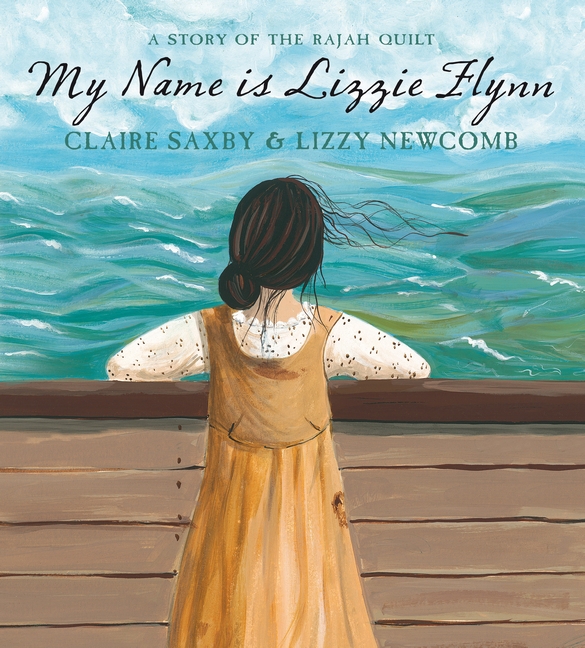
Other Reading Matters highlights include hearing about the interactive making of the wonderful TV series Nowhere Boys (watch the series trailer) and talking to Claire Saxby, whose new book My Name is Lizzie Flynn: A Story of the Rajah Quilt should be in every Tasmanian library. 

Evocatively illustrated by Lizzy Newcomb, the Rajah Quilt was made by some of the women convicts aboard the convict ship Rajah which arrived in Hobart on 19 July 1841. The quilt was presented to Lady Franklin the governor's wife. The quilt was lost for many years and is now housed at the National Gallery of Australia. This wonderful book recounts an important story in Tasmania's history. More importantly we see a glimpse into the lives of women and children convicts.

On another leg of my holiday I visited the Colin Thiele exhibition at the Lu Rees Archives and accompanying lecture 'Colin Thiele: His Work and Legacy'. A video recording can be accessed and viewed on the Lu Rees website.

Nella Pickup
Reader and former librarian

(Editor's note: Apologies for inconsistent layout - no solution can be found!)