Welcome to the blog of the Tasmanian branch of the Children's Book Council of Australia!

Friday, 22 July 2022

Getting ready for the celebrations – it’s nearly Book Week!

With just four weeks until Book Week kicks off, Loretta Brazendale is making plans for  celebrations in libraries on the north west coast of Tasmania. She shares some past costume ideas and her thoughts on shortlisted Early Childhood titles. Have you predicted a winner yet?


Well, it’s getting close to my favourite time of year Book Week!!! 

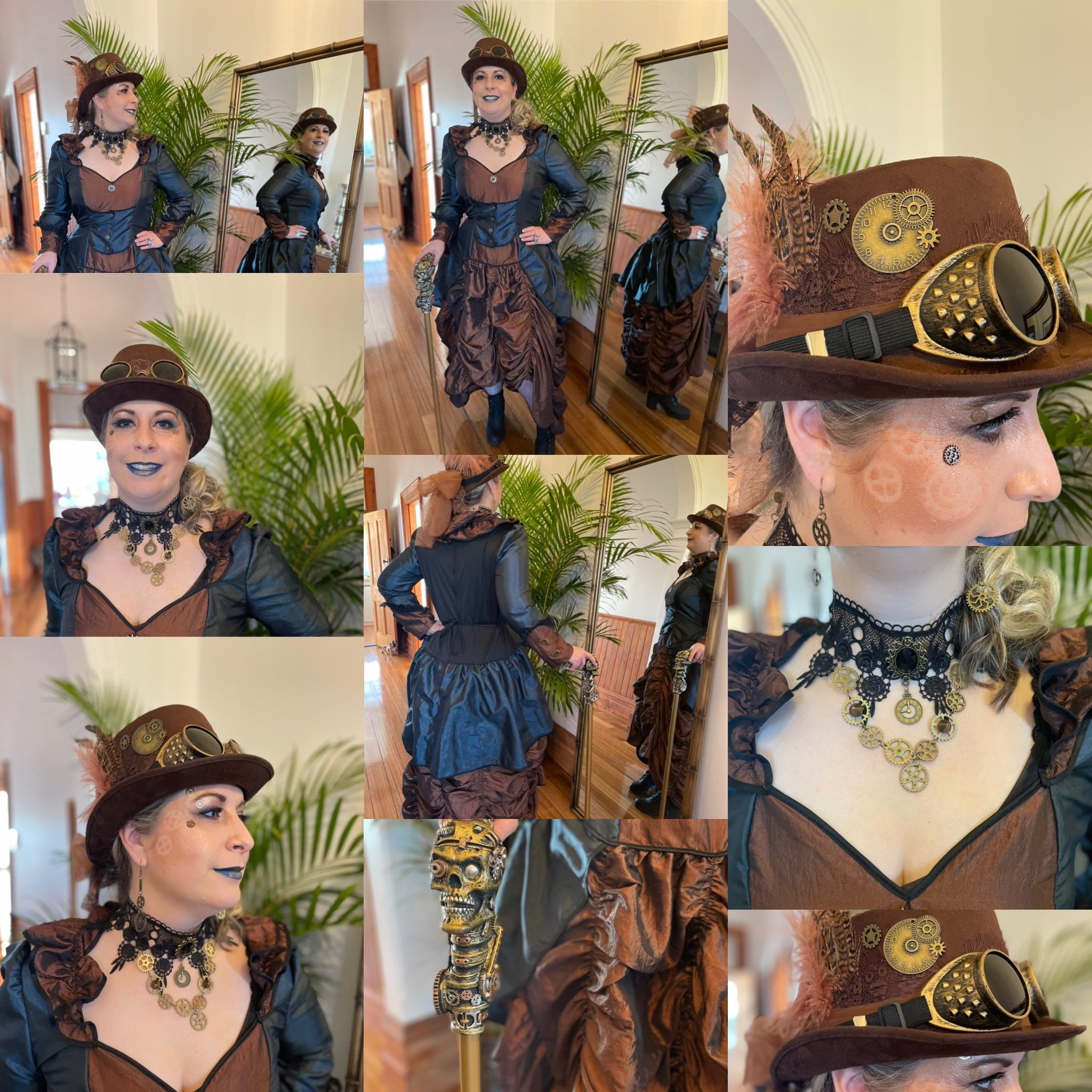
What to wear for this year’s book week is a very hard decision and I always think of a costume that I need my Mum to help make. Don’t get me wrong my Mum loves to help make and design my Book Week costumes but often comments, “I didn’t ever think I would still be making Book Week Costumes for my daughter who is nearly 36!” Good old mum! 


Thought I would share the 2 costumes I wore last year at the Burnie Library for Book Week. The Cockroach costume even caught the eye of Author Maggie Hutchings who then shared my picture on her Instagram page. 

I wish everyone a happy 2022 Book Week and good luck to all the Shortlists for this year. 


Book of the year shortlist – Early Childhood 


When the Waterhole Dries Up – Kaye Baillie (illus. by Max Hamilton). Windy Hollow Books

The tale of a little boy in the Australian outback, where its dusty and dirty and lots of Australian animals live. But the water hole has dried up, so the animals try to share his bath but spill all the water... good thing it’s raining!

Nice fast-moving story that could generate fun for younger readers. Ideal for bedtime or just before bath time. Very well illustrate with lots of local Australia wildlife. 


What Do You Call Your Grandma? – Ashleigh Barton (illus. by Martina Heiduczek). Harper Collins

A beautiful book with a double page spread of each country and its landmarks and how a child refers to their grandma in that country.
Will suit multi-cultural, diversity and Harmony Day themes.
Nicely illustrated and well written I feel older children above ages 5 and up will love it. I think the story would be too long to hold the interest of younger children. 


Walk of the Whales – Nick Bland. Little Hare / Hardie Grant

My favourite book by far for 2022! 

Great illustrations and a very meaningful story. A lesson for everyone, not just children. Easy to read and the illustrations themselves tell the story. 

I loved the whale reading in the swimming pool. I also loved the whales on bikes. They were wearing helmets! Safety first.

(Hopefully a Winner)


Amira’s Suitcase – Vikki Conley (illus. by Nicky Johnson). New Frontier 

Amira finds a sprouting seed growing inside a suitcase, she lovingly begins to nurture and look after the seed. As the seed grows and grows, so does Amira’s happiness, her friendships with the other children in the camp. A heart-warming story of children contributing what little they have for the greater good. Beautiful Illustrations.  


Jetty Jumping – Andrea Rowe (illus. by Hannah Sommerville). Little Hare / Hardie Grant

Really nice book with a good story & great illustration. Plus, it told a good story of a child conquering her fear. I would say that this story would suit children 3 years and over. 


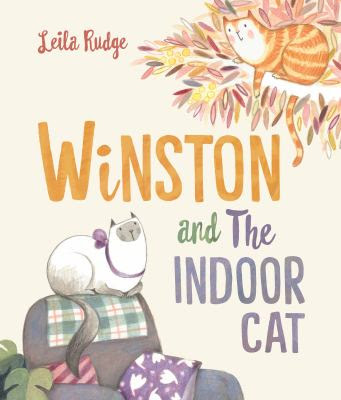
Winston and the Indoor Cat – Leila Rudge. Walker Books

A cute, simple story. There is probably a message about understanding and accepting each other's differences. The small amount of repetition was used well. Nicely illustrated but the story didn’t really appeal to me but that might be – because I’m more of a dog lover than a cat lover. 


Loretta Brazendale | Information Services Coordinator
Burnie Library 
and West Coast Libraries including King Island | Libraries Tasmania 


Editor's note: I too think Walk of the Whales is an outstanding entry and one well suited to older readers - would have loved to see this title in the Picture Book of the Year category and do hope that secondary schools include this book in their collections as a a sophisticated picture book to engage older readers,

Saturday, 16 July 2022

With Opened Eyes: Snapshot 3 follows the Aboriginal Dreaming trail

The 2022 CBCA Conference brought together a range of speakers and covered significant topics deftly woven together with connections to country and an Australian Aboriginal presence that aptly encouraged participants to dream of possibilities and look at the world with open eyes to consider different points of view. As a virtual attendee Jennie Bales draws together some of these Aboriginal perspectives.


I heard some wonderful things about the launch of the conference on the Friday evening, understandably not accessible via video link, but fortunately I had a colleague happy to share a little about the opening ceremony. 

Duncan Smith OAM delivered the Acknowledgement of Country as a Wiradjuri man on Ngunnawal Country and together with his daughter Jakida, performed the Sweeping and Cleansing Dance to a rapt CBCA audience. Both Duncan and Jakida are members of Wiradjuri Echoes and they performed several dances beautifully illustrating Wiradjuri culture. Duncan introduced his stunning new book, We Are Australians, which was written in collaboration with Nicole Goodwin and incorporates the artwork of Jandamarra Cadd. The previously created paintings are stunning illustrations for the book and Duncan acknowledged how grateful he and Nicole were to be able to use Cadd's work. Both Duncan and Jakida were gracious with their time following the performance, staying around for photos and answering questions. It was an exciting and entertaining way to open the conference. (Thank you Louise Saint-John for sharing your experience)
We Are Australians, 2022, published by Simon and Schuster

Respect, 2020, Magabala Books
The first day opened with an informal and insightful conversation between Sue Lawson and Aunty Fay Muir : Hearing our First Nations Voices and Sharing their Dreaming with the two ‘Zooming’ in from Victoria. The session included Aunty Fay sharing of her 2020 picture book Respect which explores the importance of learning about respect for yourself and family, of sharing knowledge, and that families come in all sizes. Identifying visual literacy cues in the book highlighted the importance of the guiding students to know where different texts come from, to build an appreciation of the vastness of Australia and the diversity of different cultures and stories. The Indigenous Map of Australia is great resource to support this. Where possible Aunty Fay encouraged educators to connect with local First Nations people and to seek out stories reflective from that area. Her preferred terminology is First Nations or Aboriginal and Torres Strait Islanders. 
Guidance provided:

Reconciliation -  you have to go on a journey of learning yourself as a prelude to teaching y our students. All students need to know about county and culture as it is everyone’s history – visit places and read books.

Authority - Know about the author – current practice is to include that info in the blurbs, contact the publisher and inquire. First Nations people tend to write in a different way and with a different flavour.

Aboriginal English - need to take in account aboriginal expression and language – elders may not have a strong literacy background, and today many kids just write down their thoughts and ideas in Koori English – often spoken at home. It is a recognised language and needs to be accepted.

Oral tradition and reading aloud – oral storytelling a traditional practice that continues today. Encourage and exemplify in practice. Model how to ‘read’ the illustrations, young people need more storytelling to fuel the imagination.

Dreaming stories – understand which country each story comes from -e.g., Rainbow Story is from northern Australia – not all communities have Rainbow Story as their creator. Important that the author knows this as well. Remember that some stories are sometimes individual stories of personal dreams. If doing in class, speak to a local person and find out about the creator spirit of that country.

Be respectful of art and culture in displays and activities. Find out styles that are representative of the land you are on. E.g., Dot painting are reflective of First Nation people living in desert country, hatch work found in Victoria. It is first nations art and should reflect the country on which they are situated.

Useful information sources:

Deadly & Proud Victorian State Government

Deadly Questions

miss.gibbs - resources for curriculum shared on Instagram


Our Dreaming, 2022, Scholastic
Also presented via Zoom, Dub Leffler had a conversation about his newest collaboration with Kirli Saunders: Our Dreaming to be released in August. Dub used the virtual platform to share close ups of story boards, illustrations as works in progress, and in their final form, that were truly mesmerising to behold. His love of nature and use of natural elements in combination with water colour and pencils shone through. Watch out for this captivating picture book that shares the Yuin and Gundungurra Dreamings 


Professor Belle Alderman session Dreaming of Finding, Celebrating and Preserving Australian Children’s Literature provided fascinating insights into the work of the National Centre for Australian Children's Literature which included coverage on the creation and development of the Aboriginal and Torres Strait Islander Peoples Database. Belle has written about this frequently including a post on this blog. This presentation also covered the work of the Centre to preserve and promote Australian Children’s Literature and the valuable contribution of volunteers in the process. 


Open your Hear to Country
2022, Magabala Books

Other sessions that continued to help us open our eyes to First Nations peoples included Jasmine Seymour reading her recently released Open Your Heart to Country where the combination of  words and illustrations appears as poetry in motion. Jasmine discussed the importance of investing in indigenous languages and how multilingual texts support students from diverse backgrounds and celebrate country. 


Adam Goodes and Ellie Lang talked about their new series Welcome to Our Country in their session on Sharing our First Nations Dreaming with all Students. The second title Ceremony has been published and each book has detailed supporting teachers notes. The authors talked about the power of language to convey culture and how the books are designed to make Aboriginal language accessible for readers to pronounce the words. There are QR codes in the books to connect to Adam reading the texts. The books convey a strong message about caring for country – being sustainable and only taking what you need, and Adam pointed out that there is so much we can learn from Indigenous people that have lived on this land for 1000s of year. They also advise to take the books for what they are – different ages will absorb what  they are ready for, and the teachers’ notes add a  further dimension for them to be used for  learning more about people and country to learn about what we can do for reconciliation and   caring for country.

Welcome to Our Country series, Allen & Unwin

Writing this post has helped me revisit some of the key sessions and reflect on the strong messages that were conveyed by passionate presenters. This snapshot focuses on opening our eyes to Aboriginal culture, country, reconciliation and unity – a truly memorable and worthwhile thread woven into the program. A wonderful conference experience!


Jennie Bales

Adjunct lecturer, retired teacher librarian and reader,

CBCA Tasmania Social Media Coordinator.

Saturday, 9 July 2022

The Butterfly Effect – social flutterings at the 14th national CBCA Conference

Tasmanian author, Nicole Gill, brings us Snapshot 2 of the recent 2022 CBCA Conference – enjoy these social highlights – don’t you wish you were there?


“A butterfly can flap its wings in Peking, and in Central Park, you get rain instead of sunshine…. The shorthand is ‘the butterfly effect.’”  

Jeff Goldblum man-splains chaos theory to Laura Dern in Jurassic Park.


“Dreaming With Eyes Open” is the Book Week 2022 theme, and the enamel pins minted to mark this event are monarch butterflies.  Monarchs are also known as wanderers and are famed for their long migrations in their native lands.


The social butterflies of the children’s book-loving world migrated to Canberra for the 14th national CBCA conference from 10-12 June 2022.  Needless to say, chaos ensued.


Many CBCA attendees hadn’t been to an in-person conference before The Disease That Dare Not Speak Its Name ruined everything back in early 2020.  Which suited many authors just fine, as they nestled into their writing cocoons to develop their latest manuscripts. 


But after literally years of avoiding going outside, even the most introverted creators were forced to admit that perhaps the conversational gambits of their cats, dogs and chickens were getting a little stale, and that it might be nice to get outside and talk to actual human beings.  As such, once we made it to Canberra, we were as excitable as drunken butterflies, flitting about and banging into things (with frequent breaks spent hiding in our rooms to recharge our batteries).


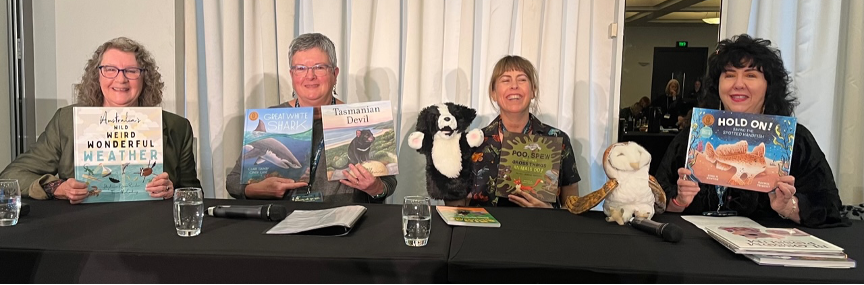
I was there as a presenter, lucky enough to appear on panels with kidlit nature writing legends Claire Saxby, Dr Stephanie Owen-Reeder, Dr Gina Newton and Sami Bayly, speaking about introducing younger readers to the wonders of the natural world.  But I also enjoyed the opportunity to flit about the conference’s social events like a nectar-addled invertebrate, after the daytime programs had concluded.

Panel: “Dreaming of sharing the Wonders of the Animal Kingdom”
– Dr Stephanie Owen-Reeder, Claire Saxby, Nic Gill, Dr Gina Newton

Friday night was the Welcome Reception, replete with drinks and nibbles. The butterflies flapped their wings.  Authors met teachers, and swapped numbers for visits.  Teacher librarians spilled the beans on what was hot in their school libraries. Publishers eyed potential new talent, and creators gossiped about who was writing what for whom.  Faces were put to names, and Zoom and Twitter friends materialized into IRL actual people.  


The reception rolled into the SCBWI Friday Night Book Fest, which fellow attendee Lian Tanner recently wrote about here. Each creator had three minutes, and three minutes only, to spruik their latest book to the crowd.  It was an exercise in tightly controlled chaos. Props were encouraged, and theatricality rewarded.


I’d prepared myself to talk about my new book, “Poo, Spew and Other Things Animals Do” by investing in some excellent puppets, one a border collie, the other a masked owl (“Tax deductible!”, I muttered to myself, as I frenziedly ordered one expensive fluffy toy after another from the interwebs, “Tax deductible!”).  Not only did the puppets help me to explain how owls digest their food, and how dogs can be used to find where owls might be hiding, but they also answered questions on my behalf when I was too nervous to speak to people directly.


I wasn’t the only person using fluffy toys to promote their latest creation.  Lian Tanner brought along her friend Rita the Duck to promote “Rita’s Revenge”, and Ali Stegart used a bush-stone curlew puppet to dance the story of “Boogie Woogie Bird”.  There was performance poetry, character cosplay and even the occasional erratically thrown puppet (sorry if I hit any of you).


The following night was the official CBCA conference dinner.  Once inside the venue, the butterflies emerged from their puffer-jacket cocoons, and made a bee-line to the bar, where a selection of delicious nectars had been prepared for their delectation.  There was much flitting about, fluttering of hands, sipping of bubbles and coveting of other people’s shiny dresses. 

Picture of the dinner from Claire Saxby’s table POV (thanks for the photo, Claire!)


Each dinner table was hosted by a creator, and decorated with their books and associated objects.  My lovely publisher, Briana Melideo from CSIRO Publishing, made showbags for our table, full of books and shiny CSIRO swag, and had selflessly stolen her son’s poo emoji soft toy to add to the table’s general scatological vibes.   My table was largely dedicated to my new book, “Poo, Spew and Other Gross Things Animals Do”, which I wrote with koala poo PhD Dr Romane Cristescu, and is illustrated by Rachel Tribout.  I’d previously warned people that conversation at my table was unlikely to be considered polite by conventional standards. Fortunately, my co-diners were more than happy to talk about revolting animal science, owl pellets, and the terrible exploits of their household pets.

CSIRO Publisher Briana Melideo and author Nic Gill flaunt their soft toy collection at the CBCA dinner

After the main course had been scoffed down, special guests fluttered onto the stage. The Australian Mint introducing their new, Diary of a Wombat-themed one dollar coin, with Jackie French making a guest appearance, and Margaret Wild was honored with the CBCA Lifetime Achievement Award.


After the final day of the conference, a dozen or so SCBWI members got together at the Civic Hotel – a great chance for us interstate interlopers to chat to the locals, and to congratulate them on the great work they’d done pulling together some really fun conference events.


The morning after the conference, we bunched together in dribs and drabs in the hotel lobby, preparing to fly back to our respective territories.  I looked down at my shirt – a rather loud number covered in a chaotic print – and noticed a flock of monarch butterflies flitting across the busy patterns.  Perhaps there was some order in the chaos after all.


And in keeping with the theme... Here are some fun butterfly facts!

  • Although native to the Americas, monarch butterflies can now be found all over the world.  They were first recorded in Australia in the 1870’s, where they are considered to be an invasive species, albeit a relatively benign one.
  • The world’s largest butterfly is the Queen Alexandra birdwing – with a wingspan of up to 30cm, this giant flapper can easily fly off with a small chihuahua*
  • Butterflies can actually be quite disgusting.  More than one species has been observed gorging on animal poo!  
  • For more information on the monarch butterfly in Australia, try this great article from Ann Jones, which also contains a link to an Off Track episode on these beautiful invaders. 

* Actually, no one has ever seen them do this.  But pretty sure they could take down a chihuahua if they wanted to.


Nicole Gill

Author

Friday, 1 July 2022

The crit group I didn’t know I needed

With Rita’s Revenge about to hit the bookshops, Lian Tanner shares her writing processes and the valuable insights provided by a team of fellow children’s book writers. What a wonderful process these outstanding children’s authors have engaged in to improve and develop their craft.


Halfway through 2020, that long first year of Covid, I received an email from fellow children's author Deborah Abela. The email also went to Tristan Bancks and Zanni Louise, and contained an invitation to form a small online critique group.


My reply was both enthusiastic and cautious. 'It's been such a confusing year that I'm not entirely sure what I'm working on,' I said. 'But it'd be good to talk to other writers about it.'


As it turned out, this was the crit group I didn't know I needed. And it's been going ever since, with the addition of Sarah Armstrong, who had previously written for adults and was now turning her hand to middle grade.

The book I ended up bringing to the group was Rita's Revenge, the sequel to A Clue for Clara.


Some authors work with their editors from the very beginning of an idea. I've always been the opposite. I never showed anyone what I was writing until I was reasonably satisfied with it, which was usually after at least four or five complete drafts. 


So sending those first chapters to the crit group presented a challenge. It also reinforced changes I had already started to make in the way I write.


With the fantasy trilogies (The Keepers, The Hidden and The Rogues), I plotted in great detail then wrote a first draft very quickly, not going back to correct anything or reread until I got as close to the end as possible. As a result, that first draft was always very rough and needed a lot of work to shape it into a story.


When I wrote Clara, I went about it differently. My plotting was looser, and I wrote the first draft much more slowly, allowing myself to go back and fix things so I didn't end up with nearly as many internal contradictions.


I found that I enjoyed it more. And at the end of that first draft, I had a coherent story.


This fitted well with joining the group. I didn't want to send them my rawest work; what was the point of that? I wanted them to find the problems I couldn't see; the ones I hadn't fixed.


So even though I was nowhere near finishing Rita’s Revenge, the extract I finally sent had been gone over several times, until I was reasonably happy with it. Still, I was terrified that my fellow authors wouldn't like it. 


To my relief, they loved it. 'So endearing,' they said. 'Hysterically funny.' ‘Love the rules about what a duck can and can't do ’. 


But as well as encouragement, they offered informed and intelligent criticism. 'Could you introduce the poetry sooner? It comes a bit too late.' 'It feels as if we don't really get into the story until the second chapter.' 'Can General Ya come in earlier, too?'


This mixture of encouragement and criticism has become the pattern for our zoom meetings. It provides us with a recharge of energy once a month – a valuable thing for a writer. It bolsters our strengths, and helps us shore up our weaknesses. It gives us trust, kindness and honesty, and we all agree that we have become better writers as a result.


We also agree that, although we all have very different writing styles, we love and appreciate each other's work. In fact, that's one of the great pleasures of the group – seeing each story develop and grow.

This year, we all have books out – the first ones since the group started. Sarah Armstrong's Big Magic was the first, published in May. Tristan Bancks' Cop & Robber is coming on July 5, the same date as Zanni Louise’s picture book Pigasus, and my own Rita's Revenge.

And Deborah Abela's The Book of Wondrous Possibilities will be out in August.

I heartily recommend them all. 


Lian Tanner
Author

http://liantanner.com
https://www.facebook.com/liantannerauthor
Instagram: liantannerbooks


Editor’s note: If you are in Hobart next weekend, head down to Hobart Bookshop for the launch of Rita’s Revenge. 11 am Sunday July 10th.

Friday, 24 June 2022

Snapshot 1: The 2022 CBCA Conference

Readers who could not attend the CBCA Conference in person, or as a virtual participant are in for a treat with the first of several posts that bring great moments to life. This week, Lian Tanner, shares some perspectives as both an ‘on the ground’  presenter and a participant.


On the weekend of June 10/11, in the depths of a very cold Canberra winter, teachers, librarians, writers and illustrators gathered together for the 14th National Conference of the CBCA. The theme was ‘Dreaming with eyes open…’

There were many highlights, including the Saturday night dinner where Jackie French and Bruce Whatley spoke about the writing and illustrating of Diary of a Wombat (which is being honoured with an Australian Mint coin to mark its 20th anniversary), and Margaret Wild was presented with the third CBCA Lifetime Achievement Award. 


One of my personal highlights was the Friday night BookFest. A bit like speed dating, it showcased the work of 21 authors, who had three minutes each to present their latest book in a way that would excite and entertain the conference delegates. It was a great format, fast moving and fun, with a drum roll between each author.


Another favourite was listening to illustrators Dub Leffler, Bruce Whatley and Tania McCartney talking about their work, showing examples of how they work, and discussing the highs and lows of illustrator life.


And then there was the hilarity of Stephanie Owen Reeder, Sami Bayly, Claire Saxby, Gina Newton and Nicole Gill sharing stories about why they write and/or illustrate non-fiction books about animals, how they got into the field, and their unlikely adventures in the pursuit of their craft.


... The Great Debate: Fantasy vs Reality

But many would agree that THE highlight (or at least the funniest part of the weekend) was Sunday's Great Debate, a battle over which was better: fantasy or reality. The brief given to the debaters? To be entertaining. (And no bloodshed.)

© The Great Debaters - 2022 CBCA Conference

Moderator Deborah Abela introduced the debate with humour and razzmatazz. Then it was on.


I was up first, for Team Fantasy. I began with the complaint that Team Reality had been allowed to bring in as many props and visual aids as they wanted – chairs, tables, bits of paper. Even microphones! All we’d asked for was one measly orc, and it wasn't allowed. 


I pointed out – in between jokes – that fantasy teaches kids that they can change the world. And that it can illuminate and reflect real-world problems. Because the very best sort of fantasy is about the things we care about; friendship, struggle, love, courage, hope.


Sue Whiting was next, for Team Reality. She spoke with passion about the fact that realistic fiction shows us what humans are made of, and that there is some powerful magic right there. 


She also pointed out that it celebrates all kinds of backgrounds and races and families, a representation that is long overdue. To my dismay, I found myself nodding agreement as she spoke.


Then Kate Temple, for Team Fantasy, stripped the magic from well-known novels to show how hollow they would be without it. Her examples were all hilarious, but my favourites were probably Harry Potter and the Philosopher's Stone and Alice in Wonderland.


The former, with the magic removed, became 'an orphan boy in foster care goes to boarding school and finds he is quite good at hockey'. Alice became 'a girl falls asleep on a river bank. Later, she wakes up.'

The final speaker was Pip Harry, a last minute substitute who nevertheless did Team Reality proud as she pointed out the magic in everyday life: cicadas emerging from their shells, the moon, laughter, the ocean, music, art, the connection between friends.


There were two unexpected visitors at the end of the debate. Gandalf arrived to support Team Fantasy – a masterstroke, we thought. But then Oliver Twist came creeping up to the podium to ask for more, on behalf of Team Reality.

It was an hour of creativity and laughter, with a great reception from the audience. Their eventual vote was evenly split, at which Sue Whiting pointed out that books were the real winner!


Lian Tanner
Author

http://liantanner.com
https://www.facebook.com/liantannerauthor
Instagram: liantannerbooks


Editor’s note: I agree 100% - the debate was a winner - a riveted audience joining in the hilarity. And yes, books may have been the overall winners but personally, I think that fantasy won on the day!