Welcome to the blog of the Tasmanian branch of the Children's Book Council of Australia!

Sunday, 30 October 2011

Bulging Bookshelves! Book expert Maureen Mann talks shelf-purging & discovers some new favourites!


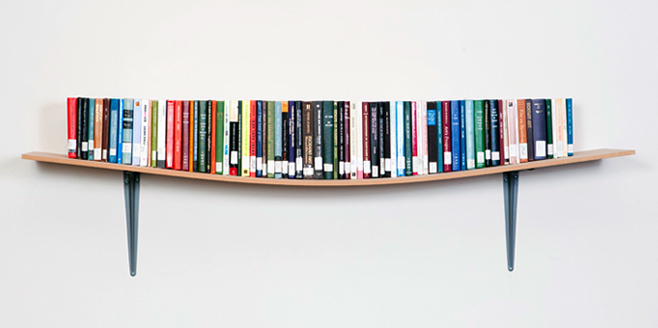
I’ve spent quite some time recently looking at my own collection of books, and making decisions about which one will remain on my shelves. I do it every few years as the collection begins to spill out of the confines of our bookshelves, and each time go through the same angst over the process. I am one of those people who rarely re-reads a book, but it doesn’t take away from the fact that there are some books which I want to have at home. I may not remember the specifics of many of the titles, but I do remember my reaction to each one. I remember the reactions to the very bad, as well as to the brilliant. And so, through the process I have dipped in and out of a few titles. Almost each time I have had my positive impression reinforced. Occasionally I change my mind. So, the discard pile grows, giving me more room for new titles to come.

Do you go through your bookshelves regularly? Do you keep everything, or do you pass on loved books so others can enjoy them too?


So what new (to me) books have I been reading?
Frank Cottrell Boyce has written Chitty Chitty Bang Bang Flies Again, the first in a series of sequels to Ian Fleming’s only children’s story. Boyce is the author of the very successful Millions and Cosmic. The Tooting family set off on a life-changing adventure in their campervan which has been modified by adding a huge old engine that was once in an amazing car. This is a story for children of all ages – the ones who remember the original story and/or film, as well as the ones being introduced to the magic for the first time.

Have you been a fan of Ann Brashares’ series which started with The Sisterhood of the Travelling Pants? Well, the fifth and final in the series has recently been published. Titled Sisterhood Everlasting, it traces the lives of the girls ten years on, after they have moved apart. Each feels that life is no longer as fulfilling as it had been. Tibby bridges the distance between them but it’s not a happily-ever-after ending. The book sometimes grabs the reader and at other times it’s more of a chore, but for those who have come of age with these characters, you’re sure to want to know what happens.

As always, I’ve also been enjoying several picture books, not all of them recent publications. I came across Mike Dumbleton’s Muddled Up Farm (2003). Why didn’t I know about it earlier? Sadly, it is out of stock, so we have to hope that it might be reprinted. The animals make lots of noise, but not the noises we expect. The farm inspector tries to correct things, but the changes aren’t quite what he intended.
In Jeanne Willis’s Stomp(2011), the blue monster stomps through various rooms in the house, making lots of noise till he finds what he’s looking for. And again, it’s not quite what we expect. The illustrations use primary colours and the text is repetitive and child-friendly. Good fun!

Pete the Cat (by Eric Litwin and James Dean, 2010) with his white shoes sings along his way, “I love my white shoes, I love my white shoes …” But then he steps into a huge pile of strawberries and now has red shoes. There are no tears, the song changes and Pete goes on his way. Because of various accidents, his shoe colours change and each time Pete modifies his song, maintaining his positive outlook on life.

Perfect Square (2011) by Michael Hall is another book using primary colours, but otherwise a different concept. On each double page spread, a square is transformed by changing its format – holes punched, torn, cut, etc – and a new creation appears. It leads children to want to experiment with a piece of square paper and their own imagination. A great addition to early years mathematical concepts.
Please share some of your recent favourites. And let us know how you cope with bulging bookshelves.

Tuesday, 18 October 2011

The Other Cup That Stops the Nation - Maureen's Readers Cup Wrap-up!

Reader's Cup - Book Club just got cool!

Congratulations to all schools involved in his year’s Southern Tasmanian Readers’ Cup. Finals for this competition have been held, for southern schools, over the past two Wednesdays in Hobart: the first for grade 5/6 students and the second for grade 7/8 students. As always, the standard of the students was fantastic, both in their knowledge of the books and in their creativity and there were wonderful contributions from all involved. I’ve had the great pleasure of coordinating the challenge this year and we had 2 wonderful days of competition.

Readers’ Cup was introduced into South Australia by Judy Styles in 1987 after a trip to the USA and the concept has spread to several Australian states. It is a competition in which teams of school students read a set of books, which varies each year, and then compete against each other, based on their knowledge and interpretation of the books. The aim of Readers’ Cup is to encourage all children – not just ‘good readers’ – to read, and to enjoy what they read. It is also a way to reward enthusiastic readers in the context of a team activity.

There are wider benefits as well. Readers' Cup:
  • encourages reading, not only among competitors
  • is a visible way to promote and recognise reading and children’s literature
  • creates a competitive framework for those who enjoy reading
  • provides non-sporting inter-school competition
  • encourages insightful reflection about literature
  • focuses on student achievement
  • provides inter-school communication and interaction
  • is fun!

Tasmania has an extra element which we believe expands the benefits of the competition. It evolved years ago when Tasmania was modifying the curriculum. One of the major focuses then was on thinking skills. It was decided that Readers’ Cup didn’t give students the opportunity to demonstrate their deep understanding of the themes and issues of any of the books. So we introduced a ‘creative element’ in which each team interprets, using a format chosen by them, an aspect or aspects of one or more of the books and presents their interpretation to an audience. Each presentation is expected to last a maximum of five minutes.

The presentations included the use of PowerPoint, plays and movies written by the students, songs and dance. We had 3 judges for each of the finals and thanks go to them for giving up their time and enthusiasm. Thanks also go to our MC for both events, who was able to fit Readers’ Cup in between his university tutorials. The adults involved enjoyed things as much as did the students.
We had six schools register for each level of the event, but unfortunately one of the secondary schools had to withdraw at the last minute. We’d love to have more involvement in 2012 so keep your eyes and ears open for the notification about the preliminary meeting early in term 1. It’s usually held in March. (Readers’ Cup is also alive well in other parts of the state but is run by ASLA).

So, after all that information, who won? Congratulations go to Princes Street Primary School and the Fahan School, in the secondary section. But all those who competed, whether they were the teams in individual schools who didn’t make the cut for the inter-school competition or the ones who came to the finals, gained a great deal from their reading, their team spirit and the fun they had through the process.

Information about the books used in the 2011 Southern Schools Readers Cup competition can be found on the CBCA (Tasmania) website: www.cbcatas.org. Early in 2012 the Guidelines for next years’ Readers’ Cup will be posted here too.

Just before I finish. In my last blog back in August, I talked about the Marilyn Baillie Picture Book Award, administered by the Canadian Children’s Book Centre. The winner was announced at the beginning of October and congratulations go to I Know Here by Laurel Croza.


Happy reading and see you next time.

The Other Cup That Stops the Nation - Maureen's Reader's Cup Wrap-up!

Reader's Cup - Book Club just got cool!

Congratulations to all schools involved in his year’s Southern Tasmanian Readers’ Cup. Finals for this competition have been held, for southern schools, over the past two Wednesdays in Hobart: the first for grade 5/6 students and the second for grade 7/8 students. As always, the standard of the students was fantastic, both in their knowledge of the books and in their creativity and there were wonderful contributions from all involved. I’ve had the great pleasure of coordinating the challenge this year and we had 2 wonderful days of competition.

Readers’ Cup was introduced into South Australia by Judy Styles in 1987 after a trip to the USA and the concept has spread to several Australian states. It is a competition in which teams of school students read a set of books, which varies each year, and then compete against each other, based on their knowledge and interpretation of the books. The aim of Readers’ Cup is to encourage all children – not just ‘good readers’ – to read, and to enjoy what they read. It is also a way to reward enthusiastic readers in the context of a team activity.

There are wider benefits as well. Readers' Cup:
  • encourages reading, not only among competitors
  • is a visible way to promote and recognise reading and children’s literature
  • creates a competitive framework for those who enjoy reading
  • provides non-sporting inter-school competition
  • encourages insightful reflection about literature
  • focuses on student achievement
  • provides inter-school communication and interaction
  • is fun!

Tasmania has an extra element which we believe expands the benefits of the competition. It evolved years ago when Tasmania was modifying the curriculum. One of the major focuses then was on thinking skills. It was decided that Readers’ Cup didn’t give students the opportunity to demonstrate their deep understanding of the themes and issues of any of the books. So we introduced a ‘creative element’ in which each team interprets, using a format chosen by them, an aspect or aspects of one or more of the books and presents their interpretation to an audience. Each presentation is expected to last a maximum of five minutes.

The presentations included the use of PowerPoint, plays and movies written by the students, songs and dance. We had 3 judges for each of the finals and thanks go to them for giving up their time and enthusiasm. Thanks also go to our MC for both events, who was able to fit Readers’ Cup in between his university tutorials. The adults involved enjoyed things as much as did the students.
We had six schools register for each level of the event, but unfortunately one of the secondary schools had to withdraw at the last minute. We’d love to have more involvement in 2012 so keep your eyes and ears open for the notification about the preliminary meeting early in term 1. It’s usually held in March. (Readers’ Cup is also alive well in other parts of the state but is run by ASLA).

So, after all that information, who won? Congratulations go to Princes Street Primary School and the Fahan School, in the secondary section. But all those who competed, whether they were the teams in individual schools who didn’t make the cut for the inter-school competition or the ones who came to the finals, gained a great deal from their reading, their team spirit and the fun they had through the process.

Information about the books used in the 2011 Southern Schools Readers Cup competition can be found on the CBCA (Tasmania) website: www.cbcatas.org. Early in 2012 the Guidelines for next years’ Readers’ Cup will be posted here too.

Just before I finish. In my last blog back in August, I talked about the Marilyn Baillie Picture Book Award, administered by the Canadian Children’s Book Centre. The winner was announced at the beginning of October and congratulations go to I Know Here by Laurel Croza.


Happy reading and see you next time.

Tuesday, 11 October 2011

Popular versus "literary" - where do you stand?


I used to work in the children's section of an independent book shop. I made it my duty to read just about every children's book that hit the shelves, so I could knowledgeably recommend the books to both children and parents.

Some days, I wondered why I bothered.

Parents (and grandparents) would come up to me and ask for recommendations for birthday presents or occasional gifts. "She's fifteen," they'd say. "What do you recommend for a fifteen year old?"

That question in itself always made me cringe. As if all fifteen year olds are the same and enjoy reading exactly the same kind of book! But I was used to this question. I was used to having to dig a little bit deeper. So I'd ask, "Do you know what other books they've read and enjoyed?"

Often this question would get met with a blank look, or a look of aggravation - like why was I annoying them with all these questions? Why couldn't I just pick a book off the shelf and give it to them? Why was I wasting their time? If the parent did answer the question with any degree of certainty, at least fifty percent of the time the answer went something along the lines of, "Well, she liked that [insert name of popular book of the moment] book. But I don't want her reading stuff like that. I want her reading 'good books'."

At this point my soul would die a little bit.

For me, reading is pleasure. It's entertainment. Like the great Jacqueline Wilson said (and I'm paraphrasing enormously here) when asked how parents should go about getting their children to read: "Don't tell them they have to get off their computer or their video games and go and read. Don't make it sound like a punishment. Surround them with books from an early age. Set an example by reading yourself and showing them that reading is fun."

Reading is fun. And rewarding. And life-changing. And who know, parents? That [popular book] you were so quick to dismiss could well be the book that allows your child to cope with bullying - a role the very popular Tamora Pierce books had in my life - or turn them on to reading hundreds of other books and starting a lifelong love of reading. Harry Potter did this for millions of children. And I lost count of the number of teenagers who'd come into my old workplace saying "I just read Twilight. I love reading now. What else would you recommend?"

I'd take absolute pleasure in recommending a Maggie Stiefvater or a Claudia Gray or, if they were older, the delicious Gail Carriger Alexia Tarabotti series, or even (if I got the feeling they might be into it), Justine Larbalestier's incredible Liar. If they were ready to move on from vampires (but really, why should they have to?), we'd chat about the superlative John Green, or the wickedly funny and incisive Libba Bray or Scott Westerfeld or, if they were after a bit of action and suspense, maybe some Chris Morphew or even the gut-wrenching (and, yes, incredibly popular) Hunger Games series.

The kids who came into my workplace after having read Twilight were so excited about reading; so switched on; so open to new ideas, new genres, the new worlds that reading could give them.

The parents? Half the time they were the same. Half the time they just wanted their kids to read and they were happy to discuss their child's reading with me and work with me to find a book they'd actually enjoy. The other half? Notsomuch. "Is that about vampires? No thanks. That's popular rubbish, isn't it? Don't you have any Enid Blyton?"

As a side issue, my favourite comment was a common one, often from grandparents who, after I showed them piles of brilliant new kids' books, would say, "They all look a bit dark and violent. Do you have any Roald Dahl?"

I'll leave that one with you.

Back to the popular versus literary argument - or "bad books" versus "good books", if you like. I once had a brilliant conversation with a hugely popular bestselling Australian author of teen science fiction action bestsellers who told me that he didn't care if he never won an award because the main thing was that kids loved his books and that he made a difference to them, not the adults who judged children's book awards. I guess it leads to the question: Why does it have to be one or the other? Why can't he be hugely popular and win awards, because he writes books kids want to read? Surely that's the ultimate goal?

I watched "Compass" on Sunday night and had to smirk when Geraldine Doogue introduced Christos Tsiolkas as the writer of "that rarest of things: the literary bestseller." I also rolled my eyes when listening to a podcast by the (I think) wonderful Anita Shreeve who talked about the numerous newspapers who condescendingly called her books "not quite literary" and was then thrilled at all the men in her Wheeler Centre talk who stood up and "outed" themselves as readers of her supposed "women's novels".

Why shouldn't men read women's novels?

Why shouldn't science fiction books be shelved in the literary section and (my personal bugbear) books by literary writers that are blatantly science fiction or fantasy (I'm talking to you, Margaret Atwood and Jeanette Winterson) be shelved in speculative fiction? This literary snobbery might be useful in some circles but most of us just want to read. We want it to be pleasurable, not hard work. Kids especially. And you never know, if you let them read anything (within, of course, the bounds of your personal morality) - like Christos Tsiolkas' non-English-speaking father did when he bought him Mills and Boon and Charles Dickens and all manner of other random books because he had no idea what the titles meant -  they just might chance upon a few "literary" books along the way.

Reading shouldn't be a chore. I'm as happy reading the latest Joanna Trollope as I am reading Anthony Trollope (and, you know, he was pretty "popular" back in the day); as happy reading Martin Amis as I am reading Ann M Martin.

Every single author I've heard speak has said they read voraciously on a range of subjects. Popular and "literary". Wide reading means open minds and - to use Tsiolkas' own terminology - "free thinkers".

If only free thinking was more "popular".

What do you think? What's more important: that kids love reading or that they read books with "literary merit" (prepared for healthy debate here)!

Tuesday, 27 September 2011

How my heroes are changing - by CBCA judge, Jenni Connor


I grew up on Detective fiction really, devouring every Dorothy Sayers, Ngaio Marsh and Margery Allingham in my youth and becoming addicted to the pantheon of Elizabeth George, PD James and Ruth Rendell as they came on the scene. The very early ‘lady writers’ invariably created an elegant, dignified gentleman as their brilliant crime solver. Lord Peter Wimsey, Inspector Alleyn and Albert Campion (not to mention Christie’s indubitable Poirot) used their incisive wit and extraordinary minds to seek out and destroy the most cunning villain and restore polite society to its rightful balance.

Have you read any of these recently? I have a friend in London who re-reads them all, regularly. I don’t know how she can bear to; the style now seems infuriatingly archaic, posturing and lacking in reality.
The same cannot be said for contemporary masters of the genre!

For 20 years, Ian Rankin took his tough, hard drinking cop, Detective Inspector Rebus, into Edinburg’s grimy underbelly – where he felt perfectly at home. Rankin describes his influences as Robert Louis Stevenson and the Gothic tradition which leads him to explore the Jekyll and Hyde qualities of a contemporary urban environment. I imagine I wasn’t the only devotee to mourn Rebus’ departure in Exit Music.

All of this grimness, of course, paled into insignificance when Stieg Larsson’s Millennium Trilogy burst on the scene, with Lisbeth Salander possibly the most oppressed and indomitable heroine of contemporary fiction.

Having relished the trilogy, like many fellow addicts, I turned to Jo Nesbo for another take on the Nordic landscape and culture. The Snowman (2010) made Nesbo’s name when it won the prestigious Glass Key Award for Best Nordic Crime Novel – joining Larsson and Henning Mankell in the illustrious list of recipients.

Recently, I tackled The Redbreast (2006), an ambitious and complex novel that spans from the Second World War to the present day. It delves deep into an unpalatable past, when Norwegian troops collaborated with Nazi Germany and fought for Hitler on the Eastern front. In the novel, surviving soldiers are being murdered one by one, and Harry Hole, a good, but troubled cop in the Olso Crime Squad has to stay off the grog long enough to bring matters to a close. There’s a rich palette of characters and the constant switching between the two time zones means it’s wise to keep a list of Dramatis Personae handy. Dedicated readers of the genre will find much to enjoy as well as much to mull over about old wounds, old debts and the grey areas of morality.

Then, a knowledgeable bookseller where I was travelling (don’t you love them?) recommended another Nordic writer – Camilla Lakberg –‘The hottest female writer in Sweden at the moment’ as the cover screams. Interestingly, the novel, The Hidden Child, also deals with a terrible secret from the darkest days of WW11. While the plot is intriguing, the characterisation is slightly stereotyped; the novel may have suffered in translation. There is almost a surfeit of ‘detectives’, including a young policewoman who is in a gay relationship whose partner is having a child through IVF, and a male detective who is on Paternity Leave.

We’ve certainly come a long way from an entertaining effete little man twirling his moustache!


* Who are your literary heroes? Have they changed over time?

Wednesday, 21 September 2011

Imagination Takes Flight!

Before our newsletter officer, Penny Garnsworthy, flew away to the other side of the world, she filled us in on a couple of books that made her mind travel to new and wondrous places!

I’m still on the adventure of catching up on my reading books for young people, and I've just finished two amazing books for young adults.

Mara, Daughter of the Nile was written by American author Eloise Jarvis McGraw in 1963. It is the story of a slave girl in ancient Egypt who gets herself involved in both sides of the political argument surrounding Hatshepsut and her brother Thutmose. The novel was brilliantly researched (I learned more about life in Egypt reading it than much of the non-fiction I have read over the years) and beautifully written with just the right amounts of romance, intrigue, adventure and suspense. And it has a typical happy ending. I guess you’d say it’s an old fashioned type of book.

By comparison, Triple Ripple was written by Australian author Brigid Lowry in 2011. It is three stories in one: the fairytale set in a typical fairytale setting; the reader’s story as she reads the fairytale; and the writer’s story as she writes it. The premise has been well thought out and this results in a story that’s quirky and fun and at times, very, very different. And it doesn’t have a 'typical' happy ending.

I guess you’d say it’s a modern, contemporary tale.

I just can’t imagine two books for the same age group being such poles apart (and 48 years). And yet I loved them both. I loved the descriptions of the settings, the characters and their respective issues, and I learned a lot about people and places I didn’t previously know.

Just goes to show that books are an enduring medium. And whether they’re a hardcover, a paperback or an electronic file I’ll still be reading them for many years to come!

Have a great trip, Penny! We'll miss you but we know you'll come back with lots of wonderful stories!


What have you been reading lately that's made your imagination take a journey?

Wednesday, 14 September 2011

Want to be the Tasmanian judge for the CBCA Book of the Year Awards?


Applications are invited for the Tasmanian representative on the interstate judging panel for the 2013 and 2014 CBCA Book of the Year Awards.
The Children’s Book Council of Australia (Tasmanian Branch) Inc. invites applications for the honorary position of CBCA Book of the Year Awards Judge representing Tasmania on the National Awards Judging Panel for the 2012 and 2013 CBCA Book of the Year Awards. Reading commences in May 2012.
Selection Criteria:
· Recognised standing and qualifications in the field of children’s literature
· Wide and recent knowledge of children’s literature, especially Australian children’s literature
· Awareness of illustration techniques, design, editing, printing and production processes
· Excellent communication and interpersonal skills
Eligibility for serving as a judge:
Those seeking the position as Tasmanian judge must be current financial members of The Children’s Book Council of Australia (Tasmanian Branch) Inc.
A person with a current vested interest in the Awards may not be a judge. Examples include authors, illustrators, book editors and publishers.
Notes
Judges are appointed for a two-year term.
The reading period extends from approximately May till February. Reports on each book are compiled and circulated and discussed via email and teleconferences with other members of the panel during this time.
Between the end of February and the Short List announcement, judges prepare for the five-day Judges’ Conference in late March/early April, by rereading and refining potential shortlists. All judges attend the Judges’ Conference at which short lists, honour books and winners of the Awards are decided.
The Tasmanian judge is also expected to promote the Awards in the Tasmanian community, to write brief reports for the newsletter, and to contribute to the compilation of Notable Australian Children’s Books.
Detailed information of the process, role and responsibility can be found in the wards handbook section on the CBCA websitehttp://cbca.org.au/publisherinfo.htm - go to - Judges role and responsibilities
If you wish to apply for this position, please send a letter outlining your interest and addressing the selection criteria to The President, CBCA (Tas Inc.), PO Box 113, MOONAH 7009.
If you wish to send an application in electronic form, or require any further information, please contact the Secretary through the CBCA (TAS) website to be provided with an email address.
Applications close on 30 September.

Sunday, 11 September 2011

To PD nor not to PD by CBCA Tas secretary and bookshop worker, Nella Pickup


The last few weeks I’ve had some interesting PD opportunities.

Recently Carol Fuller & I attended a lecture by Professor Len Unsworth “The literacies of image and languages and the new national English curriculum”.  I wasn’t sure what to expect – education speak and great long ugly words – yes, they were there in abundance but also an explanation/exploration of the visual choices authors make.

As with all PD, you must practise what you’ve learned. I’ve unsuccessfully tried to read graphic novels in the past. So I read an illustrated book The Invention of Hugo Cabret by Brain Selznick (Scholastic 2007).  When first published, this was a ground breaking book - a unique work of art, of spare text, and of sheer imagination.  The illustrations are essential to the story.  Four years later, it’s still an exceptionally good read.

Next PD was to attend Ellen Forsyth’s Connecting with people: Twitter reading groups, scenarios for the future of public libraries and games.  I’d heard Ellen speak at other sessions.  She’s entertaining and energetic.  Luddite that I am, I just don’t get why people would waste good reading time to twitter about the books they’ve read.  ***

Then some professional reading.  An article about what’s on your bedside table made me reflect about the books I’ve just been reading.  Then I read one of Will Manley’s discussions about weeding.  “When you are weeding your collection, forget the printout that the head of circulation gives you. Circulation statistics do not tell the whole story.... Why don’t you start by looking for food stains? Books with food stains are so good their readers could not put them down even while eating.”

So here are my bedside table’s recent highlights and their food stain ratings.

Glow by Amy Kathleen Ryan. Macmillan October 2011 ...

... is a toast burner i.e. you become so engrossed in the well crafted, sometimes blood chilling story, you forget about everything around you.

This is a page turning science fiction adventure thriller – first of the Sky Chasers series. Told through the alternating narratives of the kidnapped Waverley and Kieran, the victim of a Lord of the Flies style mutiny, it examines many important issues - survival, religion, politics, right versus might, the inviolability of the individual versus the needs of the whole community, the role of the charismatic leader and mob mentality.

The characterisation is brilliant – the villainous Anne Mather - grandmotherly, disarmingly sweet, until someone crosses her; Waverley - strong and steely character; Kiernan starts out as a cardboard cut-out hero (all dull and superior) but develops into a complex and broken young man; underdog and seemingly villainous Seth Ardvale is caught in a love triangle.

Pod  by Stephen Wallenfels Allen & Unwin July 2011

Food stains of great variety until you get to the Bathtub Man scene.

Another dystopian thriller. For 28 days giant spinning balls fill the sky.  They kill anyone who goes outside.  Josh (16 years old) and his obsessive compulsive dad are at home in suburban Washington; Megs, a 12 year old who lives in the back of a car with her mother, is trapped inside a multi storey car park. Food and water are running out – how will they survive?

Shift by Em Bailey Hardie Grant September 2011

Sorry – no food rating – too much of a roller coaster ride to eat.

Olive is a self imposed outsider with one friend: Ami. Olive watches the new girl, Miranda develop an unhealthy obsession with Olive’s former best friend Katie.  As Miranda begins to resemble Katie, Olive becomes suspicious and believes Miranda is a shape-shifter – sucking the life from people and then moving on.  But is Olive a reliable narrator? She fears the ocean, blames herself for her parents’ divorce, and talks cryptically about her past.

A mystery within a mystery shifting between psychological and paranormal, sinister and supernatural, horror and romance.

Straight Line to my Heart by Bill Condon. Allen & Unwin August 2011

Coffee, chocolate and (happy) tear stains.

A wonderful story about growing up and going with the flow.  Tiff has just finished school.  Work experience at the local newspaper is not what she expected.  Her life is filled with iconic Aussie characters, tough Reggie and his policeman son Bull, best friend Kayla, interview candidate Clarence  a 98 year old centenarian (read the book) and the awkward goofy yet lovable Davey.

And last but not least – a picture book.

The Carrum Sailing Club by Claire Saxby & Christina Booth. Windy Hollow September 2011

No food stains on my picture books!  But if there were, they’d be melted icy pole drips and sandy sandwich crumbs. A glorious celebration of summer at the beach.

*** As an avid Twitterer who sees reading as a sharing, communal experience as much as a personal one, and Twitter as a wonderful medium for connecting with other avid booky tweeps, website officer Kate Gordon wonders what other CBCA members think about the sharing of booky love via social media. And don't forget you can follow the Tasmanian CBCA branch on www.twitter.com/CBCATas!